Knowledge
Building a Healthier India: Why School Health Programs Are Essential
A developed India by 2047 requires more than economic growth; it requires human capability. Currently, the “last mile” of India’s healthcare system is missing—and it’s located in our schools. While the National Education Policy (NEP 2020) mandates health programs, the reality is a complete absence of trained health educators. By transforming schools into hubs of practical health skills, we do more than teach vitamins—we create a “child-to-parent bridge” that carries wellness back into the home, breaking intergenerational cycles of malnutrition and sedentary lifestyles for good.

India’s ambition to become Viksit Bharat by 2047 sounds inspiring in political speeches. But here’s the uncomfortable reality: we can’t build a developed nation on the backs of an unhealthy population. And right now, we’re not doing well on that front.
Our average life expectancy has climbed to about 70 years—a genuine achievement. But dig deeper and you’ll find a troubling statistic: our healthy life expectancy is only 58 years. That means the average Indian spends their final 12 years managing poor health or living with disability. We’ve gotten better at keeping people alive longer, thanks to medical interventions. But we haven’t figured out how to keep them healthy. There’s a crucial difference.
The conventional approach to fixing this would be to focus on treating adults—better hospitals, more clinics, improved chronic disease management. But research tells us this is backwards. By the time someone is an adult struggling with diabetes or heart disease, you’re fighting an uphill battle.
Why Childhood Matters More Than We Think
Here’s what the science shows: health behaviors established in childhood act as a blueprint for adult life. The habits formed during our first two decades are significantly more resistant to change than those we pick up later. Think about it—how many adults do you know who’ve successfully transformed their relationship with food or exercise after decades of poor habits? It’s possible, but rare. The window of opportunity is childhood, and there are only two environments that really matter: home and school.
The Home Environment: When Parents Can’t Model What They Don’t Have


Children are mimics. They absorb far more from what they observe than from what we tell them. A parent who goes for morning runs or plays weekend cricket teaches their child that movement is normal and enjoyable. A sedentary parent who spends evenings on their phone? They’re teaching too, just a different lesson.
The same pattern holds for nutrition. Research from the World Health Organization shows that parental practices—what goes in the shopping cart, what sits on the dinner table—are among the strongest predictors of a child’s nutritional status. Children of parents who eat fruits and vegetables tend to follow suit. Those whose parents reach for processed foods and sugary drinks learn to do the same.
But here’s where things get difficult.
Data from the National Family Health Survey reveals that only about 28 percent of Indian adults eat what’s considered a balanced diet—all five major food groups daily. Fewer than half meet the global guideline of 150 minutes of moderate physical activity per week. Many parents actively discourage their children from playing sports or being physically active, pushing them toward extra study time instead. And approximately 40 percent of Indian men use tobacco in some form.
This isn’t about blaming parents. Most are doing their best with the knowledge and resources they have. But the data is clear: many Indian parents can’t model healthy behaviors because they haven’t developed them themselves.
Which brings us to schools.
Schools as the Missing Link
If we can’t rely solely on homes to teach healthy habits, schools become critical. The National Education Policy (NEP 2020) has recognized this by making school health programs mandatory and prioritizing holistic student development. Good policy on paper—but implementation is everything.
For a school health program to work in India, it needs to be skills-based, not just theoretical. Don’t just teach what vitamins are. Teach how to choose a healthy snack at the canteen. Don’t lecture about hygiene. Make sure the school has clean toilets and safe drinking water. Practice what you preach.
The benefits of getting this right extend far beyond the individual student.
First, obviously, students learn skills to improve their own health immediately. Second—and this is where it gets interesting—when these students eventually become parents, they’ll be far better equipped to raise healthy children themselves. Studies show that a mother’s education is more effective at preventing child stunting than household wealth alone. Educated mothers are 25 percent more likely to have non-stunted children because they understand exclusive breastfeeding, timely complementary feeding, immunization schedules. School health programs can break the intergenerational cycle of malnutrition.
Third, there’s what researchers call the “child-to-parent bridge.” Children can be remarkably effective change agents in households. A child who learns about nutrition in school will often come home and demand healthier foods, influencing what parents buy. When homework involves cooking a healthy meal with a parent, both learn. Schools should also run health seminars for parents—even if attendance is spotty, some education is better than none. Online options can help too.
The Infrastructure Gap: We Don’t Have Health Teachers
Here’s a problem: India currently has no trained health education teachers. Not a shortage—an absence. To make school health programs work, we need to establish training programs and certification systems. Most developed countries have had these for decades. We’re starting from scratch.
These school health educators would work alongside existing programs—the Anganwadis and ASHA workers who are already embedded in communities. But they’d fill different gaps. Anganwadis focus on early childhood, primarily birth to three years. They provide crucial health counseling and developmental tracking. ASHA workers are the frontline health activists facilitating vaccines, medications, and hospital visits. Both do important work, but they’re community-based and focused on medical tasks.
School health educators would operate in a structured learning environment. Once a child enters primary school, the intensive Anganwadi tracking often drops off. School educators can pick up that thread and extend it through age 18. And here’s the key difference: parents might follow ASHA workers’ instructions about medical “to-dos,” but they don’t necessarily internalize the science behind healthy habits. When health is taught as a formal subject in school, it carries intellectual weight. It bridges the gap between “knowing what to do” and “understanding why it matters.” Think of it this way: in parents’ minds, the Anganwadi is “the helper for my baby,” the ASHA worker is “the person for medicine,” and the school health educator could become “the teacher for my child’s future.”
Getting This Right Matters
The model that makes sense for India is integrated: Anganwadis continue handling ages zero to three, schools provide mandatory health literacy from six to eighteen, with periodic parent education built in. Each piece complements the others. This isn’t a small undertaking. It requires investment in teacher training, curriculum development, and ongoing program support. But consider the alternative: continuing to spend the final years of our lives managing preventable chronic diseases, watching productivity and quality of life decline, falling short of our potential as a nation.
School health programs represent what you might call the “last mile” of health education. We’ve built the healthcare infrastructure. We’ve created community health worker programs. But without embedding health literacy into the formal education system, we’re leaving a critical gap unfilled.
Viksit Bharat by 2047 isn’t just about economic growth or infrastructure development. It’s about human capability and wellbeing. And that foundation gets built in childhood, one healthy habit at a time.
About the Author:
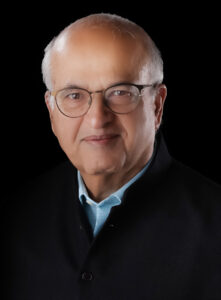

Dr. Rahul Mehra is the National Representative of India for the UNESCO Chair for Global Health & Education and serves as the Executive Chairman of Tarang Health Alliance. He is a prominent advocate for health education, emphasizing the need for comprehensive health education in schools to address mental health, emotional well-being, and social skills.