News
Inclusive Education Summit 2026: Designing the Future of “Learner-Centric” Education
The Inclusive Education Summit 2026 gained significant momentum on Day 2, moving from policy vision to practical implementation. Focused on “Inclusive Education Pathways,” the session highlighted the transformative PRASHAST 2.0 digital screening tool and groundbreaking state models from Andhra Pradesh and West Bengal. Industry experts from NCERT, NIOS, and UNICEF emphasized a critical shift from mere “classroom access” to “academic achievement” through Universal Design for Learning (UDL). By integrating assistive technology, specialized teacher training, and inclusive sports, the summit is redefining how India supports Children with Special Needs, ensuring that every learner has a personalized path to success.
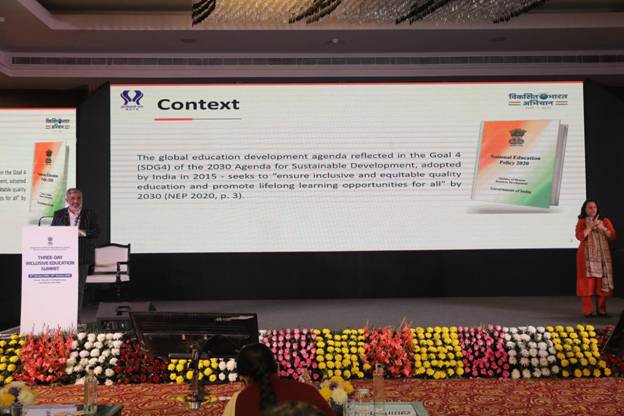
New Delhi | January 22, 2026 – As the three-day Inclusive Education Summit 2026 enters its second day, the conversation has shifted from policy theory to tangible pathways. Organised by the Ministry of Education (DoSEL) at The Lalit, New Delhi, the summit is setting a high bar for how India intends to align with NEP 2020 and the RPwD Act 2016.
While Day 1 set the stage, Day 2 focused on the “how”—the digital tools, pedagogical shifts, and inter-sectoral collaborations required to ensure no child is left behind.

1. Digital Transformation: PRASHAST 2.0 Takes Center Stage
The most significant tech highlight was the unveiling and live demonstration of PRASHAST 2.0. Introduced by Ms. Ira Singhal (Deputy Secretary, DoSEL), this revamped disability screening tool is designed to move the needle on early identification.
-
Integrated Ecosystem: The tool now integrates directly with UDISE+, allowing for real-time tracking and data-driven interventions.
-
The Goal: Moving away from guesswork toward evidence-based planning at the school level.
2. Scalable Success: Lessons from the States
The summit showcased that inclusion isn’t just a national mandate; it’s a local reality. Two states shared blueprints that other school leaders can learn from:
-
Andhra Pradesh: Highlighted the transformative impact of their 125 Autism Support Centres.
-
West Bengal: Showcased a model of strengthening resource rooms to provide child-centric interventions immediately after identification.
3. Reimagining Pedagogy and Teacher Training
A recurring theme throughout the day was that “access” to a classroom is not the same as “achievement” in learning.
-
NCERT’s New Framework: Dr. Sharad Sinha presented an 8-module framework designed to mainstream inclusive pedagogy. The focus is on training teachers to manage diverse classrooms as the norm, not the exception.
-
NCTE & NIOS: Discussions led by Prof. Pankaj Arora (NCTE) and Prof. Akhilesh Mishra (NIOS) highlighted the shift toward flexible admission systems, accessible e-content, and a national mentoring mission to support inclusive practices in everyday schooling.
4. Beyond the Classroom: Sports and Language
Inclusion was also discussed through the lens of holistic development:


-
Inclusive Sports: Representatives from Special Olympics Bharat and the Indian Blind Sports Association emphasized that sports are a primary vehicle for building confidence and independence in children with intellectual and visual impairments.
-
The Power of Words: Ms. Amita Tandon (UNICEF) reminded delegates that disability-inclusive language is the first step in reducing stigma.
Innovator’s Spotlight: Prof. Bharti Kaushik (CIET, NCERT) showcased the “Kitaab Ek, Padhe Anek” project. Based on Universal Design for Learning (UDL), this initiative allows a single textbook to offer multiple accessible pathways, proving that “one size fits all” is a thing of the past.
Key Takeaways for School Leaders
As the summit concludes its second day, the message to the Indian education fraternity is clear:
-
Screen Early: Use tools like PRASHAST 2.0.
-
Train Often: Move toward inclusive pedagogy, not just special education.
-
Build Infrastructure: Invest in resource rooms and UDL-compliant materials.