Education
Daring to Dream: Six Years in the Heart of Rural Rajasthan
Across India’s government schools, millions of students are first-generation learners—navigating education without inherited privilege or guidance. Dare To Dream, a documentary filmed by Ranu Ghosh over six years in rural Rajasthan, brings these lived realities into focus through the stories of young girls from the Rabari community. This feature (like the documentary) explores how education becomes dignity, protection, and possibility—and why such stories matter deeply to classrooms, educators, and communities across the country.
The journey of a thousand miles begins with a single step. For many girls in India’s rural communities, that step is often blocked—by tradition, by circumstance, and by expectations set long before they are old enough to question them.
In Banswara district of southern Rajasthan, filmmaker Ranu Ghosh spent six years documenting what it means to take that step anyway. The result is Dare To Dream, a documentary that offers an intimate, unflinching look at first-generation learners, gender, and education within the Rabari community—a community rich in cultural knowledge yet constrained by rigid social norms that frequently limit the lives of its daughters.
A community of knowledge—and contradiction
The Rabaris are globally recognised for their generational expertise in camel breeding and their close relationship with nature, mobility, and craft. Their cultural heritage is admired and celebrated, yet the community remains socially isolated, shaped by traditions that are slow to evolve.
Within this context, women often face early marriage, restricted mobility, and limited access to education—realities rarely portrayed with nuance in mainstream narratives. Dare To Dream avoids simplistic portrayals of victimhood. Instead, it presents a layered reality where hardship coexists with dignity, resilience, and quiet strength.


“There is a constant struggle to balance tradition with modernity,” Ghosh observes. “These communities are trying to preserve their identity while adapting to a world that often does not accommodate their way of life.”


The invisible journey of first-generation learners
For many students in India’s government schools, education is a journey undertaken without a map. These are first-generation learners—children whose parents never had the opportunity to complete, or even begin, formal schooling.


“For them, education is not only about studying subjects,” says Ghosh. “It is about dealing with uncertainty, responsibility, and self-doubt from a very young age.”
Their challenges are layered. Academic support at home is limited, financial insecurity is constant, and schooling must often be balanced with household responsibilities and strong social expectations. Beyond these visible constraints lies a quieter, internal struggle—whether it is acceptable to aspire at all.
Yet Dare To Dream shows that ambition persists even within these limits. The aspirations of these children are shaped not by entitlement, but by resilience and determination. Every milestone—learning English, completing a grade, staying in school a little longer—becomes a meaningful act of perseverance.
“Dreaming,” Ghosh notes, “is not a privilege. It is a right.”


When education becomes protection
The documentary’s emotional core lies in the contrasting journeys of three women, revealing how education shapes lives in profoundly different ways.

Ganeshi’s story is one of quiet defiance. Married at a very young age, she was unusually allowed to remain at her parents’ home to continue her education. She later became the first English secondary-level teacher from her community in a government school—moving to her in-laws’ home only after securing her job.
Her sister, Swapna, followed a similar path. She completed her education, found employment, and married later, breaking a cycle that had long seemed inevitable.
In contrast, Reena’s story shows what is lost when education is cut short. Married before completing school, she became a mother too early and passed away at just twenty-nine.
“Education is more than opportunity,” Ghosh reflects. “It is protection, voice, and hope. When girls are denied education, what is taken away is not just learning, but the chance to choose.”
Why these stories matter in classrooms
Ghosh believes that audio-visual storytelling has a unique ability to reach young people—especially those who rarely see their own lives reflected in books or media. Even in remote regions, mobile phones and social media are deeply embedded in everyday life.
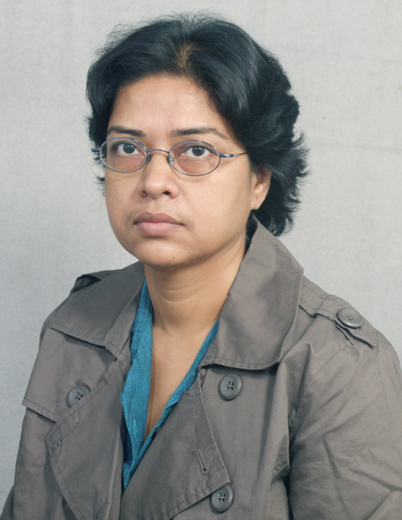

“When students see lives similar to their own on screen,” she says, “they begin to feel seen. They realise that their experiences and struggles matter.”
She hopes screenings of Dare To Dream in villages and government schools can affirm students’ aspirations
while also serving as a reminder to educators of the influence they hold.
“Sometimes,” she adds, “a small gesture of encouragement from a teacher can change the course of a child’s life.”
For communities, the film creates space for dialogue—about education, gender, early marriage, and the difficult balance between tradition and change. Importantly, these conversations emerge without judgement, allowing reflection rather than resistance.

Beyond slogans, towards quiet change
After six years of documenting these lives, Dare To Dream leaves behind a powerful truth: meaningful change is often incremental. It unfolds in classrooms where teachers persist, in families that choose education over early marriage, and in girls who dare to imagine futures different from those prescribed to them.
If the film succeeds in helping even a few girls take one step closer to that freedom, it reinforces a larger truth—when first-generation learners from marginalised communities are trusted and supported, they do not just change their own lives. They reshape the future of others as well.