Inspiration
The world’s first SOLE Cambridge School – Paradise School Goa
We are a school in Paradise (ie Goa) hence the name. However, the meaning goes deeper than that. The Cambridge English Dictionary definition of Paradise is: ‘a place or condition of great happiness where everything is exactly as you would like it to be’.

Shilpa Mehta, Founder, Paradise School Goa, tells MARIE D’SOUZA what goes into making this SOLE Cambridge School a real game-changer
What's in a name…? Tell us the reason and significance of the name 'Paradise School'.
We are a school in Paradise (ie Goa) hence the name. However, the meaning goes deeper than that. The Cambridge English Dictionary definition of Paradise is: ‘a place or condition of great happiness where everything is exactly as you would like it to be’.
This most perfectly sums up the ethos of Paradise School because we are daring to forge new ground-breaking paths in education. We are genuinely interested in the potential and well-being of our learners, as well as teaching faculty. In that sense, we are not just a school but an educational community, with wider concerns at heart.
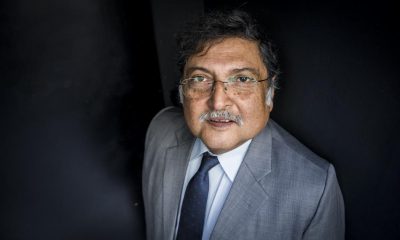
This is why we use the SOLE at the centre of our learning culture. Sugata Mitra’s method of Self-Organising Learning Environments allows children the intellectual freedom to discover concepts for themselves and be enchanted by this process (rather than jaded as with most schoolroom practises). This liberation is important. We use it to fuel our mainstream curriculum of the International Cambridge Board, which also supports active and dynamic learning. We find the two complement each other perfectly. Best of all, the learners thoroughly enjoy it which makes for a happy environment.
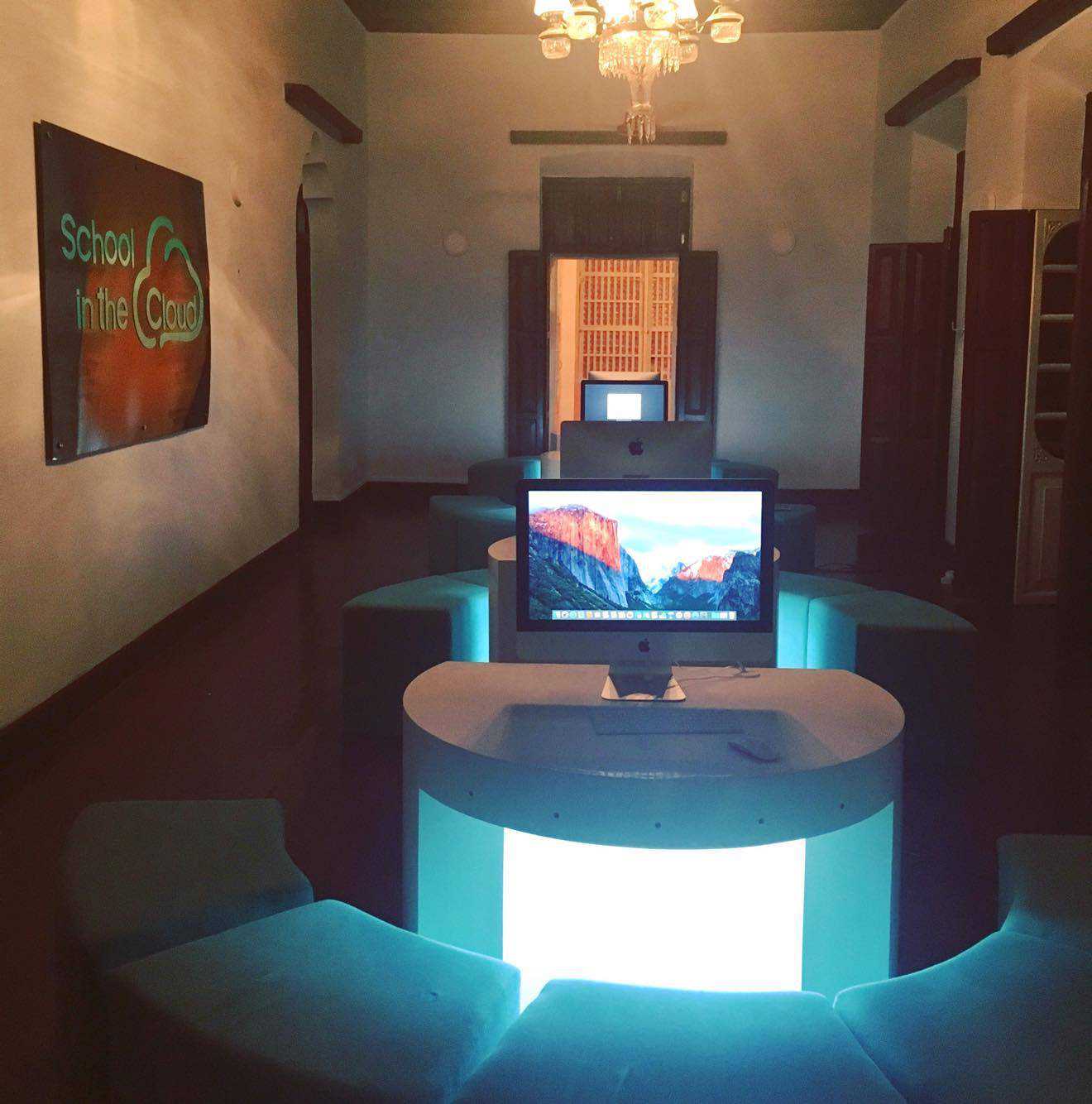
We are a SOLE Cambridge School – the world’s first. Fusing the present and the future. Hence the name Paradise.

How does Paradise School perceive the Future of Learning?
It is mainly an attitude. One has to let go of the old shore in order to find the new. However, going out to sea takes courage, fortitude and resilience when familiar landmarks disappear. One has to be willing to reinvent the wheel. But if any area needs it, it’s education, as the future stakes of our children depend on it.
This attitude needs to show up in management, infrastructure, classroom design, tech choices and overall the culture and community of the school. The biggest shift is putting the child’s voice at the centre. Often schools and institutes silence children and force them to accept the way of tradition. We have to teach children to be their own leaders, otherwise, they will never survive in the new world of not just the 21st but also the 22nd centuries.
Moving away from a patriarchal, top-down, hierarchal, authoritative structure to an inclusive, collaborative, child-centred, self-organising model is the key. We are all in together. Education should be the most exciting place on earth, for students, teachers and school creators. It’s where the best innovation can happen. Instead of suppressing it, we have to wholeheartedly allow it to emerge.
As Abraham Lincoln said, ‘the best way to predict the future – is to create it’.
'Taking education to the next level'… How does Paradise School strive to achieve this?
There are many important aspects of changing the game.
Firstly, we are creating a personalised learning experience for our students, rather than a standardised one. This is the most vital shift. It is good they move at their pace so learning is authentic and real. We favour stage, not age, and keep our class sizes small, no more than 15. In that sense we are a boutique school, offering a bespoke and tailored educational experience.
We like the latest thinking in pedagogy and have therefore chosen the most modern and contemporary subjects from the Cambridge programme including Global Perspectives, Enterprise, Environmental Management, World Literature, Fashion and Textiles and Digital Literacy. At A’level we hope to add Media Studies, Marine Studies and Psychology – as well as all the usual STEM subjects.
We offer the full flexibility of the Cambridge system by allowing our IGCSE learners to schedule their own exams over the November, March and June series. This means they don’t have to take all their exams in one go (which is stressful). Much better to stagger them in order of preference. We feel this puts the learner in charge of the examination process rather than at the mercy of it.
We embrace the internet and technology, harnessing these forces for educational purposes. Secondary children are allowed to bring their phones and devices to school; we often have digital reviews about best policy on their use, as discussed with the children themselves. Self-control is our ultimate aim. We would like our kids to be creators on the internet rather than mere consumers. As a school, we have been studying Digital Citizenship since the onset, to give children a positive and informed handle on the virtual universe.
We don’t skimp on quality. Paradise tech is iMacs and iPads. We favour the IOS platform as it offers the best and most magical experience of the internet and technological advancement. An Apple Developer teaches in our school a programme he designed called ‘The A Game’. This is where kids get to use and become very proficient at the full suites of apps the platform affords.
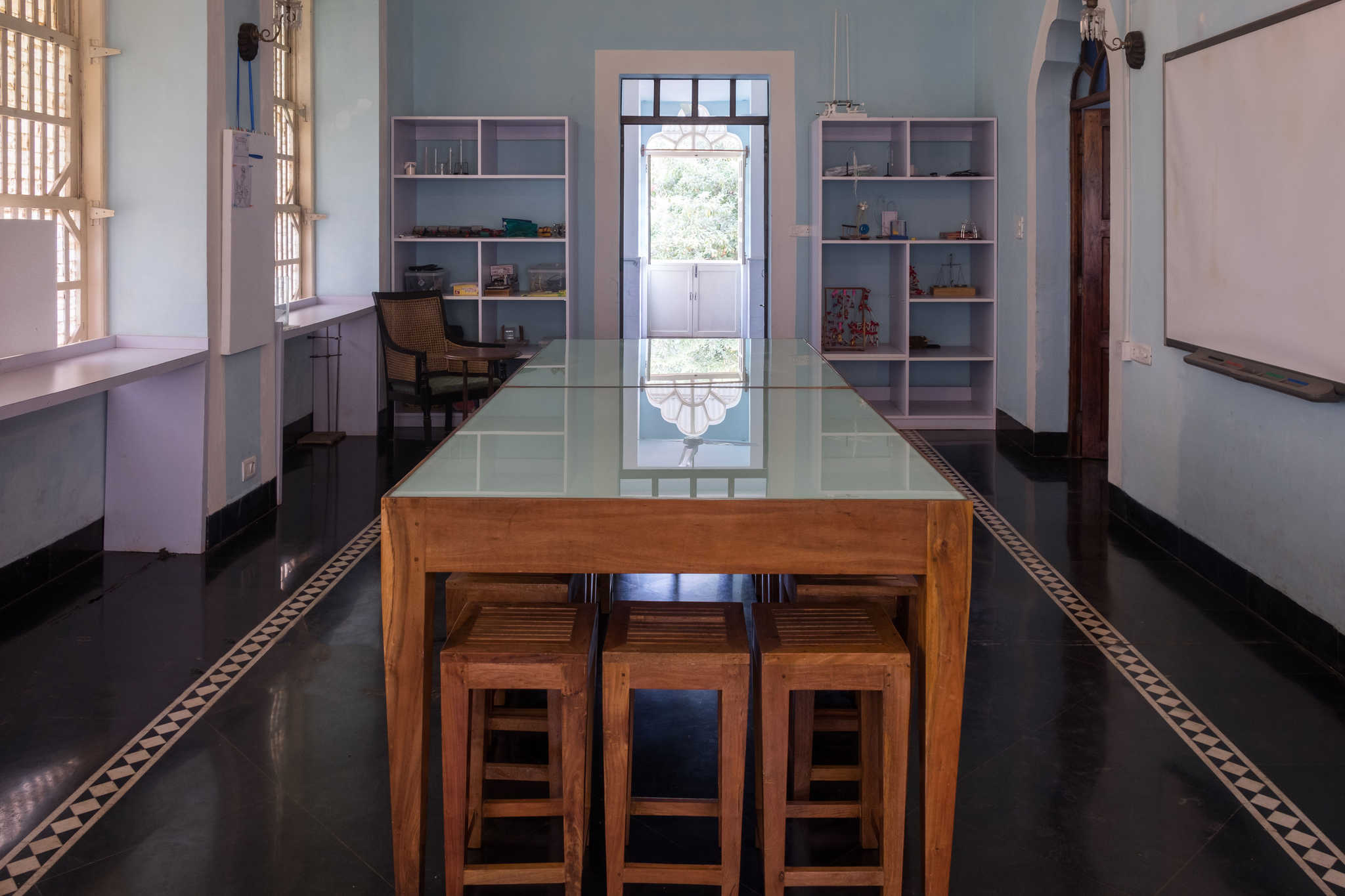
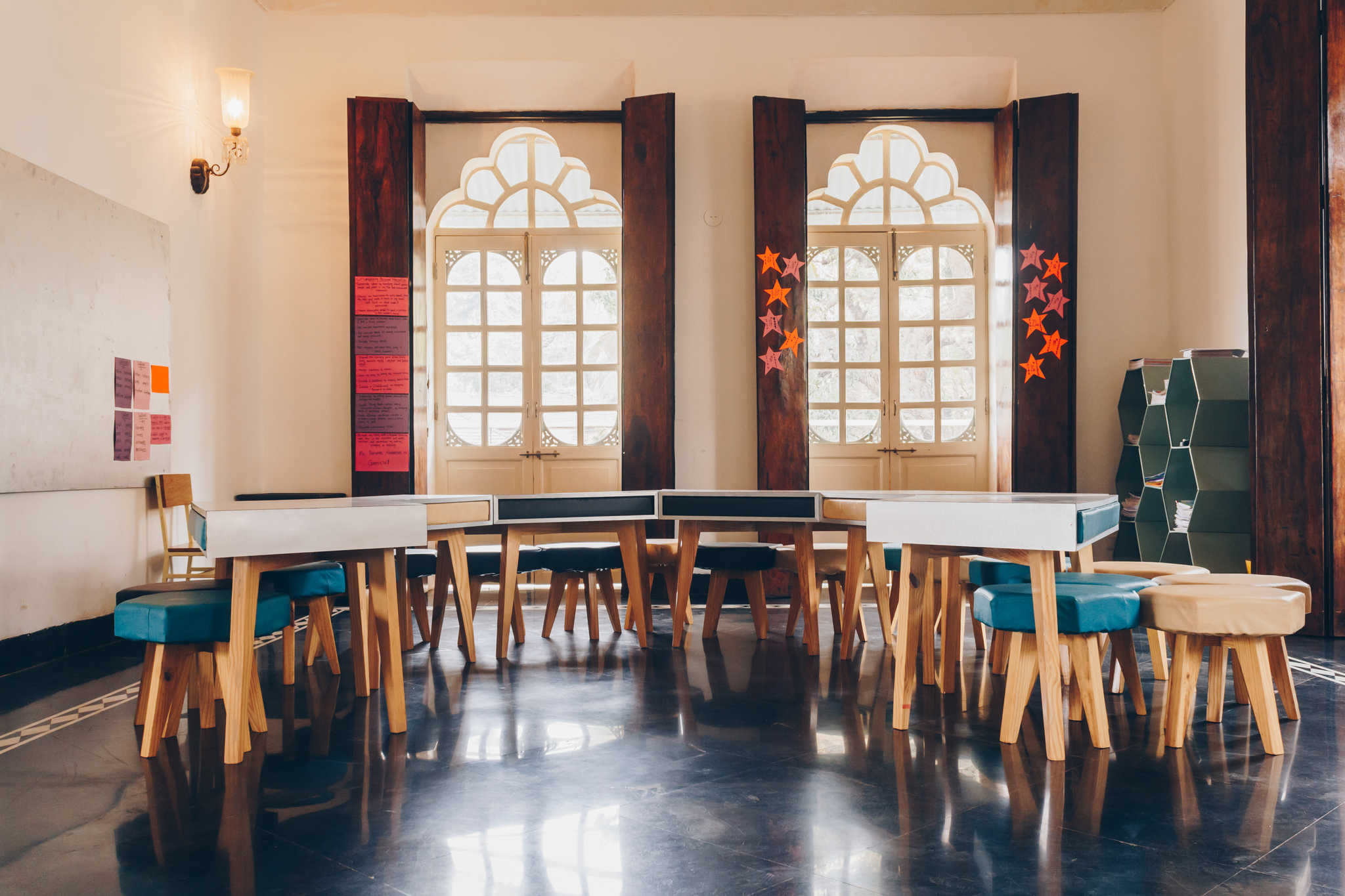
Practically, we have personally designed all the furniture in the school so that it is dynamic, flexible and interactive (you can write on the surface, like a whiteboard). Once again, this gives children and teachers the day-to-day power to express themselves in the classroom rather than be stuck in a rigid grid of conformist infrastructure.
In terms of our day-to-day reality, we don’t have uniforms and are on first-name terms with each other (no Sir and Miss). We have found SOLE has gone beyond the classroom and has become part of our culture making us democratic, cooperative, innovative, seeking and unafraid to explore. Most importantly, we are able to manage people’s differences of opinions with goodwill and equanimity. This is the spirit with which Paradise operates.
This goes to the heart of our community, where we have open, supportive and genuine relationships with each other – from the Trustees, to our School Board, the parent body, faculty, and children. Bullying is rare in our school. Creating a bedrock of safety and harmony is key.
What is the vision of Paradise School?
Our vision is to be true to the real meaning of education – from the Latin ‘educere’ meaning to ‘draw or to lead out’. Most education suppresses children. Our aim is to encourage our kids to emerge as their truest selves. This is a spiritual goal, not just academic. Without the full and proper contribution of children to the future world, who knows what the consequences will be? The advancement of the human race and the planet are at stake. Hence as educators, we carry the greatest responsibility to allow our children to sink and not swim when the tidal waves of change hit.
Therefore, we embrace the future and are not frightened by it. Rather we are inspired and encouraged by all the wonderful possibilities that await us. We truly believe our children will be at the helm of this ship, confidently and powerfully sailing to a brighter day.
Academically, we respect the Cambridge system and work well in alignment with their evolved position of active and dynamic learning, as well as honouring the examination process. We are excited about the doors that open at the university level and are consciously preparing our children for this now.
We are on the cusp of great change. We are handling this tipping point between the old and the new, with flair, courage and genuine innovation.
Optimism to create a better world for our children is what drives us.
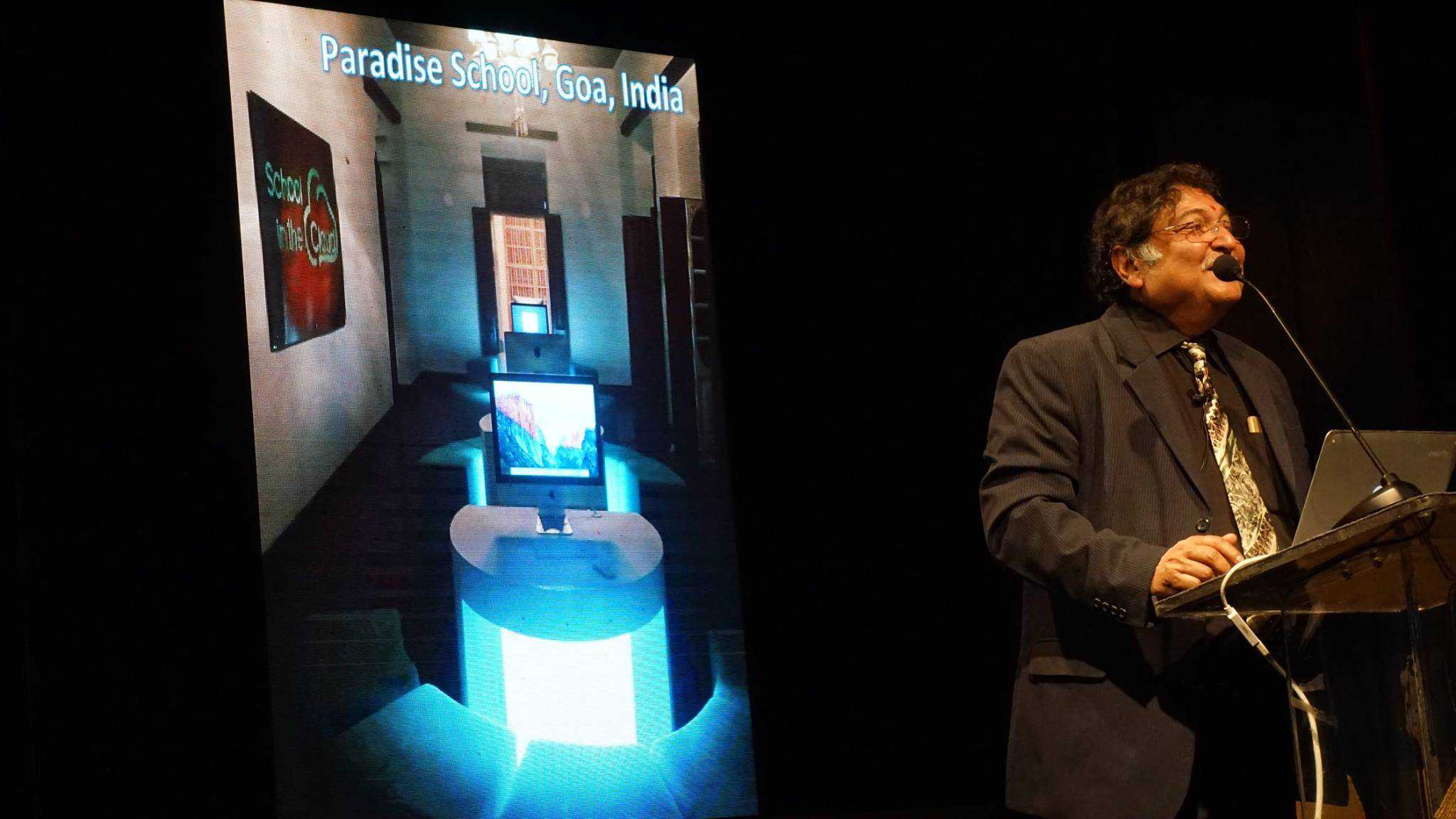
Renowned educator and TED Prize winner Sugata Mitra is the main advisor to Paradise School. How are his ideas of SOLE and School in the Cloud being implemented at Paradise?
Sugata inspires us constantly. He really does take education to the next level, with an argument that is humorous, searingly intelligent and ultimately so wise.
The best thing about Sugata is he puts everyone into a SOLE space, even us as a school. We are always asking ourselves, ‘What is a SOLE School’, ‘How can we best merge the old and new ways of thinking about learning’ and ‘If teachers are not necessary in the age of the internet, then who are we, as teachers?’
My favourite question as a result of my association with Sugata is – ‘What is a self-organising system ?’. This has opened up a profound and mystical journey for me as I establish the world’s first self-organising school. I am sure once this becomes second nature to me, I will be able to share it widely with all. Successful self-organising, on all levels, is the pathway to a very dynamic human race. Let’s start with children mastering it at school.
On a practical level, merging SOLE into a mainstream curriculum has been an amazing adventure in learning. We have found so many interesting techniques for doing so, entirely self-discovered, by my team of passionate and inspired educators. We are organising the first worldwide SOLE Conference ever, to create a forum for all of us to share our findings with other SOLE educators and like-minded teachers and school leaders.
But to give you a simple taste of how it works in our school, Rounak, our Lower Secondary English teacher, asked his learners ‘Why does humour make us feel good?’ as a SOLE question. This unlocked an intense and fun workout for the kids in the SOLE Room to come up with insights.
He then asked them how humour works as a genre in literature – and what does it contribute to the stories we read and watch?
By opening up the topic as SOLE, it ignited their curiosity and lit the flame of their open-minded exploration of the subject. Rounak was then able to take this intellectual enthusiasm and channel it down a curricular highroad.
This, to me, is a perfect example of how SOLE and Cambridge work so well together.
Tell us more about the team behind Paradise School.
The strongest feature of our school is the key business people in our management structure (from trustees, to advisors to investors) who are from Goa. This gives us such a solid base to work from. Other Directors have lived or worked in Goa for over a decade, and we are all committed to creating a world-class, world-changing, inspirational educational hub here. We believe in Goa, what it stands for and its potential. For me, this team is a dynamite combination of power and expertise.
We are partnered with Newcastle University and SOLE Central as the world’s first SOLE School. Sugata Mitra is our Advisor and does workshops and talks with us often.
My Head of School, Academic Coordinator and Primary and Secondary teachers come from international schools from all over India and Goa. What marks them as Paradise faculty is they are serious about breaking new ground in education and are passionate and sincere educators. As the School Leader I give them plenty of space to mine their talent and stretch their wings. I have found giving teachers autonomy liberates their potential like nothing else. Seeing them blossom is as important to me as allowing our children to thrive. This is what creates a genuine educational community – because everybody is growing and learning.
Other collaborators include Apple Education India (and UK) as we are using technology to innovate new learning platforms for our children. We are aiming to become an Apple Distinguished School in the future.
We have also partnered with Alma, a US Student Information System, and are the first to be using their product in India. Alma has been designed by teachers so is intuitive and flexible, which suits us so well. We are really looking forward to getting on board with them, and opening up the app for enhanced parent communication.
Paul Dass OBE and the British Education Centre in Delhi have very kindly shared their huge network of UK Universities with us in order to forge academic ties for the launch of A’Level launch in March 2020. Having direct access to universities abroad is a wonderful feather in our cap for our older students.
Finally, our strongest team is our parents. Without them, the word about Paradise could not have spread so far and wide. We literally went viral on the parent’s network from Goa to Delhi, Mumbai, and Bangalore – to LA, the UK, Europe. We barely advertise, yet our admissions have soared. We listen closely to parents and see them as an integral part of our self-organising community.
The location of the school, including the large Goan mansion with various residential rooms, appears most, unlike the conventional school building structure. What is the motive behind this?
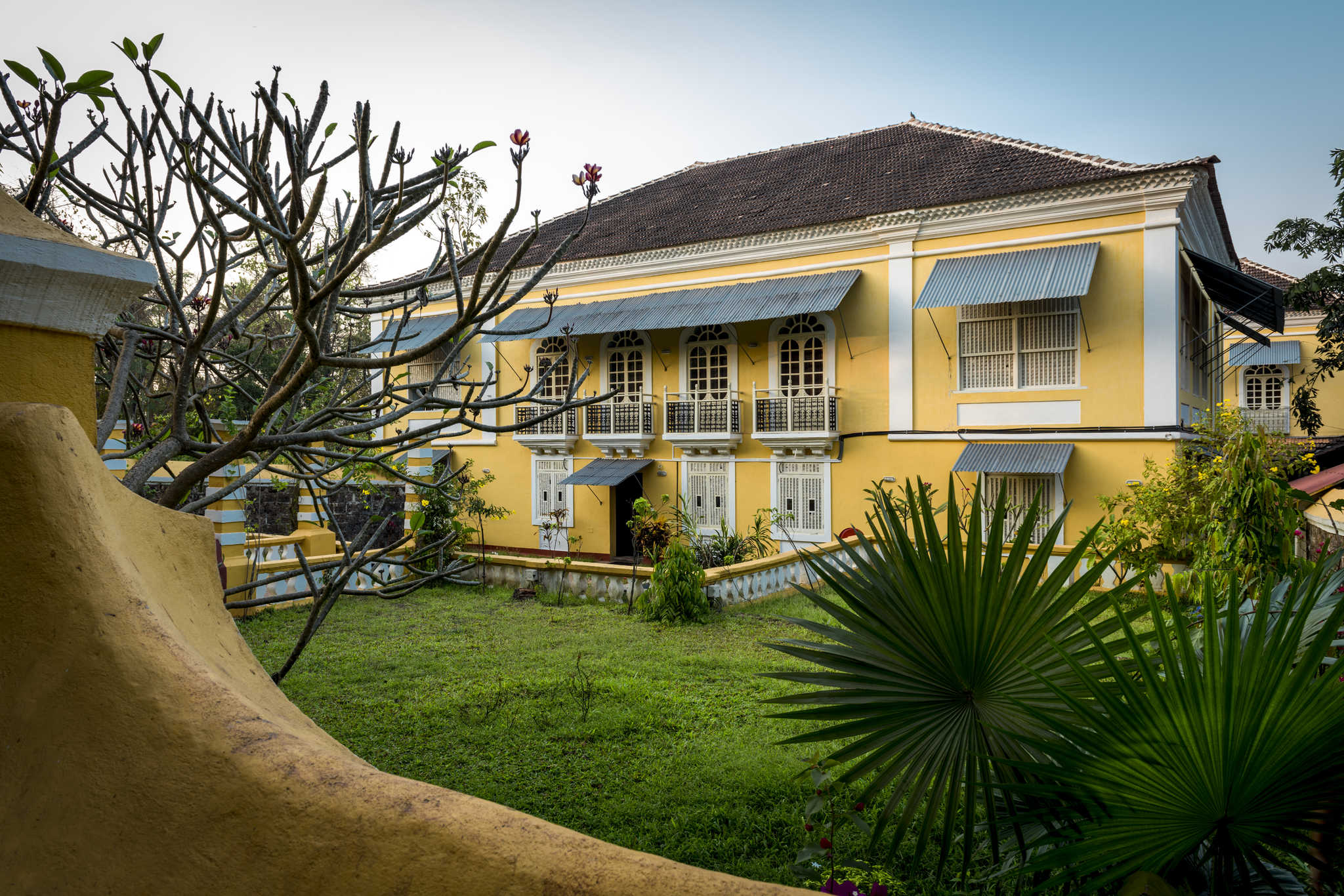
North Goa, where the school is based, is really a series of rural, networked villages. So, there is no ready infrastructure for schools. But when Aurelia came on the market, I knew it was just perfect. A 400-year-old exquisitely restored Goan heritage mansion with large rooms and spacious proportions – ideal for an International School. The owner was very kind to allow us to set up our school there, for which we are eternally grateful. Many people call it a Digital Hogwarts, which makes us laugh. Outwardly, it’s an old building but inwardly it’s high-tech.
We have also now taken on a villa nearby for our Primary School, so we have two gorgeous buildings. Many families have moved to Aldona and surrounding villages to be by the schools, so the whole area is coming up and becoming a lovely school community, of which we are extremely proud.
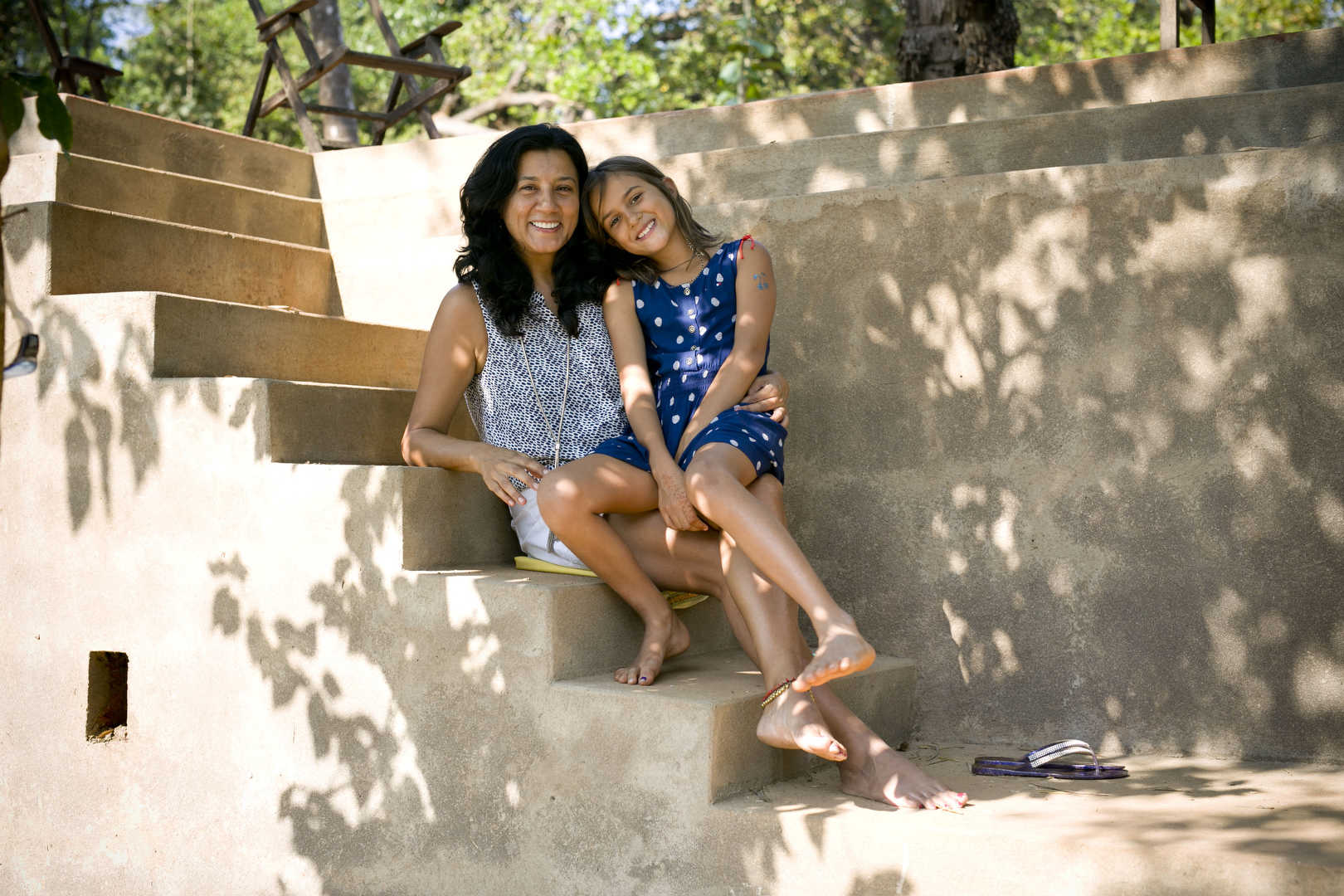
However, this is just Paradise 1.0 and 2.0.
Paradise 3.0 is buying our own land and creating our own building. We’re putting this into place – talking to landowners, investors, architects. This will be our eco-futuristic vision of how a truly advanced 21st century school should look and behave. We cannot wait to share it with the world, and most of all – with our kids.






Inspiration
The Last Thing AI Cannot Take: Saurav Sinha on Humanity, Boarding Schools, and the Generation We Are Getting Wrong
Saurav Sinha, Principal of Mayo College, delivers a profound wake-up call regarding modern education. He argues that as AI masters technical skills, schools must urgently pivot toward “humanness”—empathy, conflict resolution, and resilience. In a world dominated by social media, he views true boarding schools as essential guardians of childhood.
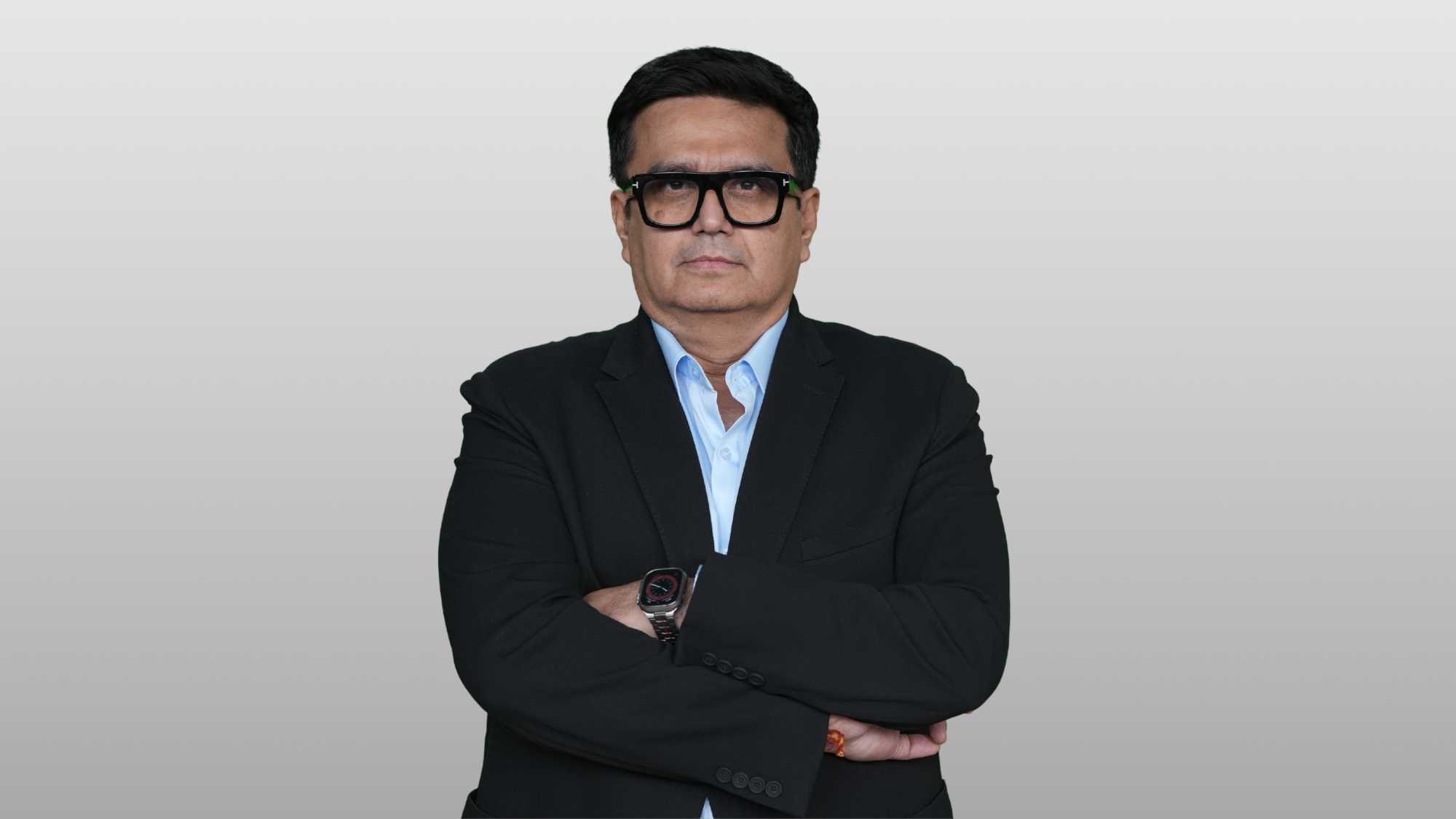
When Saurav Sinha, Principal of Mayo College Ajmer, walked onto the stage at Masters Union’s annual event Intersect, he did not begin with data or policy. He began with a question that has nothing to do with academics.
“Are we happier? For all this intelligence, are we a better society? Do we take care of each other?”
It was the kind of question that makes a room go quiet. And in the forty minutes that followed, Sinha made a case that India’s schools and particularly its boarding schools are the last line of defence between a generation of children and a world that is failing them in ways we are only beginning to understand.
The Progress Paradox
Sinha opened with a sweep of human progress. A hundred years ago, most people were born and died within a hundred kilometres of where they started. Hot showers were a luxury. Child mortality was ordinary. Today, India produces some of the most accomplished minds on the planet, running organisations across the globe.
“Being Indian is now associated with a certain intellectual acumen,” he said. “But I want to pose a rhetorical question. Are we happier? Do we have consideration for the people we meet on a daily basis?”
The question is not about physics or algebra, he argued. It is about something that Indian education has quietly deprioritised — the formation of a human being, not just an examination candidate.
The question is not about physics or algebra, he argued. It is about something that Indian education has quietly deprioritised. The formation of a human being. Not just an examination candidate.
The Gurukul We Forgot
Drawing a line from ancient tradition to modern boarding schools, Sinha reminded the audience that the gurukul was never primarily about academics. If you were going to rule a kingdom, you were sent away at the age of eight or nine, far from comfort and privilege. What the guru taught was values, responsibility, respect, and how to care for people. Academics was only a small part of it.
“Boarding schools,” he said, “are the modern version of the gurukul.” But with an important caveat. He was quick to distinguish between genuine residential institutions and schools that offer hostel accommodation as an additional revenue stream. The former structures every hour of a student’s day around holistic development. The latter simply adds beds.
Sinha leads Mayo College Ajmer, one of India’s largest pure boarding schools with 850 boys, not a single day scholar, on a two hundred acre campus that recently celebrated 150 years. He has students whose great great grandfathers received academic prizes in 1895, whose names are still on the school’s walls. Legacy, he acknowledged, can be a burden. It is also an obligation.
What Boarding Schools Actually Teach
Sinha was unsentimentally specific about the kind of learning that happens outside the classroom in a residential school. He described a scenario that any twelve year old boarder would recognise immediately.
“You have a group of five close friends. You had a fight with one of them. He is not talking to you, and he holds social clout in the group. The other four have also said they are not going to talk to you. The next morning at breakfast, you have to sit at the same assigned table with the same five boys. How do you maneuver that?”
The option of calling a parent does not exist. What the child learns at eleven or twelve is how to negotiate conflict, manage relationships, and read the dynamics of a group. By the time they are eighteen, they have already navigated a hundred such situations. The emotional intelligence that other people spend decades acquiring has been built quietly, through the ordinary friction of residential life.
He was careful to add: “This is not a day school versus boarding school conversation. It is entirely a personal decision based on family circumstances. I am not saying everyone should be a boarder.”
The Last Vestige of Humanity
When Sinha turned to artificial intelligence, he was neither alarmist nor dismissive. His position was straightforward. Resistance to AI is futile, and it is the same conservatism that accountants would have shown thirty years ago when Excel replaced paper ledgers.
“We have to master technology and not be mastered by it.”
But as AI becomes more capable, he argued, it will systematically absorb the quantitative and technical sides of work. What it cannot absorb is what humans do best. Person to person contact. Empathy. Presence.
“The last vestige of humanity is going to be humanness,” he said. “And being human is not wearing a t shirt of Salman Khan. It means providing to society what a machine cannot.”
He pointed to the three years of the pandemic as a data point that is not yet being taken seriously enough. The children who lost social contact for those years are still dealing with the consequences. In learning ability, in confidence, in social skills, in rising rates of depression. The conclusion, he said, is becoming difficult to dispute. Machines can do a great many things, but humans need humans.
The Loaded Gun
The most candid part of Sinha’s address was about smartphones and social media. He banned smartphones at Mayo College last year. He received a standing ovation from parents.
“I was looking at the parents and thinking you hypocrites. You are very happy that I am being the villain. But the moment your child steps out of the campus, you will hand it straight back.”
He was not moralistic about technology itself. He was specific about what social media does to developing minds.
“The lack of depth in this generation is purely because of social media. It came suddenly in 2007. There was not enough time, not enough reason, for anyone to do fundamental research on what it does in the long run.”
He described the effect on his own attention span. A man who once watched slow European films now cannot sit through a car chase. Then he asked the audience to extrapolate that to a child who has been scrolling since the age of two.
He referenced Jonathan Haidt’s The Anxious Generation, recommending it directly to the audience. The statistics he cited were arresting. From 2007 to the present, rates of teen depression, suicide, and mental health disorders are up not by fifteen or twenty percent but by close to fifteen hundred percent.
“We can look at that data and say it is not convenient. But I want my daily dose of Instagram so I am going to ignore it. You are welcome to do that as an adult. But it has to be controlled for younger people.”
He spoke about the puberty workshops his school runs from the age of eleven. Regular, frank conversations with boys about what they are experiencing, what is normal, and where the line is. A team from Grades 11 and 12 goes down to speak to boys in Grades 7 and 8 about what they went through.
“Once an adult tells a child that what they are feeling is normal, the first thought in their head is that I am not the only one. Once you achieve that, there is scope for progress.”
The Thing Teachers Never Know They Did
Sinha closed with a story about a former student who found him at a social gathering, embarrassed to say what he needed to say in public. The young man was finishing a law degree. He had won prizes in moot court. And he wanted Sinha to know that none of it would have happened if a teacher had not once told him in a corridor, in a throwaway moment, to start reading if he wanted to be a lawyer.
“You realise what a huge impact a statement you do not even remember making can have on a person.”
The converse, he added, is equally true. He has zero tolerance for any teacher who tells a child they will never amount to anything.
“You are not God. The child’s destiny is not in your hands. If you cannot be positive, at least do not put self fulfilling prophecies of a negative nature into a child’s mind.”
His closing line was quietly definitive.
“The best place for a child is with their parents. But only if the parents can be parents in the true sense. If not, a good boarding school provides, to whatever extent possible in the world we live in, protection from the excesses of a society that children are being exposed to far too early.”
He thanked the audience for coming on a Sunday morning. And then he sat down.
This story is inspired by Saurav Sinha’s address at Intersect, the annual flagship event of Masters Union. Saurav Sinha is Principal of Mayo College Ajmer, one of India’s oldest and largest pure boarding schools.
To watch the full speech on YouTube
Education
A school in Nallasopara just built an entire AI innovation ecosystem
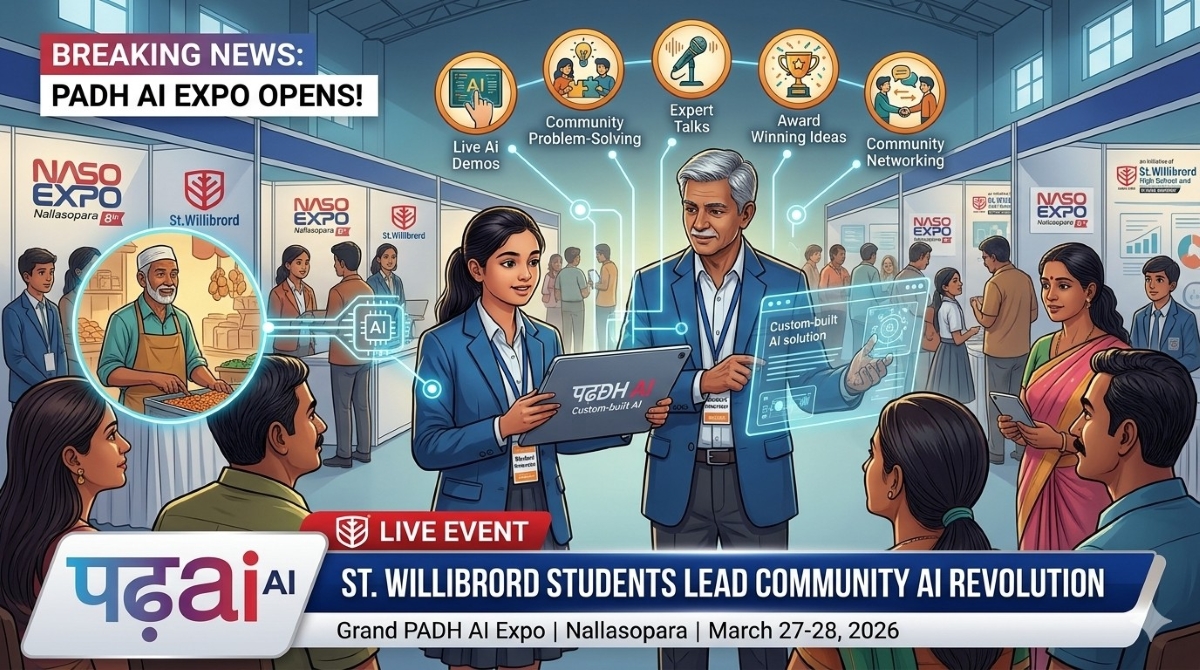
In Nallasopara, a quiet shift in education is underway. At the PADH AI Expo—part of the NASO Expo and an initiative by the St. Willibrord Group—students aren’t just learning about artificial intelligence; they’re building real solutions for their communities, turning classrooms into launchpads for innovation, agency, and real-world impact.
NALLASOPARA, MAHARASHTRA — March 26, 2026
Walk into the PADH AI Expo expecting a typical school science fair, and you’ll leave with a completely different picture.
There are no poster boards. No rehearsed speeches. No students nervously reciting facts they memorized the night before. Instead, a girl is showing a local shopkeeper how her AI tool could help him track inventory. A group of boys has built something for elderly care at home — not a concept, an actual working prototype. Another team is putting together personalized learning tools for their classmates.
It takes a minute to register: this isn’t an exhibition. These kids are solving real problems.
What’s happening at St. Willibrord?
The PADH AI Expo is part of the larger NASO Expo series, hosted by St. Willibrord High School and Junior College in Nallasopara — an institution run by the St. Willibrord Group of Schools. Over 160 students have set up 48 stalls, and what they’re showcasing isn’t academic work dressed up for display. It’s rooted in the daily lives of the people around them — local vendors, families, students who need better learning support, and community gaps that nobody else has gotten around to fixing.
The school’s guiding idea, championed by Willibrord George who leads the NASO Expo series, is almost disarmingly simple: stop underestimating students. Trust them to think, trust them to build, trust them to figure out what needs fixing and go do something about it.
Why this feels different
For years, AI in schools has been a cautious conversation — should students use it, will it replace learning, is it too soon? At St. Willibrord, that debate feels oddly outdated. The students aren’t debating whether to use AI. They’ve moved past that. The question they’re asking now is: what problem can I actually solve with this?
That shift — from “can I use this?” to “what can I build with this?” — is the real story here.
What educators are noticing
School leaders from across India have been turning up, and not just to watch. They’re trying to understand what’s different about this place. The contrast is hard to ignore:
| From | To |
|---|---|
| Learning about the world | Engaging with the world |
| Consuming technology | Directing technology |
| Classroom exercises | Community impact |
Most schools still treat technology as something to be studied. Here, students are pointing it at real problems and seeing what comes out.
Event Details
- Dates: March 27–28, 2026
- Time: 4:00 PM – 7:00 PM
- Venue: St. Willibrord High School, Topaz Center, Tulinj Road, Nallasopara East
- Entry: Free (QR-based registration at venue)
The bigger question
We spend a lot of time asking what the future of education should look like. Maybe a better question is why we’re still treating it as something that needs to be designed from the top down, rather than built — right now, by students who already have the tools and the ideas — from the ground up.
In Nallasopara, a school figured that out. And 160 students showed up to prove it.
Education
Daring to Dream: Six Years in the Heart of Rural Rajasthan
Across India’s government schools, millions of students are first-generation learners—navigating education without inherited privilege or guidance. Dare To Dream, a documentary filmed by Ranu Ghosh over six years in rural Rajasthan, brings these lived realities into focus through the stories of young girls from the Rabari community. This feature (like the documentary) explores how education becomes dignity, protection, and possibility—and why such stories matter deeply to classrooms, educators, and communities across the country.

The journey of a thousand miles begins with a single step. For many girls in India’s rural communities, that step is often blocked—by tradition, by circumstance, and by expectations set long before they are old enough to question them.
In Banswara district of southern Rajasthan, filmmaker Ranu Ghosh spent six years documenting what it means to take that step anyway. The result is Dare To Dream, a documentary that offers an intimate, unflinching look at first-generation learners, gender, and education within the Rabari community—a community rich in cultural knowledge yet constrained by rigid social norms that frequently limit the lives of its daughters.
A community of knowledge—and contradiction
The Rabaris are globally recognised for their generational expertise in camel breeding and their close relationship with nature, mobility, and craft. Their cultural heritage is admired and celebrated, yet the community remains socially isolated, shaped by traditions that are slow to evolve.
Within this context, women often face early marriage, restricted mobility, and limited access to education—realities rarely portrayed with nuance in mainstream narratives. Dare To Dream avoids simplistic portrayals of victimhood. Instead, it presents a layered reality where hardship coexists with dignity, resilience, and quiet strength.

“There is a constant struggle to balance tradition with modernity,” Ghosh observes. “These communities are trying to preserve their identity while adapting to a world that often does not accommodate their way of life.”

The invisible journey of first-generation learners
For many students in India’s government schools, education is a journey undertaken without a map. These are first-generation learners—children whose parents never had the opportunity to complete, or even begin, formal schooling.
“For them, education is not only about studying subjects,” says Ghosh. “It is about dealing with uncertainty, responsibility, and self-doubt from a very young age.”
Their challenges are layered. Academic support at home is limited, financial insecurity is constant, and schooling must often be balanced with household responsibilities and strong social expectations. Beyond these visible constraints lies a quieter, internal struggle—whether it is acceptable to aspire at all.
Yet Dare To Dream shows that ambition persists even within these limits. The aspirations of these children are shaped not by entitlement, but by resilience and determination. Every milestone—learning English, completing a grade, staying in school a little longer—becomes a meaningful act of perseverance.
“Dreaming,” Ghosh notes, “is not a privilege. It is a right.”

When education becomes protection
The documentary’s emotional core lies in the contrasting journeys of three women, revealing how education shapes lives in profoundly different ways.

Ganeshi’s story is one of quiet defiance. Married at a very young age, she was unusually allowed to remain at her parents’ home to continue her education. She later became the first English secondary-level teacher from her community in a government school—moving to her in-laws’ home only after securing her job.
Her sister, Swapna, followed a similar path. She completed her education, found employment, and married later, breaking a cycle that had long seemed inevitable.
In contrast, Reena’s story shows what is lost when education is cut short. Married before completing school, she became a mother too early and passed away at just twenty-nine.
“Education is more than opportunity,” Ghosh reflects. “It is protection, voice, and hope. When girls are denied education, what is taken away is not just learning, but the chance to choose.”
Why these stories matter in classrooms
Ghosh believes that audio-visual storytelling has a unique ability to reach young people—especially those who rarely see their own lives reflected in books or media. Even in remote regions, mobile phones and social media are deeply embedded in everyday life.
“When students see lives similar to their own on screen,” she says, “they begin to feel seen. They realise that their experiences and struggles matter.”
She hopes screenings of Dare To Dream in villages and government schools can affirm students’ aspirations
while also serving as a reminder to educators of the influence they hold.
“Sometimes,” she adds, “a small gesture of encouragement from a teacher can change the course of a child’s life.”
For communities, the film creates space for dialogue—about education, gender, early marriage, and the difficult balance between tradition and change. Importantly, these conversations emerge without judgement, allowing reflection rather than resistance.

Beyond slogans, towards quiet change
After six years of documenting these lives, Dare To Dream leaves behind a powerful truth: meaningful change is often incremental. It unfolds in classrooms where teachers persist, in families that choose education over early marriage, and in girls who dare to imagine futures different from those prescribed to them.
If the film succeeds in helping even a few girls take one step closer to that freedom, it reinforces a larger truth—when first-generation learners from marginalised communities are trusted and supported, they do not just change their own lives. They reshape the future of others as well.
Inspiration
Before the Nobel, There Was a Teacher
Before Albert Camus was the voice of a generation, he was an invisible child in a house without books. He was a boy whose future was already written by the harsh ink of illiteracy and loss. Then came the intervention that changed everything. Decades later, at the pinnacle of human achievement, Camus would look back at his Nobel Prize and realize it was built upon a foundation laid by a single elementary school teacher. “I remain your grateful pupil,” Camus wrote to his mentor—a phrase that serves as a timeless anthem for every educator who has ever looked at a struggling student and said: You matter.
The Day Everything Changed
Paris, October 1957
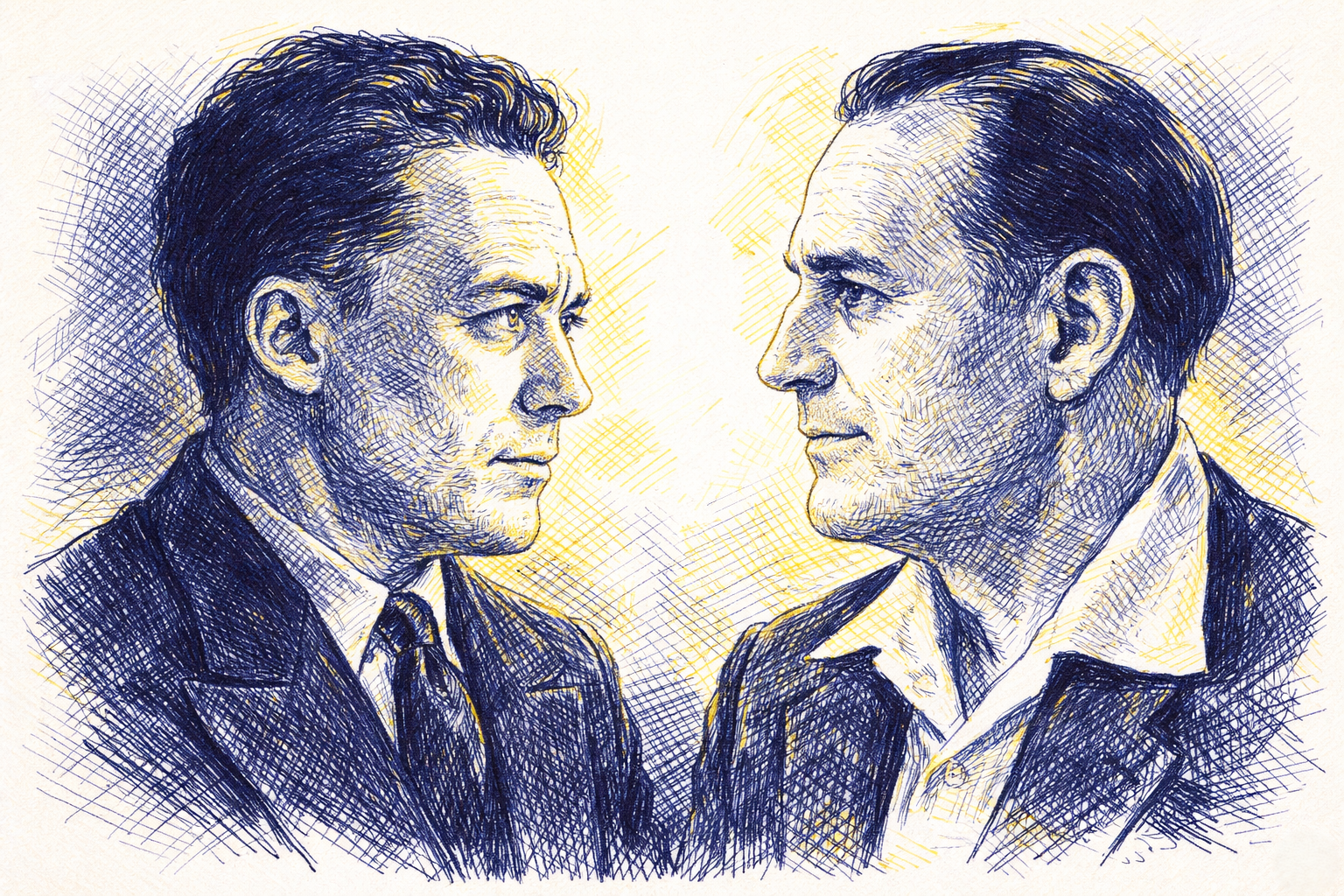
Albert Camus was 43 years old when the telegram arrived.
He unfolded the message and read the words that would secure his place in literary history: he had been awarded the Nobel Prize in Literature.
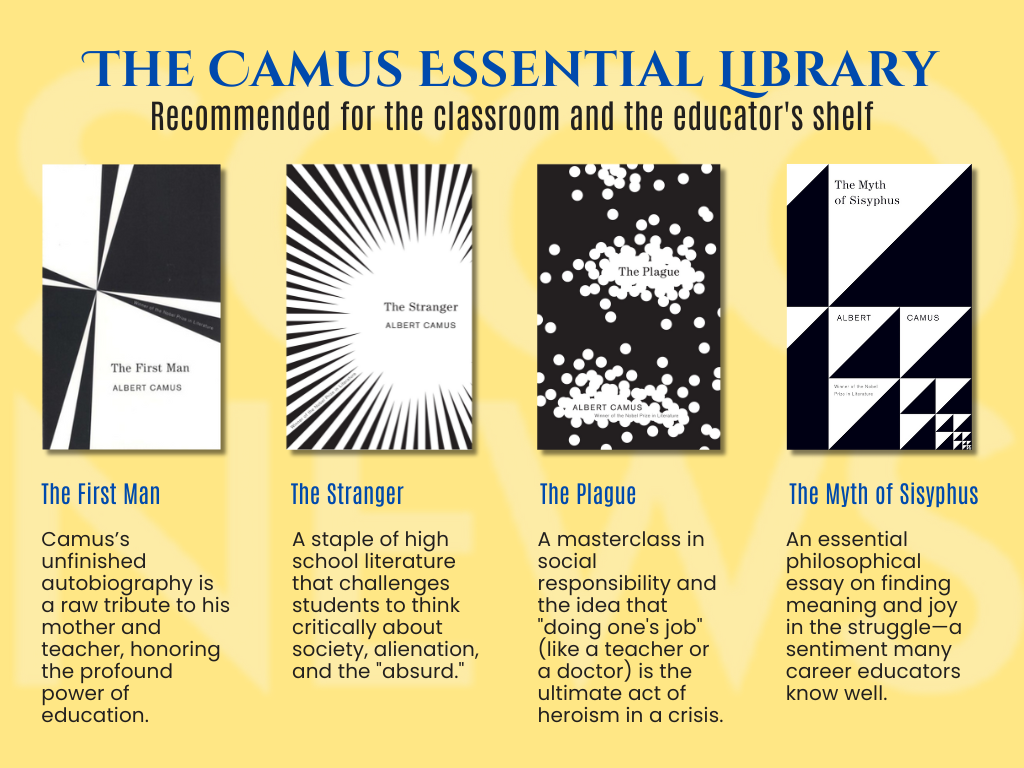
He was one of the youngest recipients ever. The world saw him as the conscience of his generation — the author of The Stranger, The Plague, The Myth of Sisyphus — a writer who had captured the absurdity and alienation of modern life.
The celebrations would soon follow: journalists, interviews, speeches, congratulations.
But Camus’ mind went somewhere else entirely.
After thinking of his mother, he thought of a man in a quiet classroom many years earlier — the teacher who had once looked at a poor, silent boy and seen a future no one else imagined.
That night, Camus sat down to write a letter.
A Childhood on the Margin
Born Into Poverty — French Algeria, 1913
To understand the letter, you must understand where Camus began.
Albert Camus was born in Mondovi, French Algeria, on November 7, 1913.
His father, Lucien, was killed in World War I before Albert turned one. His mother, Catherine, was partially deaf, nearly illiterate, and worked as a cleaner so her children could eat.
The family lived in a cramped apartment in the working-class Belcourt district of Algiers — no electricity, no running water, no books. Poverty wasn’t merely a condition; it was an entire world with sharply defined limits.
In such neighborhoods, school was a holding place. Working-class children learned the basics, then quit to earn wages. No one expected one of them to become a writer.
Camus sat in class: thin, watchful, quiet. A child easy to overlook.
Except one person didn’t overlook him.
The Teacher Who Refused to Let Him Disappear
Louis Germain’s Quiet Intervention
Louis Germain, Camus’ elementary school teacher, noticed something unusual about the boy:
- the intensity in his eyes
- the way he listened
- the unresolved questions beneath his silence
Germain decided that poverty would not define this child’s future.
He gave Albert extra help.
He handed him books — more than the boy had ever seen at home.
He stayed after school to explain ideas, encourage curiosity, and open windows Camus never knew existed.
Then came the decisive moment: the competitive exam for admission to lycée, the gateway to higher education — a path almost never offered to children of Camus’ background.
Germain tutored him personally.
He convinced administrators to let Albert sit for the exam.
He prepared him, defended him, believed in him.
Camus passed.
From that moment, his life opened: secondary school, university, journalism, Resistance work during World War II, philosophy, novels, essays — and eventually, worldwide recognition.
But beneath every achievement was that first act of belief.
Camus never forgot it.
The Letter of Gratitude
November 19, 1957
After the Nobel Prize announcement, Camus waited for the noise to fade.
Then he wrote to “Monsieur Germain.”
He thanked his teacher for the kindness and patience shown to a poor child who needed someone to see him. He confessed that when the Nobel news arrived, after his mother, his first thought was of Germain.
He wrote that without his teacher’s influence, none of his success would have existed. He wanted Germain to know that the time, the generosity, and the belief he had invested in that quiet boy lived on in the man the world now celebrated.
Camus ended with a line that has echoed through generations:
“I remain your grateful pupil.”
The Teacher’s Reply
A Humble Answer From Across the Years
Louis Germain, now an older man, wrote back.
He did not take credit for shaping a great writer.
Instead, he expressed the simple joy of having helped a student use his education well — that, he said, was the true reward of teaching.
Across decades and continents, they met again — not in a classroom, but in a pair of letters that captured the enduring connection between a teacher and a child who needed one.
The Final Pages of a Short Life
January 4, 1960 — The Last Journey
Just over two years after receiving the Nobel Prize, Camus died in a car accident on January 4, 1960. He was 46.
In his briefcase, investigators found the unfinished manuscript of The First Man, a novel in which he began exploring his childhood and the two figures who shaped him most deeply: his mother and his teacher.
Among his belongings were the letters from Louis Germain — carefully preserved, carried with him always.
Even at the height of fame, he kept tangible proof of who opened the door for him.
The Quiet Heroes Behind Every Success
The Camus–Germain Story Is Not Just Theirs
This isn’t only a story about Albert Camus and one extraordinary teacher.
It’s about the invisible army of Louis Germains everywhere:
- the teacher who gave you books because you were hungry for more
- the professor who took your questions seriously
- the mentor who wrote a recommendation letter that changed your life
- the adult who said: You matter. Keep going.
Most will never receive thank-you letters from Nobel laureates.
Many will retire never knowing which seeds they planted grew into forests.
Yet somewhere, a child they believed in is building a life once thought impossible.
What Camus Teaches Us
Success Is Never Self-Made
Camus’ letter cuts through the myth of self-made genius:
Look back.
Remember who saw you when you were invisible.
Say thank you while you can.
Albert Camus won the Nobel Prize at 43.
His first instinct wasn’t I earned this.
It was I owe this.
In a universe he believed lacked inherent meaning, Camus chose gratitude — a meaning built from memory, humility, and human connection.
He remembered the woman who cleaned houses so he could attend school.
He remembered the teacher who stayed late to explain how the world worked.
He remembered the moment someone reached across poverty and said:
You matter. You can go further.
And he said thank you.
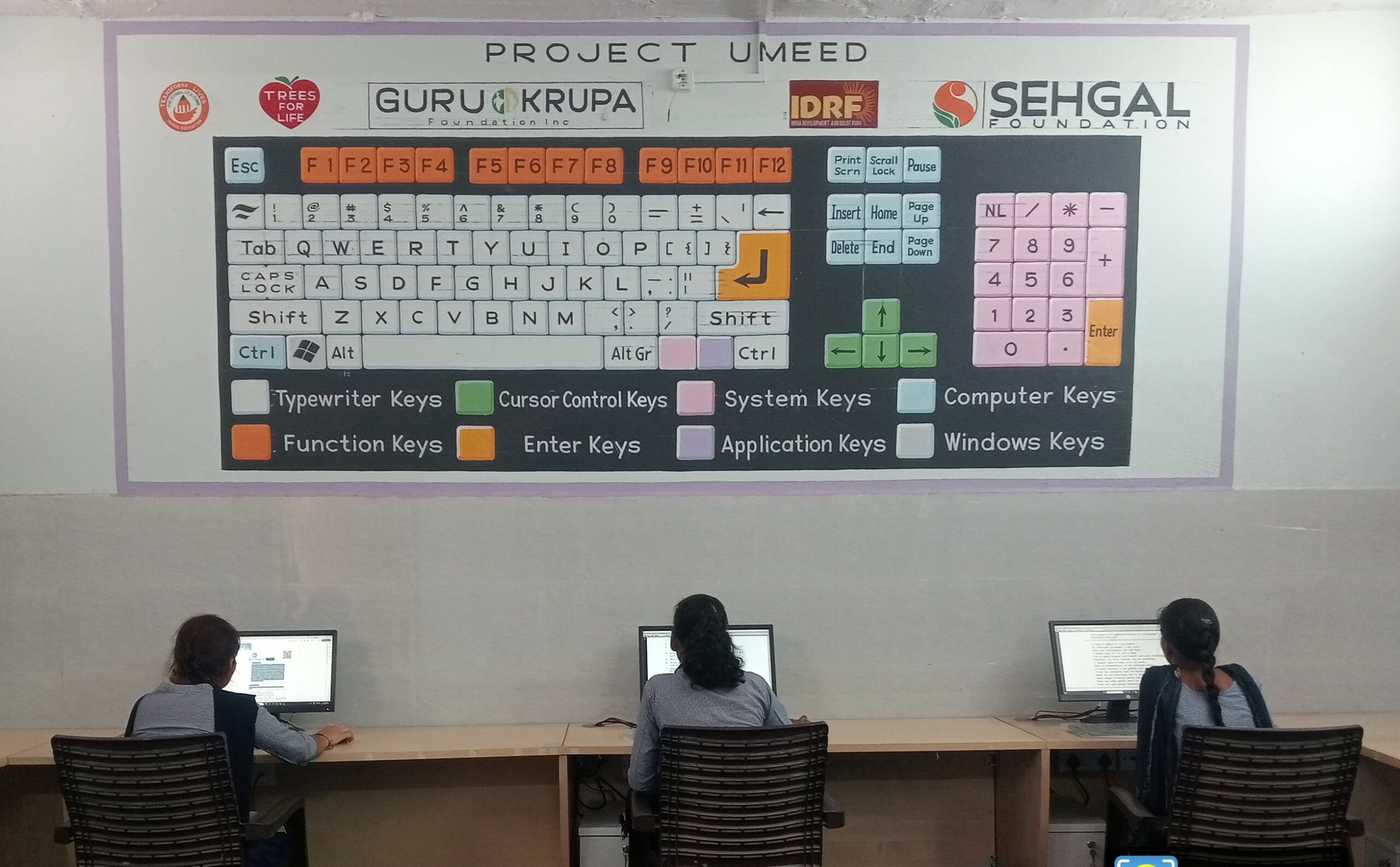
“I used to be hesitant to speak on stage, but after participating in the life skills sessions, I gained confidence. Thanks to Project Umeed,” shared Sanjana, student of Government Senior Secondary School, Kurthala, Nuh, Haryana.
The project Umeed creates equitable learning opportunities for rural schoolchildren by providing enhanced Digital and Life Skills Awareness (DLSA), leading to their overall learning and empowerment. The project is a partnership with Teach for Life supported by Trees for Life, India Development, and S M Sehgal Foundation, which is implementing the project on the ground.
The DLSA course has been operational at Government Senior Secondary School, located in village Kurthala, block Nuh, Haryana, since March 2025. Sixty students are enrolled in this course that is led and facilitated by a dedicated instructor.
The course covers essential topics related to learning about computers, technology, and cyber safety; developing important social and emotional abilities in children; building self–confidence, providing career guidance for goal setting; gaining knowledge about local participation for village development, familiarity with key government programs, and becoming informed, engaged citizens.
Topics such as “Me and My Self” and “Communication Skills” boost children’s confidence strengthen their thinking abilities and communication aptitudes.
Students Shine at the Youth Parliament
With this new learning and enthusiasm, two girl’s students, Sanjana and Renu from Govt. Sr. Sec. School, Kurthala, Nuh, who attend the DLSA classes, were selected for the Youth Parliament program. They were both excited and a little hesitant. They diligently prepared and practiced their skills on effective communication, brainstorming and role playing for over a month. Finally, on the day of the event, the entire auditorium erupted in applause as the girls confidently shared their thoughts on the Youth Parliament. Sanjana moderated the event as speaker, and Renu presented her views as finance minister. Other students participated as members of Parliament. The whole process further strengthened the students’ understanding of social issues and the democratic process. The event showcased the students’ development of confidence and leadership skills.
“I realized how important it is to present your thoughts clearly. This experience helped me hone my life skills, especially the topics of communication skills and ‘Me and Myself’ had a deep impact on me.” – Renu, student, Govt. Sr. Sec. School, Kurthala, Nuh, Haryana
The same course is being conducted at Government Senior Secondary School, Badarpur village, bock Nagina, district Nuh, with another sixty students. As part of their digital awareness sessions, students learned how to use computers and online platforms to access government programs and services. They were taught the importance of the Aadhaar card and guided through the process of downloading or updating their Aadhaar credentials. Students were made aware that their Aadhaar card serves to establish and safeguard their identity, enabling them to access government services and avail different benefits.
Earlier, the students had to depend on the Common Service Centre or Aadhaar Seva Kendras, located 2–3 km away from the village, to download or update government documents such as the Aadhaar card, ration card, or other certificates. Each time they had to update their documents, they had to pay a fee of as much as Rs 100, plus a transportation cost of Rs20. Even then, issues often remained unresolved, forcing them to make repeated trips.
With their newfound confidence in using technology, students no longer need to visit CSC centres and Aadhaar service centres repeatedly, thus saving both time and money. This experience has proven to be a significant step toward achieving autonomy.
The students’ parents and the village council were deeply impressed by this initiative. They expressed their gratitude to S M Sehgal Foundation and urged that more such digital awareness courses should run in the future, so that other people of the village can also become digitally empowered.
About the Authors: Indu Verma, Sr. Program Lead, Transform Lives one school at a time, S M Sehgal Foundation
Mahesh Sharan and Mosim Khan, Instructors, Transform Lives one school at a time, S M Sehgal Foundation

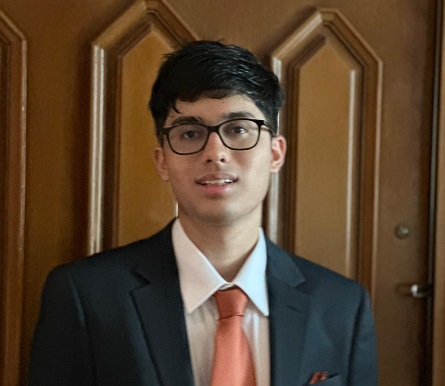
At just 17, Singapore-based student Ameya Meattle is proving that age is no barrier to impact. What began as a small idea to make education more accessible has evolved into a mission that is transforming how visually impaired learners experience learning and skill development.
Ameya founded Earth First at the age of 14 — a social enterprise that helps visually impaired individuals “earn and learn” by creating sustainable, eco-friendly products. Working with eight NGOs across India and Singapore, the initiative has trained more than 100 visually impaired students and launched over 23 sustainable product lines, from tote bags and jute placemats to macramé planters. Each design is adapted to provide hands-on learning opportunities and help trainees gain confidence in both craft and enterprise.
Beyond social entrepreneurship, Ameya has focused deeply on education and technology. He led a Python programming course for 50 visually impaired students, designing custom training modules that made coding accessible through screen readers and tactile tools. By introducing technology as a viable career pathway, Ameya hopes to help students move from manual tasks to high-skill, digital opportunities.
His work also extends into assistive technology research. Under the mentorship of Dr. Pawan Sinha at MIT, Ameya developed a VR-based diagnostic game to assess visual acuity in children — turning the process into an interactive experience rather than a clinical test. The tool is being piloted at MIT’s Sinha Lab and with Project Prakash in India, helping doctors evaluate and track visual development before and after eye surgeries.
In addition, during his internship at the Assistech Lab at IIT Delhi, Ameya worked on designing tactile STEM teaching aids, such as accessible periodic tables and coding tutorials for visually impaired learners. His goal, he says, is not just to innovate but to make scientific learning inclusive and joyful for all.
Ameya’s work highlights how education, empathy, and innovation can intersect to create a more equitable future — one where technology serves not just progress, but people.
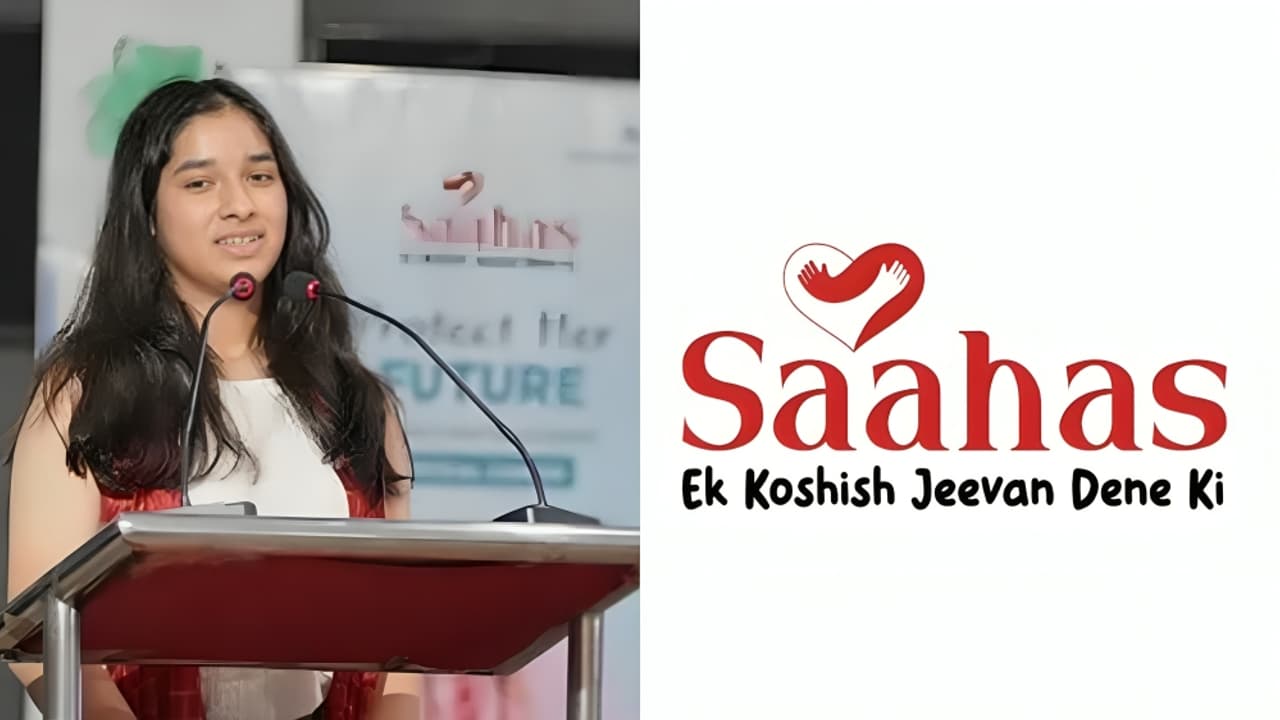
Saahas, a Delhi-based non-profit organisation founded by Class 11 student Navya Mrig of The Ram School, Moulsari, Gurugram, is creating awareness about organ donation and working to counter myths that prevent families from giving timely consent.
Established in 2024, Saahas focuses on every aspect of organ donation, particularly deceased organ donation where family approval must be granted quickly. The organisation highlights that hesitation and misinformation often stop families from making decisions that could save lives.

To address this, Saahas conducts workshops, myth-busting talks, and seminars in schools, resident welfare associations, hospitals, and workplaces. These sessions explain processes such as brain-stem death certification and the role of family consent in simple, clear terms. Each session concludes with practical guidance, ensuring participants leave with both knowledge and actionable steps.
The initiative has also developed resource kits with slide decks, facilitator notes, QR-linked checklists, and referral contacts to make it easier for schools and institutions to host repeatable sessions. Saahas partners with community groups and healthcare institutions to co-host Q&A sessions with clinicians and transplant coordinators, and also honours donor and recipient families through small ceremonies that highlight the impact of organ donation.
At its core, Saahas is designed to bring organ donation discussions into everyday spaces rather than waiting for the urgency of hospital decisions. By focusing on conversations in classrooms, community meetings, and staff rooms, the organisation aims to gradually build a culture where organ donation is better understood and more widely accepted.
Navya’s initiative reflects how young people are increasingly taking up important social causes and contributing to public awareness campaigns with structured, replicable models.
(News Source- ANI)
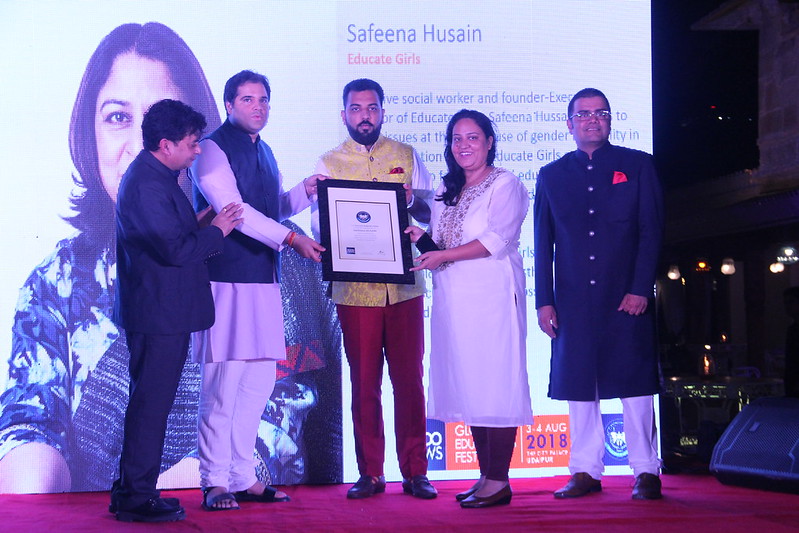
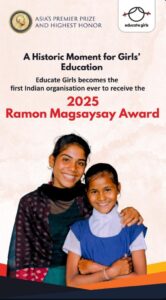
In a landmark recognition for Indian education and grassroots activism, Educate Girls, founded by Safeena Husain, has been named one of the recipients of the 2025 Ramon Magsaysay Award. Often referred to as Asia’s Nobel Prize, this honour highlights the organisation’s transformative work in enrolling and empowering out-of-school girls across some of India’s most remote and underserved regions.
The announcement marks a historic moment — Educate Girls is the first Indian organisation to ever receive this award, underscoring the global importance of its mission. Alongside Educate Girls, the other awardees include Shaahina Ali from the Maldives for her environmental work and Flaviano Antonio L. Villanueva from the Philippines. The formal ceremony will take place on November 7 at the Metropolitan Theatre in Manila.
Safeena Husain: From Teacher Warrior to Global Recognition
For ScooNews, this moment carries a special resonance. In 2018, Safeena Husain was celebrated as a Teacher Warrior, honoured for her vision of tackling gender inequality at the root by ensuring that every girl receives access to education. What started as a 50-school test project in Rajasthan has since scaled into an expansive movement spanning 21,000 schools across 15 districts, supported by a network of 11,000+ community volunteers known as Team Balika.
Her journey, as she has often recalled, was shaped by both personal and professional turning points. After studying at the London School of Economics and working in grassroots projects across Latin America, Africa, and Asia, Safeena returned to India, deeply aware of the entrenched discrimination girls faced. A family encounter in a village, where her father was pitied for not having a son, crystallised her resolve to fight for gender equity through education.
Breaking Barriers in Education
Educate Girls has gone beyond enrolling girls into schools. Its programmes aim at:
-
Increasing enrolment and retention of out-of-school girls
-
Improving learning outcomes for all children in rural districts
-
Shifting community mindsets through participation and ownership
The organisation has also pioneered innovative financing models such as the world’s first Development Impact Bond (DIB) in education, tying funding directly to learning outcomes.
Safeena has often spoken about the transformative power of education citing stories of girls who once had no aspirations simply because nobody asked them what they wanted to be, and who today, thanks to education, dream of becoming doctors, teachers, or even police officers.
Global Platforms, Indian Roots
Safeena’s vision has found resonance globally. In her TED Talk titled “A Bold Plan to Empower 1.6 Million Out-of-School Girls in India”, she emphasised that girls’ education is the closest thing we have to a silver bullet for solving some of the world’s toughest problems from poverty to health to gender inequality. In 2023, she was also awarded the WISE Prize for Education, cementing her reputation as one of the leading voices in education worldwide.
But even as Educate Girls receives international acclaim, its deepest impact continues to be felt in the dusty lanes of rural Rajasthan and Madhya Pradesh, where every single enrolment represents a victory against entrenched social barriers.
Why This Award Matters
The Ramon Magsaysay Award not only recognises Safeena Husain’s leadership but also places Indian NGOs on the global stage. It sends a powerful message: education is both the foundation of equity and the key to transformation. For India, a country with one of the world’s largest populations of out-of-school girls, this award validates years of struggle, innovation, and community-driven action.
For ScooNews, which first honoured Safeena as a Teacher Warrior in 2018, this moment is both proud and historic. It shows that when educators and changemakers stay rooted in their vision, their work can resonate far beyond borders.
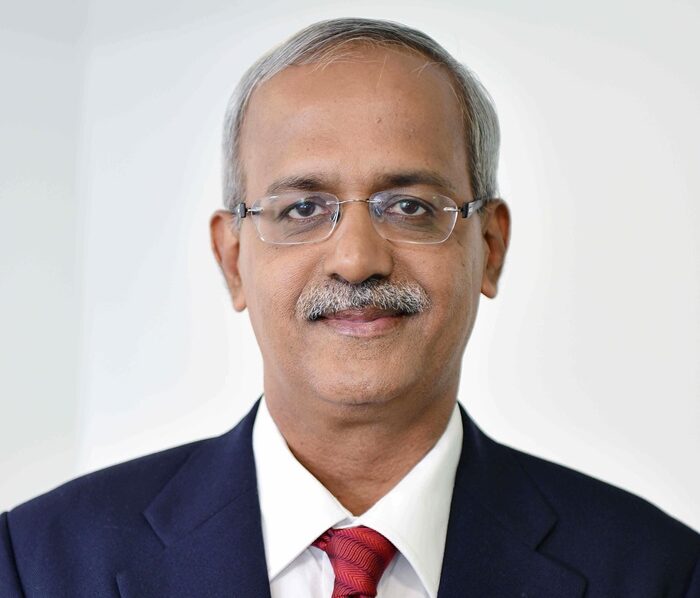
For most of his life, Sundar Iyer navigated the world of finance with precision and purpose. A seasoned corporate professional based in Mumbai, he understood the logic of balance sheets, the rhythm of quarterly targets, the language of ROI. But everything changed the day he stepped into a weekend volunteer role at a school for children with special needs. “There was no childhood story, no personal trigger,” he says. “It was just something I stumbled into — and couldn’t walk away from.”
What began as a weekend commitment slowly evolved into something far deeper. Every Saturday and Sunday, he would trade boardrooms for classrooms. These weren’t children who always spoke in words — some used gestures, some were non-verbal, some communicated with just their eyes — but every encounter left a mark.
“It was the experience of being there that planted the seed,” Sundar reflects. “You start seeing what no one else has bothered to see — the potential, the spark, the sheer dignity of their effort.”
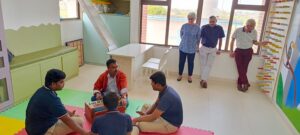
By 2010, that seed had grown roots. With two friends, he started Suryoday Trust in Nallasopara — not with a grand building or media launch, but with three rented shops and six students. Awareness of special needs was minimal in the area. Many parents hadn’t even heard terms like autism or intellectual disability. Some considered their children ‘uneducable.’ Others felt investing in them was futile. Sundar and his team went door to door, convincing families to give education a chance. “We weren’t just asking for trust,” he says. “We were challenging a lifetime of stigma.”
Fees were nominal — less than 15% of actual costs. Transportation was subsidised. Over time, word spread. Local doctors, therapists, and schools began referring children. By 2022, Suryoday operated out of 14 rented units. Then came the turning point — a purpose-built school building, opened in 2024, with support from RBL Bank and community donors. Today, the school serves over 105 children, with a vocational training centre in Bhayandar supporting another 25.
But Sundar insists Suryoday was never about infrastructure. “We weren’t building a school. We were building belief.” Each child, starting at age four, is placed in one of five levels — Early Intervention, Primary, Secondary, Pre-Vocational, or Vocational — based on NIEPID (National Institute for the Empowerment of Persons with Intellectual Disabilities) guidelines and internal evaluations. From age 12 onwards, children begin vocational exploration — housekeeping, IT, crafts, catering — and by 18, they graduate into full-fledged training.
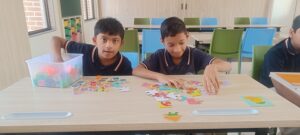
Certificates are optional. Life skills are not. “Parents wanted NIOS certificates,” Sundar says, “but we realised certificates don’t guarantee jobs. What matters is confidence, consistency, and employability.”
For students who cannot travel independently or whose families cannot support full-time employment, Suryoday is bringing work to them. Local employers are being onboarded. Home-based models are being explored. One initiative — Project Unnati — has students designing mugs, bags, and stationery that are sold through partner networks. The earnings go straight to the children. “Some earn ₹3,000 to ₹5,000 a month,” says Sundar. “It’s not charity. It’s income. It’s identity.”
What makes Suryoday unique is the ecosystem. Donors are not visitors. They’re collaborators — often participating in classroom sessions and pre-vocational activities. Teachers are required to have a B.Ed. in Special Education. Trustees are accountable — each must raise at least ₹3 lakh a year through donations or networks. “It’s not about wealth,” Sundar clarifies. “It’s about ownership.”
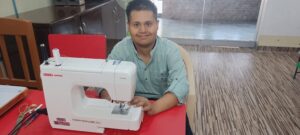
In 2018, Sundar digitised the NIEPID curriculum with support from an IT firm. The goal? To automate IEPs (Individualised Education Plans), track progress, and ease the administrative load. The platform supports 14 Indian languages and could soon be adopted nationally. An MoU with the Ministry of Social Justice is already in place, with rural schools receiving it for free and urban ones paying a nominal fee. “It’s about scaling quality,” Sundar says. “If we want inclusion to work, it has to be efficient.”
Sundar’s systems thinking has also shaped succession planning. With most trustees now over 60, a younger advisory board has been formed. Even the principal — a certified special educator — is being mentored for a future board role.
“This isn’t about me,” he says. “The work must outlast the founder.”
And yet, his presence lingers in every corner of the school — in the meticulous planning, the empathy-first culture, the high standards. He knows the children by name. He still joins donor visits. He walks through classrooms, not as a founder, but as someone still moved by the smallest progress. “When a child uses a new word, or just sits through a session calmly — that’s everything.”
His dream is simple, but not small. To create a world where every child, regardless of ability, is seen. Where financial dignity is a right, not a reward. Where employment, therapy, and belonging are not extras, but essentials. “Even if a child isn’t conventionally employable,” Sundar says, “they deserve to earn, to contribute, to matter.”
What began as one man’s weekend experiment is now a full-scale movement. And it all started with belief — belief in children, belief in change, and belief in the quiet, unstoppable power of one.
Read the full story in our latest issue – Teacher Warriors 2025.
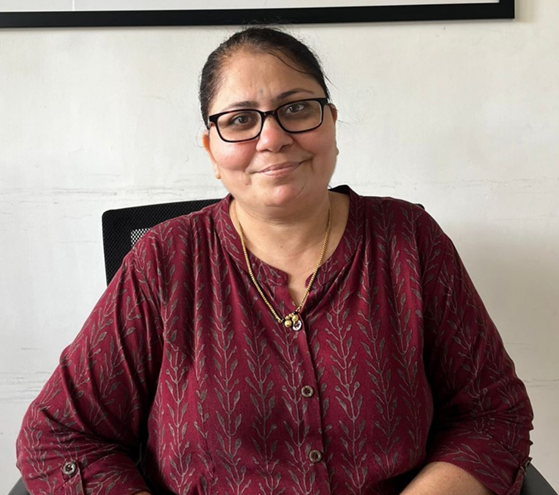
For Sandhya Ukkalkar, the path to becoming an educator in the field of special education was never just a professional decision — it was deeply personal. It began in the quiet, determined moments of motherhood, as she searched for a school that could truly understand her son’s unique needs. Diagnosed with Autism and Intellectual Disability, he required more than care — he needed acceptance, structure, and a nurturing environment.
In 1996, a compassionate doctor guided her to Jai Vakeel School. From the moment her son was enrolled, Sandhya witnessed a transformation that brought not only relief, but hope. Encouraged by the school’s doctor, she enrolled in a special education course, and by June 2000, she returned to the same institution — this time as a teacher. Over the years, she grew into the role of Principal of the Autism Centre at Jai Vakeel, dedicating her life to children who, like her son, simply needed to be seen, understood, and supported.
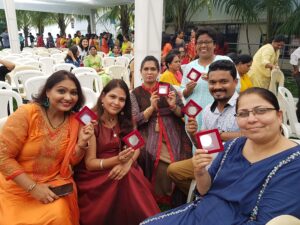
What sets the Autism Centre apart is not just its experience or legacy, but its guiding philosophy: a child-led, strengths-based approach that celebrates neurodiversity. Here, each learner follows an Individualised Education Plan (IEP), supported through small groups, one-on-one sessions, and methodologies that include Applied Behaviour Analysis (ABA), Sensory Integration, and Visual Supports. The goal isn’t to fit children into a mould but to honour their unique ways of engaging with the world.
Serving children aged 3 to 18, the centre focuses on early intervention, functional academics, and pre-vocational training — all grounded in a multisensory curriculum aligned with NCF and NCERT. For the 31 students with Autism and Intellectual Disability who currently attend, the emphasis lies on building communication and sensory skills that can translate into real-world independence.
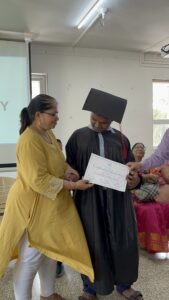
Sandhya believes collaboration is the cornerstone of success. At the centre, therapists, educators, parents, and healthcare professionals work as a unified team. Over 75% of the children served come from low-income families, and many receive free or subsidised education and therapy through rural camps and outreach programs.
“These aren’t luxuries,” Sandhya insists, referring to tools like sensory rooms and assistive tech. “They’re essentials.”
And the results are deeply moving. Children who once struggled with attention now engage joyfully in sessions. Some who were non-verbal begin to use gestures, visuals, and eventually words. Others transition into mainstream schools. One student, now preparing for CA exams, once needed foundational classroom readiness support. These are not isolated cases — they are the product of consistent, individualised attention and belief.
For Sandhya, the real victories come in the smallest moments: a child pointing to a picture to communicate, another who finally sits through a full session, or a parent whispering “thank you” with tears in their eyes. These everyday breakthroughs are everything.
Her personal experience as a parent gives Sandhya a unique lens. She understands the fears, hopes, and quiet triumphs families carry. That’s why parental involvement is not optional at the centre — it’s essential. Families regularly participate in progress meetings, classroom observations, and hands-on training. Home goals — practical and doable — are shared, and customised visual aids help ensure continuity beyond school hours. Emotional support is offered just as readily as academic strategies.
Still, the challenges are real. There is a pressing shortage of professionals trained in autism-specific interventions, especially for students with high support needs. Assistive communication tools are expensive and often out of reach. Space is limited, even as demand grows. Sandhya dreams of expanding — with dedicated sensory rooms, inclusive playgrounds, and classrooms designed for neurodivergent learners. “These help children feel safe, calm, and ready to learn,” she says.
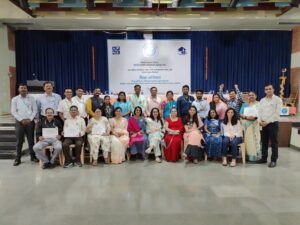
Her vision for the future is clear: inclusion that goes beyond tokenism. She dreams of classrooms where neurodivergent children aren’t merely accommodated, but genuinely valued — where belonging is a given, not a gift. To get there, she believes we must build on three pillars: Mindset (a shift from awareness to true acceptance), Capacity (training educators, therapists, and families), and Belonging (where every child is emotionally safe and socially included).
As she looks ahead, Sandhya hopes to increase enrolment, offer structured training for parents and teachers, partner with inclusive schools for smooth transitions, and support students well into adulthood — through vocational training, community participation, and self-advocacy.
Her journey is a reminder that special education isn’t just about what children need — it’s about what they deserve.
Because, as Sandhya says,
“In every smile, there’s a victory. And every child deserves to smile.”
Read the full story in our issue of Teacher Warriors 2025 here.


The Early Years Are Not Preparation for School. They Are Preparation for Life.

AI is not replacing teachers. It is exposing what schools forgot to teach

Shiv Nadar Foundation and Oxford Launch India’s Best Teachers’ Awards

Before Wembley, There Was Panchgani: The School That Shaped Freddie Mercury Opens a Gallery

Deregulate education today to be able to achieve Viksit Bharat in 2047

JBCN International School, Oshiwara, Welcomes Gregor Norman Alexander Polson as The New Head of School

The Last Thing AI Cannot Take: Saurav Sinha on Humanity, Boarding Schools, and the Generation We Are Getting Wrong

Why Indian schools are struggling to articulate who they are…

United Learning League Raises ₹100 Crore to Build India’s Next IB School Network

From Marks to Meaning: Why Schools Need Holistic Education?

A school in Nallasopara just built an entire AI innovation ecosystem

Dr Arunabh Singh Named ARISE President-Elect at Varanasi Meet

The Exceptional Indian

Daring to Dream: Six Years in the Heart of Rural Rajasthan

Tapas Project Shaala 2026 to Spark National Dialogue on Autonomy, Curiosity and Community in Education

Judicial Guardrails: How the J&K High Court’s Fee Regulation Verdict Redraws the Rules for Private Schools

Supreme Court’s Landmark Judgment for Schools: Menstrual Health is a Fundamental Right

Beyond the First Bell: 5 Key Takeaways for School Leaders from Economic Survey 2025–26

Inclusive Education Summit 2026: Designing the Future of “Learner-Centric” Education

Building a Healthier India: Why School Health Programs Are Essential

Before the Nobel, There Was a Teacher

What the Indian Army Teaches Our Children Beyond Textbooks

Umeed: A Ray of Hope for Better Tomorrow

AI to Become a Core Subject from Class 3: India’s Big Leap Toward a Future-Ready Generation

Dharav Utsav to Celebrate Rajasthan’s Cultural Heritage and Local Talent
AI is not replacing teachers. It is exposing what schools forgot to teach
The Early Years Are Not Preparation for School. They Are Preparation for Life.
SGEF2023 | Special Address by Rama Datt, Trustee, Maharaja Sawai Man Singh II Trust, Jaipur

ScooNews | After Movie | ScooNews Global Educators Fest 2023

Aftermovie | NIES2 UP Chapter | 21 Jan 2023

WEBINAR | Gamification in Education: How Digital Badges Can Boost Student Motivation and Engagement

ScooNews | WEBINAR| Importance of Physical Activity for Children at School | Plaeto

SCOONEWS | WEBINAR | WHY DIGITIZING YOUR SCHOOL IS A MUST | TEACHMINT

Keynote Address | Lakshyaraj Singh Mewar

Anurag Tripathi, Secretary, CBSE at SGEF2022

How schools can nurture every student’s genius

Aftermovie | SGEF2022 | Jaipur

Li Andersson | Minister of Education | Finland

Anurag Tripathi, Secretary, Central Board of Secondary Education (CBSE) discusses NEP2020
ScooNews | Early Ed Asia 2019 | Aftermovie
#PodarECEconf : Pursuing quality ECE
#CBSE Class XII #Results #Highlights
The interesting story of India’s educational system | Adhitya Iyer
A young scientist’s quest for clean water
The Danger of Silence: Clint Smith
National Digital Library of India is an initiative by HRD Ministry

Remembering Kalpana Chawla on her birthday!
Message from Sadhguru for Students!
Message from Sadhguru for Students!

The Untapped Genius That Could Change Science for the Better
Eddy Zhong: How school makes kids less intelligent TEDxYouth@Beacon