Education
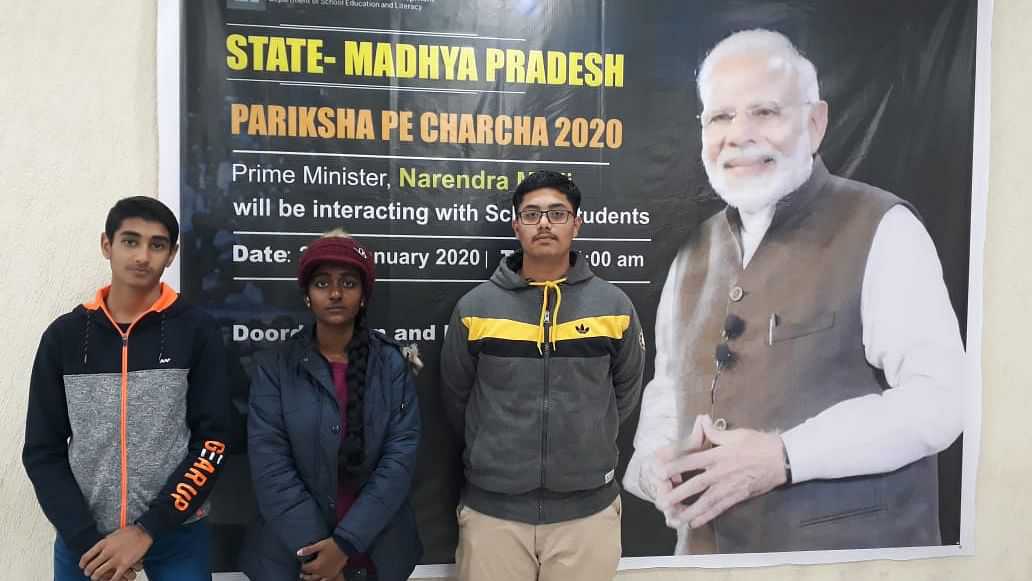
PM interacts with students at “Pariksha Pe Charcha 2020” at Talkatora Stadium, New Delhi.
The Prime Minister, Shri Narendra Modi, today, interacted with students as part of Pariksha Pe Charcha 2020 at Talkatora Stadium, New Delhi. 50 Divyang students also took part in the interaction programme. This year too, students from across the country participated in the event.

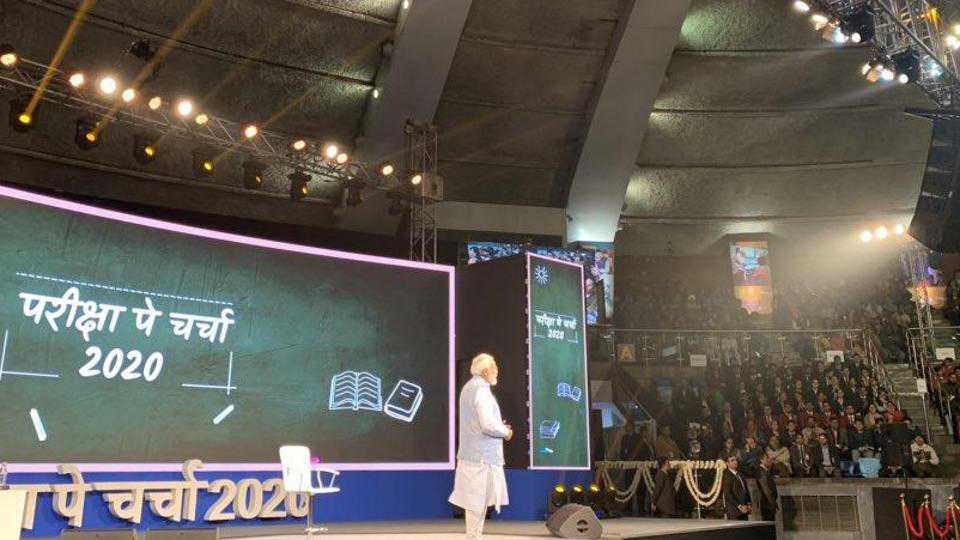
The Prime Minister, Shri Narendra Modi, today, interacted with students as part of Pariksha Pe Charcha 2020 at Talkatora Stadium, New Delhi. 50 Divyang students also took part in the interaction programme. The interaction, which lasted for over ninety minutes, saw students seeking guidance on various issues of importance to them from the Prime Minister. This year too, students from across the country, and also Indian students residing abroad, participated in the event.
At the outset the Prime Minister wished all the students for a prosperous new year and a new decade. Explaining the importance of the decade, the hopes and aspirations of the current decade rest on those kids who are in their final years of schooling in the country.
He said, “In whatever the country does in this decade, those kids who are in 10th, 11th and 12th standards now have a very great role to play. To make the country reach new heights, to achieve new hopes, all this is dependent on this new generation”.
Before beginning the interaction, the Prime Minister said notwithstanding that he attends various events and programmes, the one event which is dear to his heart is the Pariksha Pe Charcha.
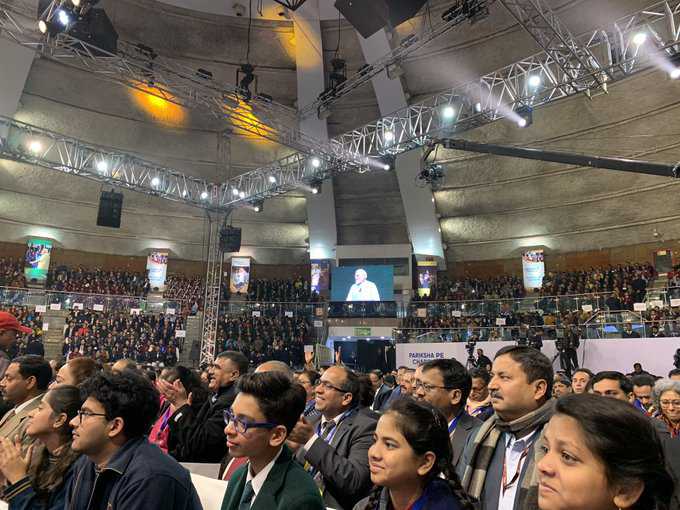
“As Prime Minister one gets to attend numerous types of programmes. You get to learn a lot in such interactions. Each of them provides a new set of experiences. But, if someone asks me about the one programme that touches my heart the most, I would say it is this Pariksha Pe Charcha. I also love attending Hackathons. They showcase the power and talent of India’s youth”, he said.
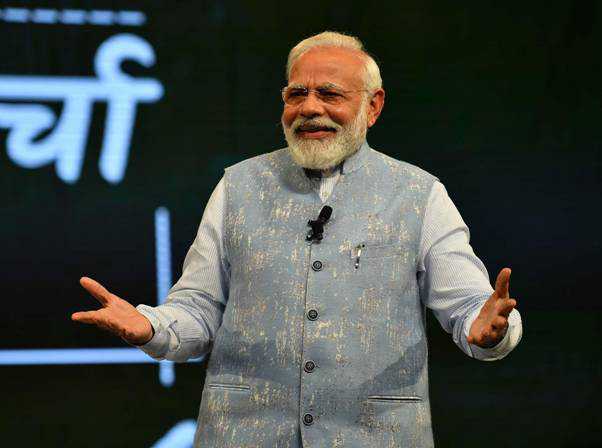
Dealing with demotivation and mood swings:

To a question from a student and losing interest while studying, the Prime Minister said most often students get demotivated due to factors that are external to them and also as they try to attach too much significance to their own expectations.
Prime Minister asked the students to find out the reason for the demotivation and ponder over how to deal with it. He gave the example of the recent issue of Chandrayaan and his visit to ISRO.
“Motivation, demotivation are very common. Everyone goes through these feelings. In this regard, I can never forget my visit to ISRO during Chandrayaan and the time spent with our hardworking scientists.
He said, “We should not look at failures as setbacks or stumbling blocks. We can add enthusiasm to every aspect of life. A temporary setback doesn’t mean that we cannot succeed in life. In fact a setback may mean that the best is yet to come. We should try to convert our distressed situations as stepping stones for a bright future”
The Prime Minister also gave examples of how cricketers Rahul Dravid and V V S Laxman batted in difficult situations during India – Australia match in 2001 to clinch victory for India from the jaws of defeat.
He also talked about how India bowler Anil Kumble bowled to India’s glory notwithstanding his injury.
“This is the power of positive motivation”, he said.
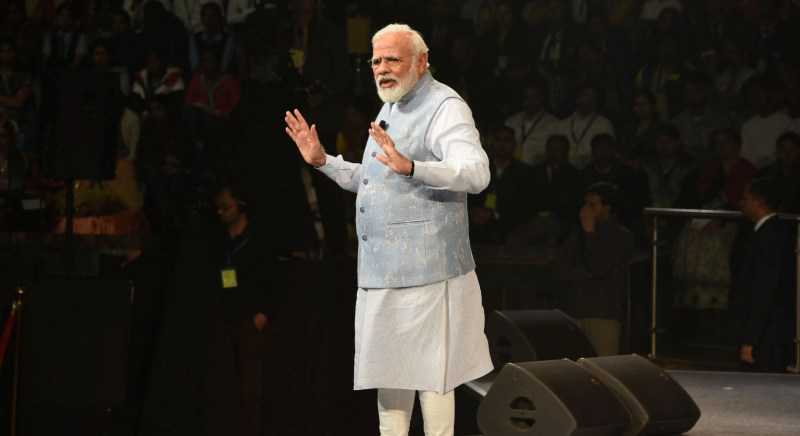
Balancing Extra- Curricular Activities and Studies:
To a question on how to balance studies and extracurricular activities, the Prime Minister said the importance of co-curricular activities in a student’s life cannot be understated.
He said, “Not pursuing extra-curricular activities can make a student like a robot”.
But he also said that that balancing studies and extracurricular activities would require a better and optimal time management by the students.
“Today there are plenty of opportunities and I hope youngsters make use of them and pursue a hobby or an activity of their interest with proper zeal”, he said.
However he also cautioned the parents not to make the extra-curricular interests of their children a fashion statement or a calling card.
“What is not good is when the passion of the children become fashion statements for parents. Extra-curricular activities needn’t be glamour driven. Let each child pursue what he or she likes”, he said.
Whether scores are all that matter:
On a question on how to score marks in examinations and whether they are the determining factor, the Prime Minister said, “Our education system determines our success based on our performance in various exams. Even though we focus our attention on scoring good marks and our parents too, exhort us towards it. “
Saying that there are several opportunities today, he asked the students to come out of the feeling that success or failure at exams determines everything.
“Marks are not life. Similarly examination is not the determining factor for our whole life. It is a stepping stone, an important stepping stone in life. I pray to parents don’t tell them that this is everything. If it does not happen, don’t behave as if you lost everything. You can go to any field. There are umpteen opportunities”, he said.
Exams are important, but exams are not life. You should come out of this mind-set, he said.
Importance of Technology in Education
To a question on the importance of technology and its use in education, the Prime Minister said,
While asking the students to keep themselves updated with the latest in technology, the Prime Minister also urged them to be careful of the perils of its misuse.
“Fear of technology is not good. Technology is a friend. Merely knowledge of technology isn’t enough. It’s application is as important. Technology is a part of our daily lives, but if we misuse it, it robs our valuable time and resources”, he said.
Rights Vs Duties
To a question on what are the rights of the students and on how to make the citizens aware of their duties, the Prime Minister said that an individual’s rights are embedded in his duties.
Giving an example of a teacher, he said, if a teacher performs his duties then he is fulfilling the rights of the students.
Referring to what the Father of the Nation opined on the issue, the Prime Minister said, “Mahatma Gandhi said that there are no fundamental rights but fundamental duties”.
“Today, I am talking to students who would be playing a key role in India’s development in 2047, when we mark a hundred years since independence. I hope this generation takes it upon themselves to act on some of the Fundamental Duties enshrined in our Constitution”, he said.
How to deal with pressure and expectations from parents and teachers?
On how to deal with the pressure and expectations from parents and teachers, the Prime Minister urged the parents not pressurize the students but to pursue with them.
“The way ahead lies in pursuing, not pressuring children. Inspire children to do things that bring out their inner potential”
Best time to study and blanking out during the exam and Fear of Board Exams
On a question on what is the best time to study, the Prime Minister advised that ample rest is as important as the study itself.
He said, “While mind is as fresh early in the morning as the sky after rain, one should only follow that routine in which one is comfortable”
On the issue of sudden blanking out during exams, the Prime Minister asked the students to be thorough in their preparation.
“I would urge students to be confident about their own preparation. Do not enter the exam hall with any sort of pressure. Do not worry about what others are doing. Have faith in yourself and focus on what you’ve prepared”, he said.
Future Career Options
On the subject of future career options, the Prime Minister asked the students pursue their heart and work with zeal to deliver for the nation and its development
“Careers are very important, everyone has to take some responsibility. We can always contribute to the nation while delivering our responsibilities”, he said.
Online competition in ‘short essays’ was launched for students of classes 9 to 12 for the third edition of Prime Minister's Interaction Programme "ParikshaPeCharcha 2020”. The entries for the competition were invited online from 2nd December, 2019 to 23rd December, 2019 through www.mygov.in More than 3 lakh children registered themselves out of which over 2.6 lakh students participated in the competition. 1.03 lakhs students had participated in the competition in 2019. Selected winners attended Pariksha Pe Charcha 2020 and interacted with Prime Minister Shri Narendra Modi.
A painting and poster making competition were held on exam related issues for CBSE & KVS school students and around 725 posters and paintings were received. Around 50 were selected and exhibited before the Prime Minister during the Pariksha Pe Charcha 2020.







Education
Before Wembley, There Was Panchgani: The School That Shaped Freddie Mercury Opens a Gallery


Long before stadiums, anthems and global fame, Freddie Mercury was a student in the quiet hill town of Panchgani. In a move that reconnects that origin story with the present, St. Peter’s School Panchgani, A Residential & Day School has set up a dedicated on-campus gallery chronicling the formative years of its most celebrated alumnus, best known as the frontman of Queen.
The initiative, conceptualised as part of the school’s effort to document and reclaim its own legacy, stems from a simple but powerful idea: that stories of global significance often begin in places that rarely receive that recognition. By bringing Freddie Mercury’s early years into focus, the school aims to bridge that gap between a globally celebrated icon and the lesser-known environment that helped shape him.
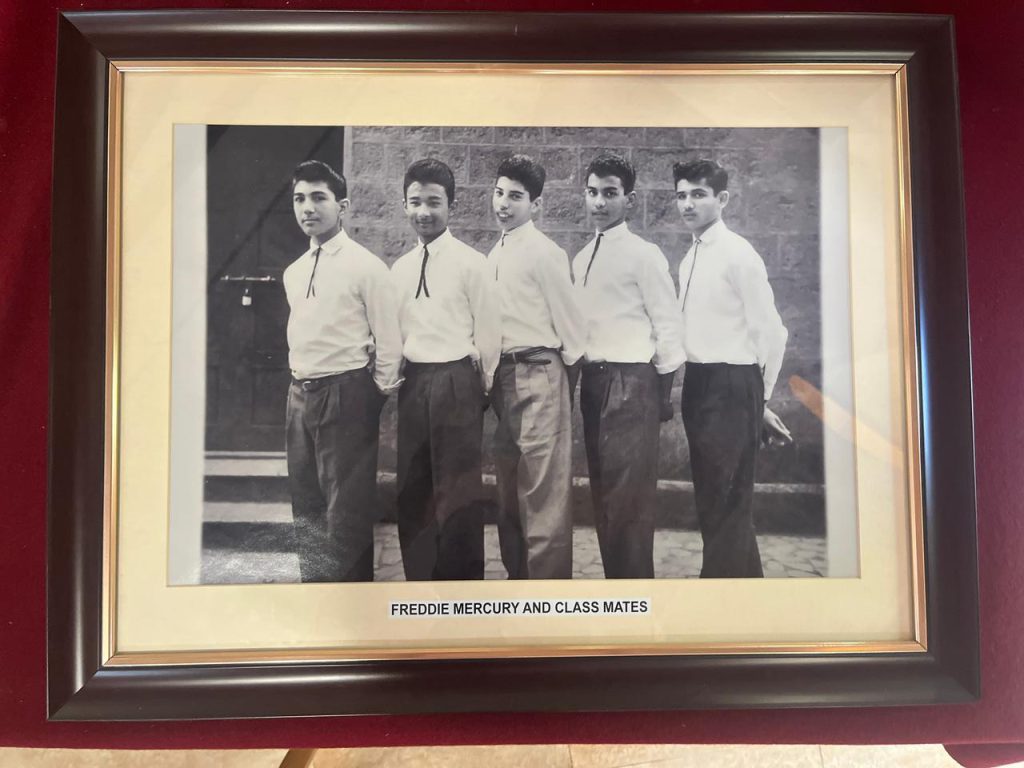
The gallery brings together archival photographs, references to his time at school, and narrative installations that trace a journey few fully associate with India: that of a young boy, far removed from the global spotlight, finding his voice in the hills of Maharashtra. The gallery features a curated collection of archival photographs, reproduced school records, personal anecdotes, and narrative installations tracing Freddie Mercury’s formative years at St. Peter’s School Panchgani.

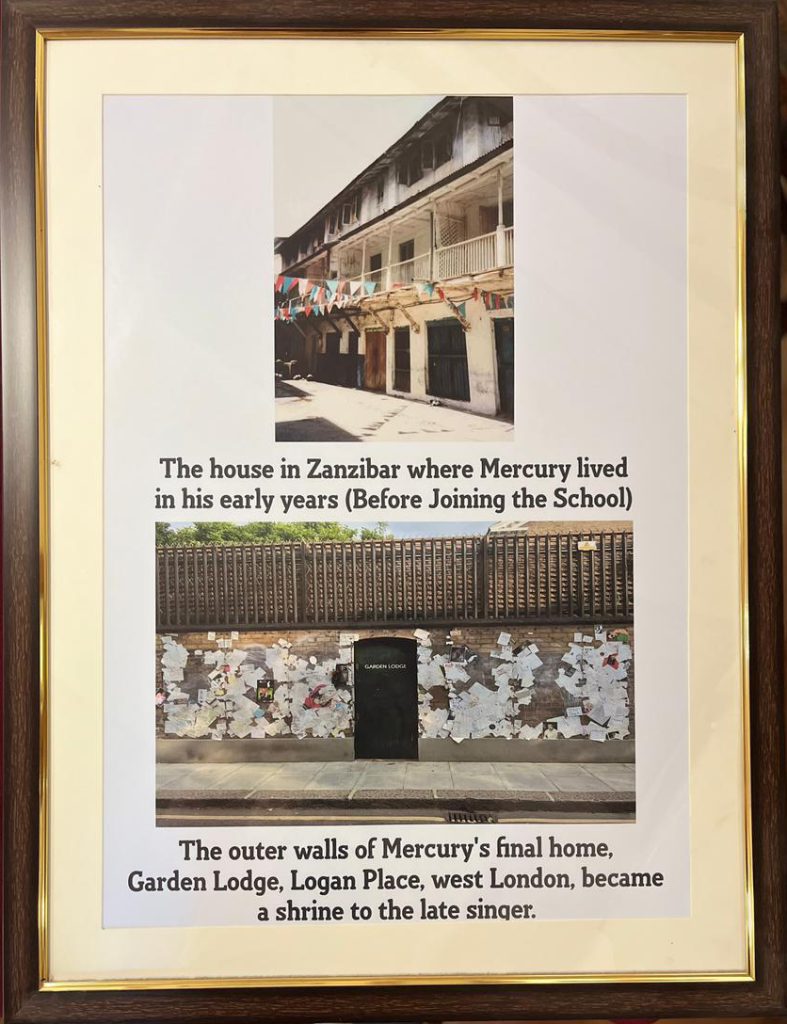
Among the highlights are references to his involvement with “The Hectics,” the school band he formed during his time in Panchgani, along with showcases exploring his early interest in piano, choir performances, and music-led extracurricular activities that shaped his artistic identity long before global fame. The exhibit also contextualises his journey from Zanzibar to Panchgani, offering visitors a glimpse into his life as a boarding student in India through recreated storytelling elements, vintage-inspired displays, timelines, and memorabilia-inspired installations.
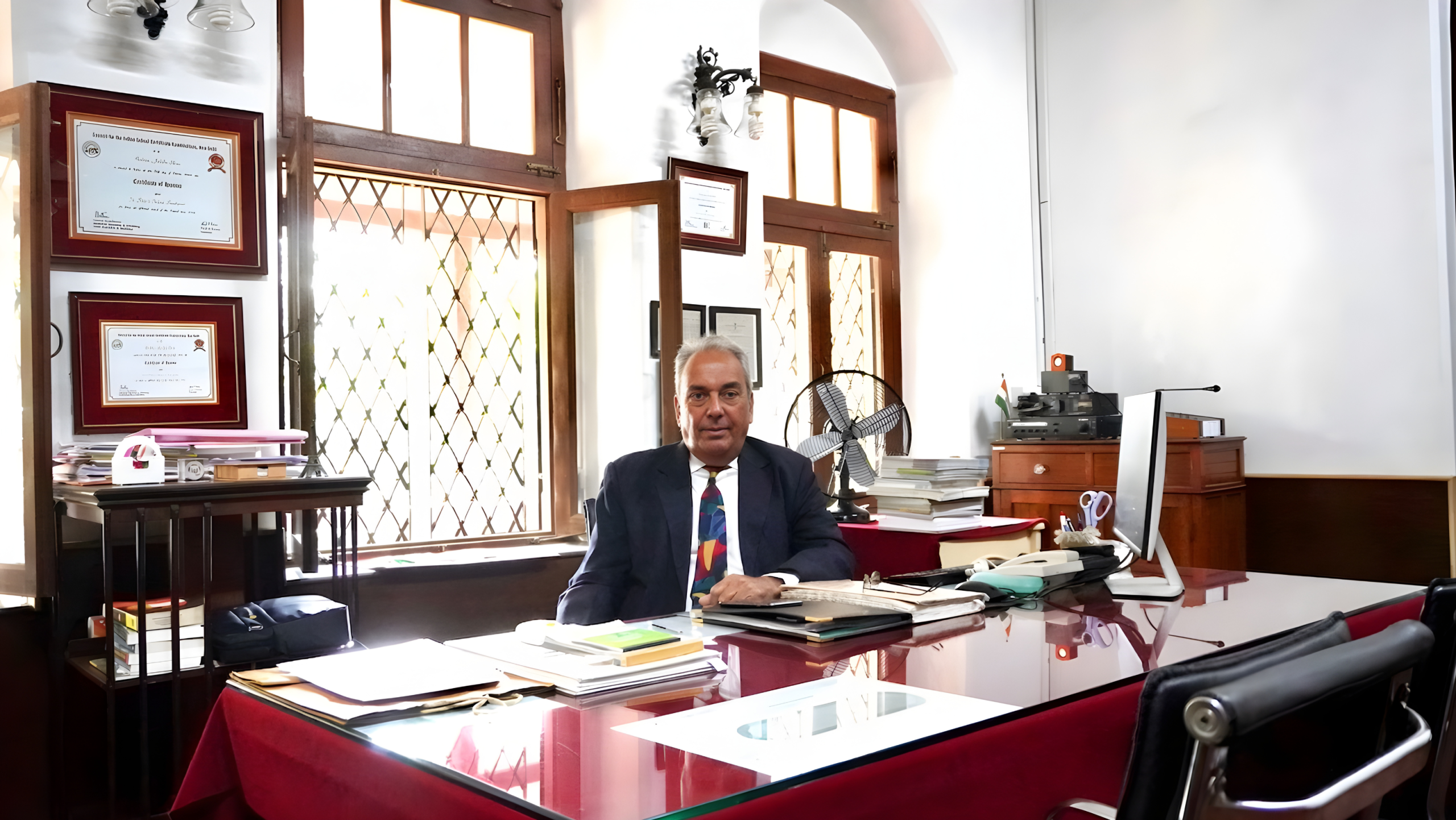
Mr. Brian Robbins, Principal at St. Peter’s School Panchgani, A Residential & Day School
“There is something deeply moving about knowing that a voice which would one day resonate across the world first found its footing here. Walking through this campus, you can almost picture a young student, curious, observant, perhaps restless, taking in the world around him, long before he became Freddie Mercury. This gallery is not about celebrating fame in hindsight; it is about understanding beginnings. We want our students to recognise that greatness is shaped quietly over time, through exposure, discipline, and the freedom to be different.”

For decades, St. Peter’s has been a preferred choice for parents considering its legacy and deep commitment to education. The creation of this gallery marks a subtle but significant shift, an effort to bring that legacy into the public eye while reinforcing the school’s longstanding emphasis on individuality and creative expression. In doing so, St. Peter’s is not just revisiting its past; it is repositioning it.
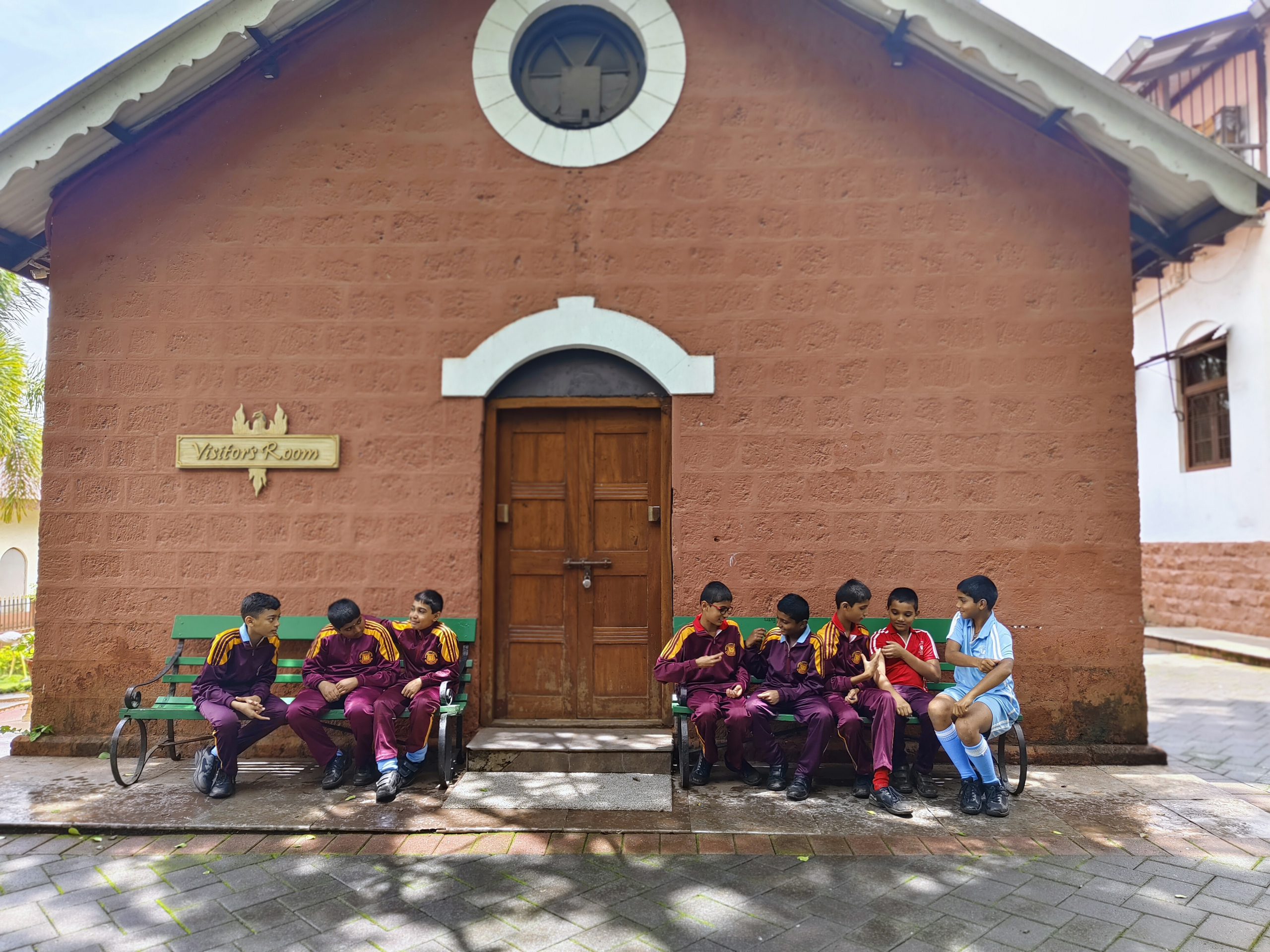
At a time when institutions are increasingly looking to their histories for meaning and relevance, this quiet unveiling becomes something larger: a reminder that global cultural icons are often shaped in deeply local, deeply human settings.
St. Peter’s School Panchgani, A Residential & Day School, is a co-educational residential institution established in 1904, offering the ICSE curriculum on a sprawling 56-acre campus in the Western Ghats. Originally established as an all-boys boarding school, the institution has evolved into a co-educational campus while retaining its longstanding legacy and residential ethos. Known for its focus on holistic development, the school combines academic rigour with a wide range of sports and co-curricular activities. With dedicated residential facilities for boys and girls, St. Peter’s fosters independence, discipline and character, creating an environment that supports well-rounded growth.
Education
A school in Nallasopara just built an entire AI innovation ecosystem
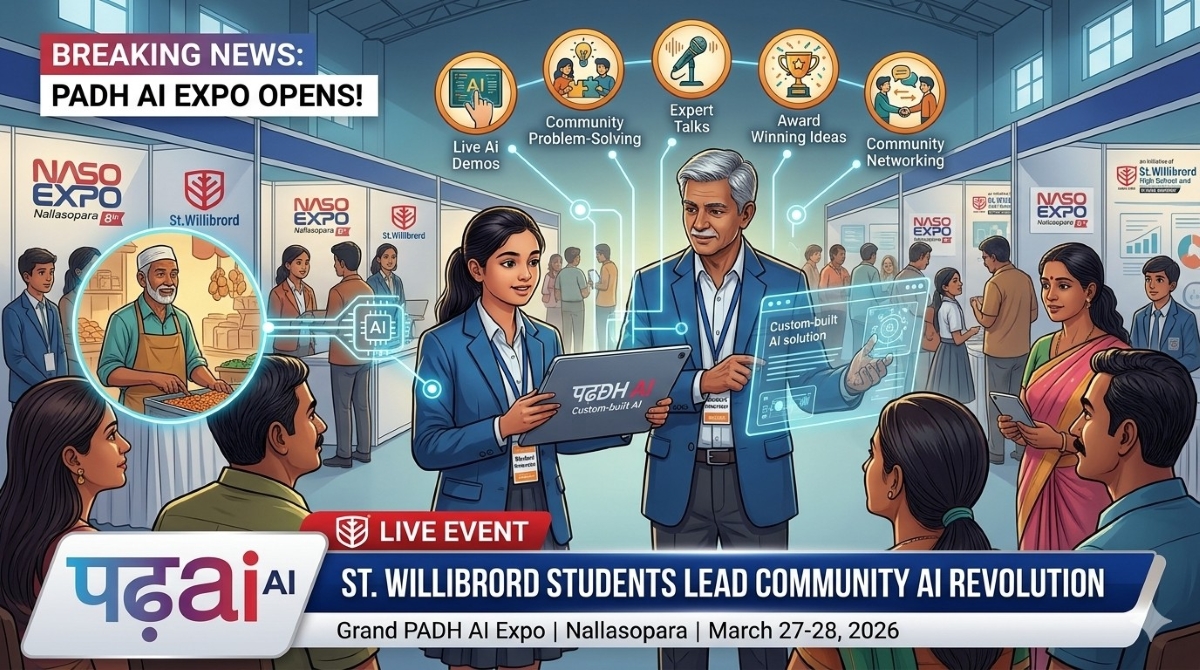
In Nallasopara, a quiet shift in education is underway. At the PADH AI Expo—part of the NASO Expo and an initiative by the St. Willibrord Group—students aren’t just learning about artificial intelligence; they’re building real solutions for their communities, turning classrooms into launchpads for innovation, agency, and real-world impact.
NALLASOPARA, MAHARASHTRA — March 26, 2026
Walk into the PADH AI Expo expecting a typical school science fair, and you’ll leave with a completely different picture.
There are no poster boards. No rehearsed speeches. No students nervously reciting facts they memorized the night before. Instead, a girl is showing a local shopkeeper how her AI tool could help him track inventory. A group of boys has built something for elderly care at home — not a concept, an actual working prototype. Another team is putting together personalized learning tools for their classmates.
It takes a minute to register: this isn’t an exhibition. These kids are solving real problems.
What’s happening at St. Willibrord?
The PADH AI Expo is part of the larger NASO Expo series, hosted by St. Willibrord High School and Junior College in Nallasopara — an institution run by the St. Willibrord Group of Schools. Over 160 students have set up 48 stalls, and what they’re showcasing isn’t academic work dressed up for display. It’s rooted in the daily lives of the people around them — local vendors, families, students who need better learning support, and community gaps that nobody else has gotten around to fixing.
The school’s guiding idea, championed by Willibrord George who leads the NASO Expo series, is almost disarmingly simple: stop underestimating students. Trust them to think, trust them to build, trust them to figure out what needs fixing and go do something about it.
Why this feels different
For years, AI in schools has been a cautious conversation — should students use it, will it replace learning, is it too soon? At St. Willibrord, that debate feels oddly outdated. The students aren’t debating whether to use AI. They’ve moved past that. The question they’re asking now is: what problem can I actually solve with this?
That shift — from “can I use this?” to “what can I build with this?” — is the real story here.
What educators are noticing
School leaders from across India have been turning up, and not just to watch. They’re trying to understand what’s different about this place. The contrast is hard to ignore:
| From | To |
|---|---|
| Learning about the world | Engaging with the world |
| Consuming technology | Directing technology |
| Classroom exercises | Community impact |
Most schools still treat technology as something to be studied. Here, students are pointing it at real problems and seeing what comes out.
Event Details
- Dates: March 27–28, 2026
- Time: 4:00 PM – 7:00 PM
- Venue: St. Willibrord High School, Topaz Center, Tulinj Road, Nallasopara East
- Entry: Free (QR-based registration at venue)
The bigger question
We spend a lot of time asking what the future of education should look like. Maybe a better question is why we’re still treating it as something that needs to be designed from the top down, rather than built — right now, by students who already have the tools and the ideas — from the ground up.
In Nallasopara, a school figured that out. And 160 students showed up to prove it.
Education
The Exceptional Indian
India has nurtured world-class engineers, doctors, and managers. But somewhere between the IITs and the IIMs, it forgot to teach its children how to be human. Rajinder Pal Devgan, with over five decades in education, makes the case for why character and not curriculum must become the nation’s first priority.
Proud are the nations that are rich in social values, culture and compassion. These nations have realised that their future lies in inculcating these values in children at the most impressionable age — from three years to ten. Primary schools are where children learn about character, integrity, empathy and social values that become ingrained in them for the rest of their lives. They learn to differentiate between what is right and what is wrong, what it means to be fair and considerate. All these qualities become a way of life.
India is a good example of what happens when a nation neglects this truth. Since Independence, successive governments have concentrated on establishing the IITs, the IIMs, AIIMS and other institutions of higher learning. We are proud of them, and rightly so. But in our rush to build the pinnacle, we forgot the foundation.
Today, India boasts of having, next to China, the largest population of young teenagers in the world. But have these young citizens grown up to be responsible and considerate? In most cases, they have not. When success is measured only in money, things go wrong. Individuals become selfish and look only at their own gains. Society becomes ferociously competitive and “win at all costs” becomes the formula. Corruption seeps in like termites into the social fabric — into institutions, government departments, every corner of public life. This is not a failure of intelligence. It is a failure of character formation.
And character is formed — or not formed — in the primary school.
What Japan Understood
Japan is a great example of what is possible when a nation gets this right.
In Japanese schools, it is all about character building right from the time the child begins to read and write. It is all about growing up together, learning to be respectful, kind and generous. Children grow up caring for each other. Subjects and academic learning follow later. They are taught how to respect elders and peers, how to take care of their bodies and their environment. Cleanliness and hygiene are a very important part of growing up. Most schools have no janitors — the students clean their own spaces and classrooms. Respect is shown by bowing to elders. Patience and tolerance become part of their lives.
The house, the school, the community, the town, the state — all become everyone’s responsibility to keep clean and unpolluted. Care is taken for the rivers, streams, forests and everything around them. All this happens because these values become a way of life at a very early age. It is as if, before they learn mathematics, science and technology, they learn that rivers and forests are the lungs of the environment they live in.
The world saw this most vividly at the Football World Cup, when Japanese supporters — having watched their team play — stayed behind to clean the stadium before leaving for home. A small act. But it said everything.
After the devastation of the Second World War, Japan chose to make the building of the character of its citizens more important than the building of infrastructure, industry and technology. |
And consider this: after the devastation of the Second World War, Japan chose to make the building of the character of its citizens more important than the building of infrastructure, industry and technology. The economic miracle that followed was built on that foundation — on discipline, respect for the environment, pride in one’s work, however small or large. If these qualities are present in the people, the rest follows.
If Japan could do it, so can we.
Where Is India Headed?
Let us be honest about where we are.
Our rivers — the Ganga, the Yamuna, rivers that civilisations were built upon and that generations considered sacred — are among the most polluted waterways on earth. Forests are disappearing fast. In our cities, air purifiers have become as essential as daily commodities. The newborn child in many of our urban environments is breathing air where every breath is like puffing on a cigarette.
Animals are coming into conflict with people. There have been innumerable incidents where elephants, leopards, bears and tigers have come into contact with humans, with tragic results on both sides. The forest cover is shrinking and wild creatures have nowhere else to go.
Imagine a nation where children have never seen a clean river, never seen a clear sky, never seen stars at night. They grow up believing that this is simply the way the world is. That pollution, deforestation, contaminated water — these are the natural condition of life.
This is not the natural condition. It is the consequence of choices. Choices made because generations of children were never taught, at the age when such lessons stick, that trees are not commodities, that a river is not a drain, that the forest is not a problem to be cleared but a gift to be protected. If we do not make serious efforts to stem the rot, we will have no fresh water to drink and only foul air to breathe. We need a movement like Fortress India to wake people from their slumber before it is too late.
What the Founding Educators Understood
I started teaching at one of India’s great residential schools in the late 1960s. One thing about the philosophy and foundation of the school struck me from the very beginning.
The school had been established in the mid-1930s. Its founding headmaster and senior British staff had a very clear vision: not to mould young Indians into Englishmen, but to produce proud Indians who would engage with the world on their own terms — Indians who could stand up for themselves against all odds. The founding headmaster, Arthur Foot, refused an offer of membership to the Doon Club because the club was restricted to whites only. In colonial India, it required real conviction to take such a stand.
Arthur Foot used to say that if, at the time of graduating from school, a student could not clearly differentiate between what is right and what is wrong, he or she had had no education. To him, and to the educators of that era, character building was the most important part of schooling. The values they taught were not soft values. Respect for diversity. The discipline of sport and the humility that sport teaches. The habit of reading and questioning. These are the qualities that produce exceptional human beings.
What Sport Teaches That the Classroom Cannot
Building character is rarely done within the four walls of a classroom.
Most parents today believe — and this is most unfortunate — that playing games and taking part in extracurricular activities are a waste of time. They would rather the child study for the examination. They are wrong.
Team games and activities teach students to be considerate, compassionate, humble. Leadership emerges from all of this. A child who has never faced failure has not been properly tested. Failure should bring out the best in us. Sportsmen are often the most resilient people in a society — fighters, brave, capable of getting up and going again.
I remember a time in school when there were no individual prizes at sports events. Every runner, every swimmer, every player contributed points to the house. Not to himself. This did not make people selfish. It made them work as a team, care about each other, share the burden and the glory equally.
The discipline that brings an entire school house together like nothing else is the cross country race. Every runner contributes to the trophy. The slowest and the fastest matter equally. Fitness has to become a way of life — not just for sport, but for the nation to thrive. By and large, Indians do not believe in exercise or in keeping themselves fit. Diabetes is rampant. We must make people aware that fitness is not vanity. It is responsibility.
A child who has never faced failure has not been properly tested. A child who has not learned to lose has not been properly educated, whatever his examination marks might say. |
A child who has not learned to lose has not been properly educated, whatever his examination marks might say.
Empathy — the Quality We Are Losing
There is a quality I see diminishing around me, and it concerns me greatly. Empathy. The ability to feel what another person feels, to be moved by another person’s difficulty, to put someone else’s need before your own convenience.
Bullying in schools could be stopped almost entirely if every child were taught to be kind to every other. It is that simple. Kindness, tolerance and genuine respect for what others believe, what they eat, how they live — these are the values that hold a society together.
A teacher once told me, on the occasion of his retirement, about his very first day at work. He had arrived at a new school and was stuck in his room because of heavy rain with no umbrella. Suddenly, through the mist, he saw a man approaching with an open umbrella above his head and another tucked under his arm. The man walked up and said that the headmaster had sent the umbrella in case he didn’t have one. The teacher said he was completely bowled over. He was ready at that moment to pledge his life to the school. That is what empathy does. It does not merely help. It transforms.
Our society needs role models who care, who are kind and understanding, who can carry everyone along with them. We need to stop being inconsiderate and selfish, stop being jealous and vindictive, and be willing to share.
The present mentality in too many parts of Indian society reminds me of the story of the Indian crab. A container of crabs was left half full of water — quite safe, none of them in danger. But not one crab could get out, because the moment one began to climb towards the rim, the others pulled it back. We must stop pulling each other back. Children need to work together, build relationships, trust one another. In today’s world, where loneliness has become one of the great hidden killers, we need to create around us people who give us a feeling of security and well-being. As we become more attached to our gadgets, genuine relationships are becoming rare. This must change.
Diversity — India’s Greatest Strength
India’s greatest strength has always been its diversity. We are blessed and enriched by having people of all faiths living together — Hindu, Muslim, Sikh, Christian, Buddhist. This living together of all faiths, this harmony, needs to be taught at a very young age. One must learn to respect other religions, other opinions, other eating habits, all that is diverse.
An Exceptional Indian is someone who can sit comfortably and eat with friends of all faiths, who enjoys the festivals of every community, who is willing to learn and share without embarrassing himself or others.
Unfortunately, the knowledge of India beyond one’s own state is very limited. People in the west, east and south do not know the Northeast — its people, its culture, its extraordinary environment. This ignorance of one’s own nation is a failure of belonging. And belonging is the root of responsibility. One who does not know his country cannot be expected to protect it.
Fortress India — Waking Up Before It Is Too Late
This is why I have joined Fortress India — a national movement whose mission is to reconnect Indians, especially the young, with the land, history, ecology and values that define us.
It is not about building walls. It is about building awareness. It asks a question every Indian should be asking: where are we headed, unless we wake up?
Fortress India works across five verticals — geography, military history, the environment, institutional integrity, and knowledge. The Indian Army’s Central Command has signed a memorandum of understanding embracing all five. I have been given responsibility for the Education vertical, and I take it as the most serious work I have done.
The story of the Indian soldier — his sacrifice, his discipline, his commitment to something beyond himself in all kinds of terrain and in all conditions — is one of the richest repositories of values this nation possesses. A young person who has never encountered that story has been denied something important.
The task is huge. It requires self-belief, resilience and patience. Rome was not built in a day. But Japan showed us it can be done. If Japan could rise from devastation to become one of the most civic, disciplined and environmentally conscious societies on earth, we as a nation can and must find our own way there.
What We Must Do
To begin with, we must invest very seriously in the education of the three and four year olds. If we do this with real concentration over five to six years, we will have children who, when they grow up, carry integrity, empathy and social values as a way of life. This is not difficult. It is a choice.
We must value the primary school teacher as the most important educator in the nation. She is presently the most undervalued person in our education system. |
We must value the primary school teacher as the most important educator in the nation. She is presently the most undervalued person in our education system. This has to change. If we carry on as we are, we will build impressive structures on unpredictable foundations.
We must bring the environment into the classroom — not merely as a chapter in a science textbook, but as a living relationship. Children should understand what a disaster it would be if we do not look after the rivers and forests, what harm comes when we treat natural resources only as sources of monetary gain.
We must make sport, fitness and community service a central part of school life, not an afterthought. Children need to travel, to encounter other cultures, to understand that India is vast and its variety is its glory.
And we must teach children to be genuinely curious about each other — about faiths, languages, food, festivals. Not merely tolerant but genuinely interested.
None of this is beyond us. All of it is necessary.
The Exceptional Indian
We need citizens who believe in preserving nature, who are proud of where they come from, who have a strong sense of belonging. |
The Exceptional Indian we need is not primarily a great personal achiever. We need citizens who believe in preserving nature, who are proud of where they come from, who have a strong sense of belonging. Citizens who carry on their work with integrity and compassion and a genuine concern for the people around them.
We need role models who are kind, tolerant and good human beings. Not exotic qualities. Not unreachable ones. The qualities that the best Indians have always possessed and that the best of our schools have always tried to nurture.
We must recognise that a nation is only as good as the social values it instils in its youngest citizens. Let us act accordingly. Our rivers are telling us something. Our skies are telling us something. The fragmentation of our society is telling us something.
It is time to listen. And it is time to act.
Rajinder Pal Devgan taught at the Doon School, Dehradun, for 27 years and has served as Principal of Yadavindra Public School, Patiala, and Founder Principal of international schools in Indonesia and India. He is Chairman of Learning Forward India and a member of the Advisory Panel of Fortress India.
Education
Daring to Dream: Six Years in the Heart of Rural Rajasthan
Across India’s government schools, millions of students are first-generation learners—navigating education without inherited privilege or guidance. Dare To Dream, a documentary filmed by Ranu Ghosh over six years in rural Rajasthan, brings these lived realities into focus through the stories of young girls from the Rabari community. This feature (like the documentary) explores how education becomes dignity, protection, and possibility—and why such stories matter deeply to classrooms, educators, and communities across the country.

The journey of a thousand miles begins with a single step. For many girls in India’s rural communities, that step is often blocked—by tradition, by circumstance, and by expectations set long before they are old enough to question them.
In Banswara district of southern Rajasthan, filmmaker Ranu Ghosh spent six years documenting what it means to take that step anyway. The result is Dare To Dream, a documentary that offers an intimate, unflinching look at first-generation learners, gender, and education within the Rabari community—a community rich in cultural knowledge yet constrained by rigid social norms that frequently limit the lives of its daughters.
A community of knowledge—and contradiction
The Rabaris are globally recognised for their generational expertise in camel breeding and their close relationship with nature, mobility, and craft. Their cultural heritage is admired and celebrated, yet the community remains socially isolated, shaped by traditions that are slow to evolve.
Within this context, women often face early marriage, restricted mobility, and limited access to education—realities rarely portrayed with nuance in mainstream narratives. Dare To Dream avoids simplistic portrayals of victimhood. Instead, it presents a layered reality where hardship coexists with dignity, resilience, and quiet strength.

“There is a constant struggle to balance tradition with modernity,” Ghosh observes. “These communities are trying to preserve their identity while adapting to a world that often does not accommodate their way of life.”

The invisible journey of first-generation learners
For many students in India’s government schools, education is a journey undertaken without a map. These are first-generation learners—children whose parents never had the opportunity to complete, or even begin, formal schooling.
“For them, education is not only about studying subjects,” says Ghosh. “It is about dealing with uncertainty, responsibility, and self-doubt from a very young age.”
Their challenges are layered. Academic support at home is limited, financial insecurity is constant, and schooling must often be balanced with household responsibilities and strong social expectations. Beyond these visible constraints lies a quieter, internal struggle—whether it is acceptable to aspire at all.
Yet Dare To Dream shows that ambition persists even within these limits. The aspirations of these children are shaped not by entitlement, but by resilience and determination. Every milestone—learning English, completing a grade, staying in school a little longer—becomes a meaningful act of perseverance.
“Dreaming,” Ghosh notes, “is not a privilege. It is a right.”

When education becomes protection
The documentary’s emotional core lies in the contrasting journeys of three women, revealing how education shapes lives in profoundly different ways.

Ganeshi’s story is one of quiet defiance. Married at a very young age, she was unusually allowed to remain at her parents’ home to continue her education. She later became the first English secondary-level teacher from her community in a government school—moving to her in-laws’ home only after securing her job.
Her sister, Swapna, followed a similar path. She completed her education, found employment, and married later, breaking a cycle that had long seemed inevitable.
In contrast, Reena’s story shows what is lost when education is cut short. Married before completing school, she became a mother too early and passed away at just twenty-nine.
“Education is more than opportunity,” Ghosh reflects. “It is protection, voice, and hope. When girls are denied education, what is taken away is not just learning, but the chance to choose.”
Why these stories matter in classrooms
Ghosh believes that audio-visual storytelling has a unique ability to reach young people—especially those who rarely see their own lives reflected in books or media. Even in remote regions, mobile phones and social media are deeply embedded in everyday life.
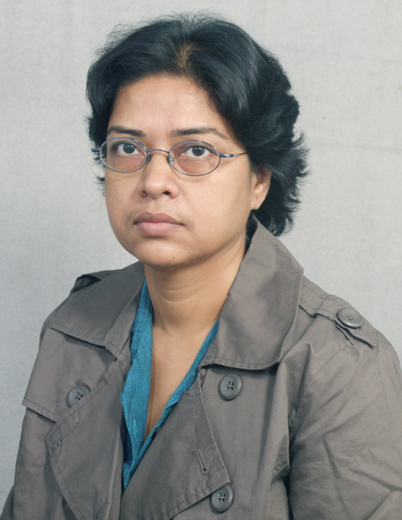
“When students see lives similar to their own on screen,” she says, “they begin to feel seen. They realise that their experiences and struggles matter.”
She hopes screenings of Dare To Dream in villages and government schools can affirm students’ aspirations
while also serving as a reminder to educators of the influence they hold.
“Sometimes,” she adds, “a small gesture of encouragement from a teacher can change the course of a child’s life.”
For communities, the film creates space for dialogue—about education, gender, early marriage, and the difficult balance between tradition and change. Importantly, these conversations emerge without judgement, allowing reflection rather than resistance.

Beyond slogans, towards quiet change
After six years of documenting these lives, Dare To Dream leaves behind a powerful truth: meaningful change is often incremental. It unfolds in classrooms where teachers persist, in families that choose education over early marriage, and in girls who dare to imagine futures different from those prescribed to them.
If the film succeeds in helping even a few girls take one step closer to that freedom, it reinforces a larger truth—when first-generation learners from marginalised communities are trusted and supported, they do not just change their own lives. They reshape the future of others as well.
Education
Tapas Project Shaala 2026 to Spark National Dialogue on Autonomy, Curiosity and Community in Education
At ScooNews, we are proud to partner with Tapas Education for an event that prioritizes authentic narratives over abstract theory. Whether you are a school leader navigating institutional change or a parent nurturing curiosity at home, TPS 2026 offers a rare, reflective space to bridge the gap between educational philosophy and real-world practice.
India | February 2026
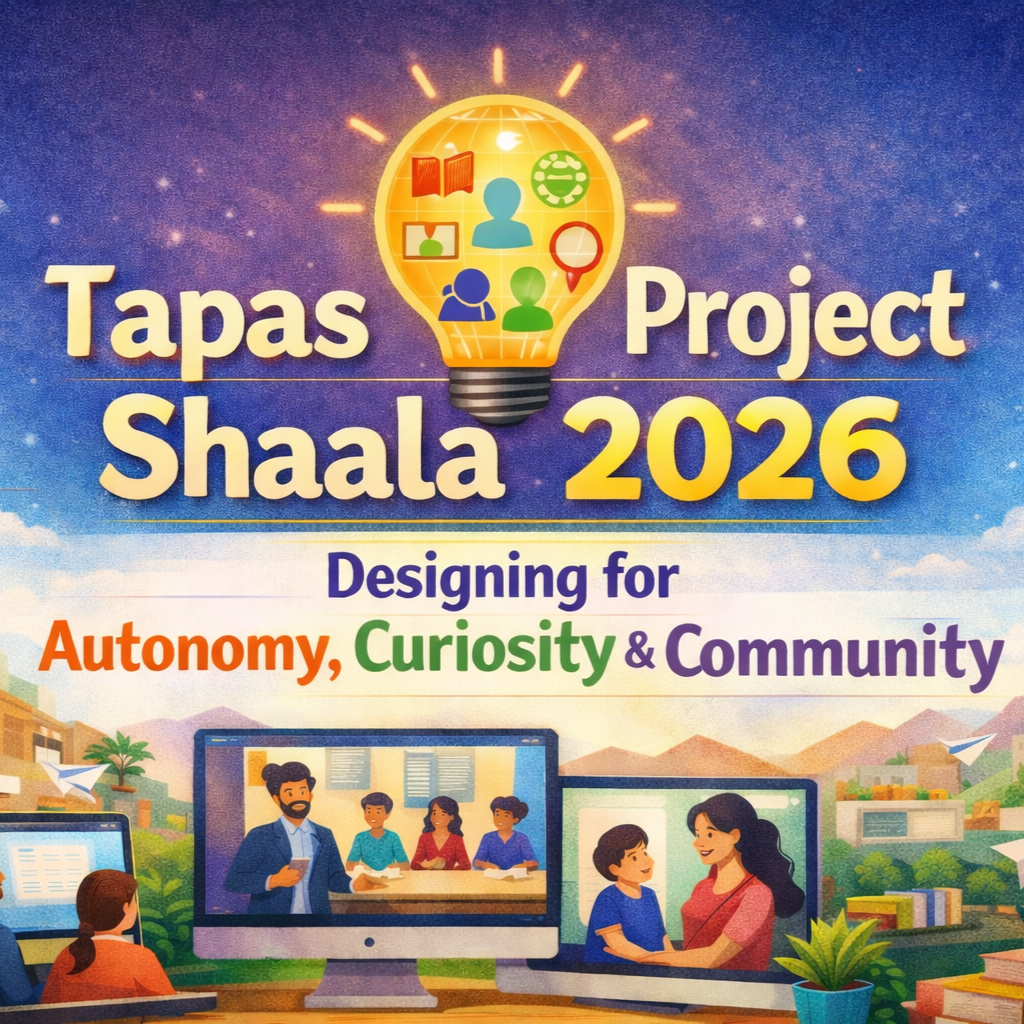
Tapas Education has announced the launch of Tapas Project Shaala 2026 (TPS 2026), a four-day virtual education conference built around the theme Designing for Autonomy, Curiosity & Community. Scheduled from 19 to 22 February 2026, the conference will bring together educators, parents, home educators, learning designers, school leaders, researchers, and community voices from across India and internationally.
Designed as a reflective and practice-driven platform, TPS 2026 aims to spark meaningful dialogue on how learning is designed, experienced, and sustained in a rapidly evolving educational landscape.
Each day of the conference will feature carefully curated keynote sessions, panel discussions, and conversations led by distinguished educators, researchers, and global contributors. The programme will explore themes including learner autonomy, curiosity-driven learning environments, community-connected education, early years foundations, leadership, and the future of schooling.
Unlike traditional conferences that focus heavily on theory, TPS 2026 places strong emphasis on lived experiences and real-world challenges. Sessions will spotlight authentic narratives, dilemmas, trade-offs, failures, and decisions shaping classrooms and institutions today.
The conference is intentionally designed for multiple stakeholders.
Educator-focused sessions will address pedagogy, leadership, assessment, and learning design. Parent-centric conversations will offer practical perspectives on nurturing independence, resilience, and emotional security at home. Additionally, architects, designers, and learning space innovators will gain insights into how educational philosophy and leadership choices influence physical, digital, and shared learning environments.
TPS 2026 will be hosted entirely online, enabling wide participation without geographical constraints.
Tapas Education has partnered with ScooNews as an event partner to support visibility and outreach for the conference.
Event Details
Event: Tapas Project Shaala 2026
Theme: Designing for Autonomy, Curiosity & Community
Dates: 19 to 22 February 2026
Mode: Virtual
Website: www.tapaseducation.com
Registration: https://forms.gle/
Education
Judicial Guardrails: How the J&K High Court’s Fee Regulation Verdict Redraws the Rules for Private Schools
In a judgment that goes far beyond school fees, the High Court of Jammu & Kashmir and Ladakh has reset the conversation around private education governance. By reaffirming institutional autonomy while retaining safeguards against profiteering, the ruling signals a shift toward smarter, evidence-based regulation. For school leaders, policymakers, and parents alike, this decision offers both reassurance and a roadmap for how India’s evolving education ecosystem might be governed in the years ahead.
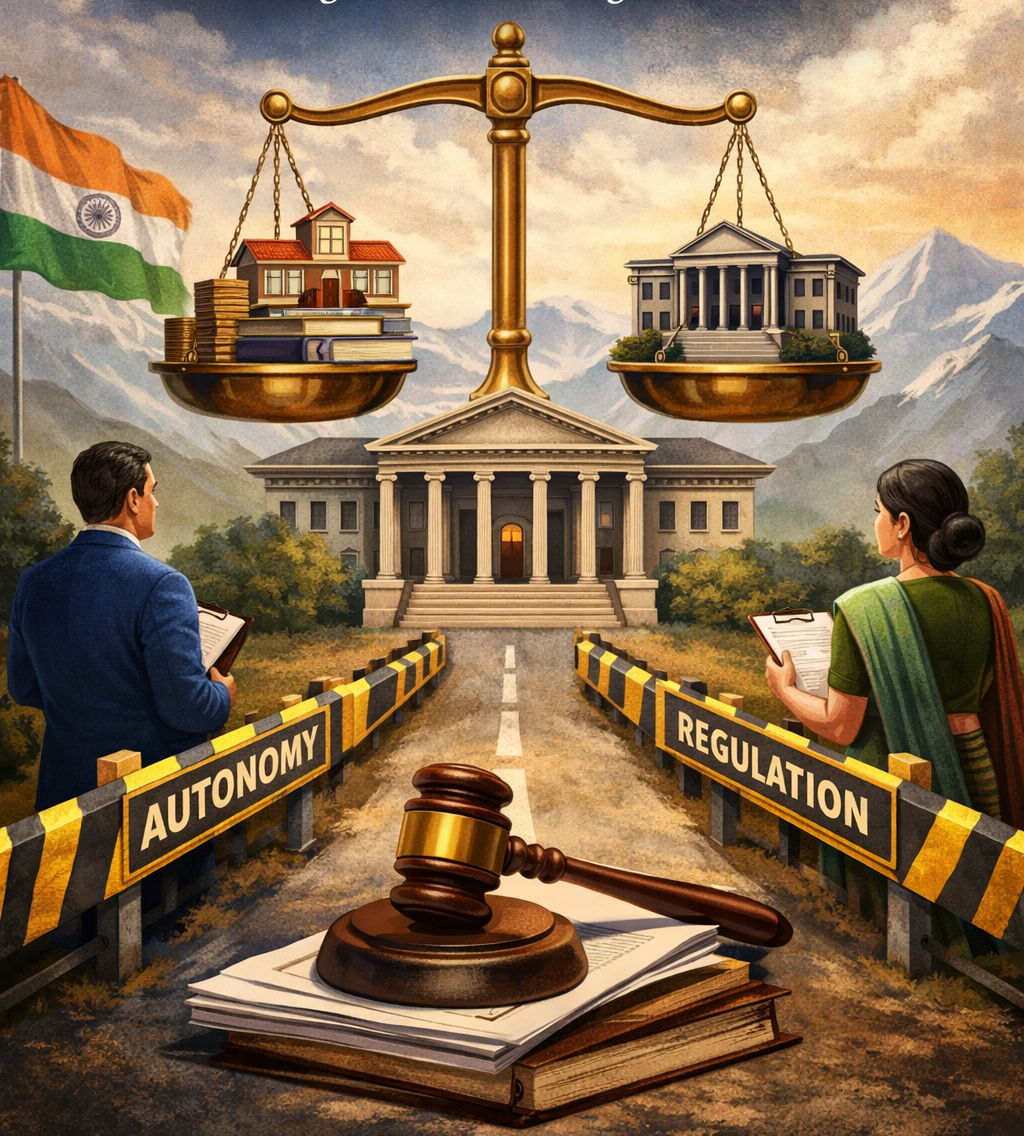
A Courtroom Decision That Echoes Across Classrooms
Every so often, a legal judgment does more than resolve a dispute—it reframes an entire conversation.
The recent ruling of the High Court of Jammu & Kashmir and Ladakh in New Convent High School & Ors vs Union of India is one such moment. While the immediate issue concerned fee regulation, the implications extend to the deeper question that has shaped Indian education policy for decades:
Who should decide how private schools operate—the State, or the institutions themselves?
The Court’s answer is neither absolute freedom nor rigid control. Instead, it draws a clear set of judicial guardrails—protecting institutional autonomy while preserving regulatory oversight to prevent exploitation.
From Supplementary to Structural: The Private School Reality
Perhaps the most striking element of the judgment is its candid acknowledgement of a reality educators and parents already understand.
Private schools are no longer merely supplementary to government schooling. In many regions, they have become structurally central to delivering education.
Families across socio-economic segments increasingly choose private institutions because of:
-
Perceived better learning outcomes
-
Stronger infrastructure
-
Greater accountability
This acknowledgement matters because it shifts the policy lens from ideology to practicality. Regulation designed for a marginal sector no longer fits a system where private institutions educate a significant proportion of children.
The End of Executive Overreach
At the heart of the case was the composition of the Fee Fixation and Regulation Committee (FFRC). A provision allowed a senior government officer to head the body.
The Court ruled that regulatory mechanisms exercising quasi-judicial powers must be independent. By reaffirming that such committees should be chaired by a retired High Court judge, the Bench effectively insulated fee oversight from administrative influence.
For the education ecosystem, this is a structural shift:
-
Greater procedural fairness
-
Increased confidence among institutions
-
More credibility in regulatory decisions
In essence, the Court strengthened the legitimacy of regulation—rather than weakening it.
Education: Neither Charity Nor Commerce
One of the most important clarifications in the judgment concerns the economics of schooling.
The Court reiterated a long-standing legal principle: running a school is a constitutionally protected occupation.
This has several implications:
-
Schools may generate a reasonable surplus
-
Investment in infrastructure and faculty is legitimate
-
Financial sustainability is necessary
What remains prohibited is profiteering—defined as excessive or exploitative gain.
This distinction is critical in a policy environment where financial viability is often confused with commercialization.
Quality education requires:
-
Qualified teachers
-
Modern facilities
-
Technology
-
Safe transport
All of these demand sustained investment.
Smarter Regulation, Not Blanket Control
Another major takeaway is the Court’s push toward proportionate oversight.
Rather than attempting to scrutinize every school equally, regulatory authorities are encouraged to:
-
Focus on cases where credible complaints arise
-
Examine institutions where fee levels appear unreasonable
-
Ordinarily accept fee proposals supported by documentation
This is essentially a call for risk-based regulation—a governance model common in mature regulatory systems.
It recognises a simple truth: excessive micro-management can harm quality as much as inadequate oversight.
The Transport Fee Conversation
The judgment also addressed the long-standing friction around school transport fees.
It noted that transport services are optional facilities provided for parental convenience—not mandatory for school recognition.
The Court recommended that any fee determination in this area involve domain experts—transport authorities, fuel cost data, and related agencies—to ensure realism and transparency.
This highlights an important gap in many regulatory systems: decisions often lack sector-specific cost benchmarking.
Key Takeaways
For the Education Sector
-
Private schools are now structurally embedded in India’s education ecosystem.
-
Financial sustainability is legitimate; profiteering is not.
-
Regulatory independence is essential for credibility.
For Policymakers
-
Blanket fee controls are less effective than evidence-based oversight.
-
Public education reform remains urgent and central.
-
Regulation must balance equity with institutional viability.
For Parents
-
Safeguards against exploitation remain intact.
-
Transparency in fee determination is being strengthened.
What’s In It for Me? (School Leaders Edition)
1. Greater Institutional Confidence
The judgment reinforces that:
-
Schools retain autonomy in proposing fee structures.
-
Regulatory decisions must follow due process.
2. Financial Sustainability Is Legitimate
Reasonable surplus for:
-
Infrastructure
-
Faculty quality
-
Expansion
is not only permitted—it is recognised as necessary.
3. Transparency Is Now Strategic, Not Optional
Clear documentation of:
-
Costs
-
Investments
-
Salary structures
will strengthen credibility during regulatory review.
4. Reduced Risk of Arbitrary Intervention
Authorities are expected to intervene primarily when:
-
Complaints arise
-
Fee structures appear excessive
This creates a more predictable operating environment.
5. A Shift Toward Collaborative Governance
The ruling signals an emerging model where:
-
Schools and regulators are partners
-
Oversight is consultative rather than adversarial
The Larger Policy Question India Cannot Ignore
Perhaps the most uncomfortable yet necessary observation in the judgment is its implicit challenge to governments.
Regulating private schools cannot compensate for weaknesses in the public system.
If private institutions are expanding because parents seek reliability and quality, the long-term solution lies not in tighter control alone, but in strengthening government schools.
India’s future education landscape will likely depend on a balanced ecosystem where:
-
Public schools ensure equity
-
Private schools drive innovation
-
Regulation ensures fairness
The Road Ahead: From Control to Collaboration
The High Court’s verdict does not dismantle regulation. It refines it.
It suggests a governance model built on:
-
Independence
-
Transparency
-
Proportional oversight
-
Institutional accountability
For India’s education sector, the message is pragmatic:
Autonomy and accountability are not opposing forces—they are mutually reinforcing.
If applied thoughtfully, this ruling could mark the beginning of a more mature policy phase—one where the focus shifts from controlling institutions to enabling quality.
Because in the end, the real beneficiary of balanced governance is neither the State nor the school—it is the student.
Education
Supreme Court’s Landmark Judgment for Schools: Menstrual Health is a Fundamental Right
In a transformative judgment delivered on January 30, 2026, the Supreme Court of India has unequivocally placed menstrual health within the ambit of fundamental rights, linking dignity, education, and equality in classrooms across the country. This ruling goes beyond infrastructure mandates to address stigma, awareness, and school culture—reshaping how institutions must support adolescent girls. ScooNews breaks down what the judgment says and what it now requires every school leader to do.
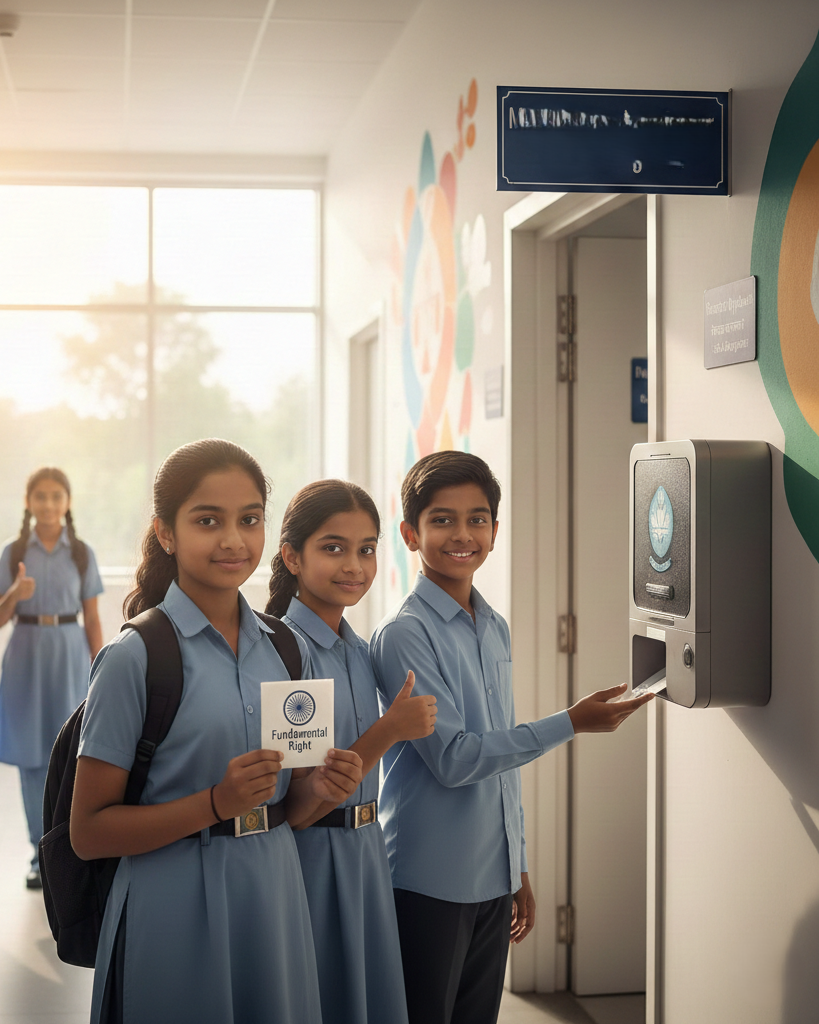
In a landmark judgment that firmly connects constitutional law with everyday classroom realities, the Supreme Court of India has declared menstrual health a fundamental right, placing it squarely within the ambit of Article 21 (Right to Life with dignity) and Article 21A (Right to Education).
Delivered on January 30, 2026, by a Bench of Justices J.B. Pardiwala and R. Mahadevan, the ruling in Jaya Thakur vs Union of India goes far beyond symbolic recognition. It lays down clear, enforceable obligations for schools—government and private alike—transforming menstrual hygiene from a welfare measure into a constitutional duty.
For school leaders, this judgment marks a decisive shift: menstrual dignity is no longer optional, charitable, or discretionary. It is a core educational standard.
Why the Court Intervened
The Court acknowledged what educators and parents have long known but systems have often ignored:
lack of menstrual hygiene support is a direct barrier to girls’ education.
Absenteeism, discomfort, fear of embarrassment, inadequate toilets, and social stigma collectively push many girls out of classrooms—sometimes temporarily, sometimes permanently. By recognising menstrual health as integral to dignity and learning, the Court affirmed that no girl should ever have to choose between her education and her period.
What the Court Said
The judgment rests on three powerful principles:
- Menstrual health is inseparable from dignity and bodily autonomy, which are central to the Right to Life.
- Education cannot be meaningful if menstruation becomes a reason for exclusion, discomfort, or discrimination.
- Infrastructure alone is insufficient—social stigma, silence, and male insensitivity must also be addressed.
In a telling observation, the Court noted that “ignorance breeds insensitivity” and warned that menstrual facilities will remain underused unless schools actively dismantle stigma.
What Schools Must Now Do
The Court’s directions are both practical and time-bound, with a three-month implementation window. They fall into two clear buckets: infrastructure and ecosystem change.
-
Physical Infrastructure: The Non-Negotiables
All schools—government and private—must ensure:
- Free provision of biodegradable sanitary pads, with a preference for discreet access such as vending machines.
- Functional, gender-segregated toilets with running water, soap, privacy, and regular maintenance.
- Disabled-friendly sanitation facilities, ensuring inclusivity for all students.
- Safe and hygienic disposal systems, including covered bins and environmentally compliant solutions.
- Creation of a Menstrual Hygiene Management (MHM) Corner stocked with emergency supplies such as spare uniforms, innerwear, and hygiene kits.
The Court made it clear that absence of these facilities amounts to denial of constitutional rights.
-
Cultural & Educational Shift: The Ecosystem Solution
Perhaps the most progressive aspect of the ruling is its insistence that menstrual health is not a “girls-only issue.”
Schools are now expected to:
- Sensitise boys about menstruation as a normal biological process, removing shame, jokes, and harassment from school spaces.
- Train male teachers and staff to respond empathetically to menstruation-related needs, without interrogation or embarrassment.
- Integrate age-appropriate, gender-responsive content on menstruation and puberty into health and wellness curricula, in line with NCERT/SCERT guidance.
- Foster a school culture where menstruation is discussed openly, respectfully, and without euphemism.
The message is unambiguous: pads without dignity do not equal access.
A Clear Warning to Private Schools
The Supreme Court issued a firm caution to private institutions:
non-compliance can lead to de-recognition.
By linking menstrual hygiene directly to the Right to Education, the Court has placed accountability squarely on school managements. Compliance is no longer a matter of reputation—it is a legal obligation.
Why This Judgment Matters
This ruling represents a rare moment where law, education, health, and gender equity intersect meaningfully.
It acknowledges that:
- Equality in education requires both facilities and acceptance
- Silence around menstruation is itself a form of discrimination
- Boys and men must be part of the solution—not bystanders
For school leaders, this is an opportunity to lead with empathy, foresight, and constitutional responsibility.
The Bottom Line
The Supreme Court has drawn a clear line:
menstrual dignity is a right, not a favour.
Schools that act decisively now will not only meet compliance requirements but will also create environments where every student feels safe, supported, and respected—every day of the month.
Education
Beyond the First Bell: 5 Key Takeaways for School Leaders from Economic Survey 2025–26
The Economic Survey 2025–26 signals a definitive pivot in India’s education strategy. While infrastructure goals have largely been met, the focus now shifts to bridging the higher secondary gap and fixing a vocational training deficit that remains under 1%. For school leaders, success is no longer measured by enrolment, but by measurable competencies, digital wellness, and global readiness.
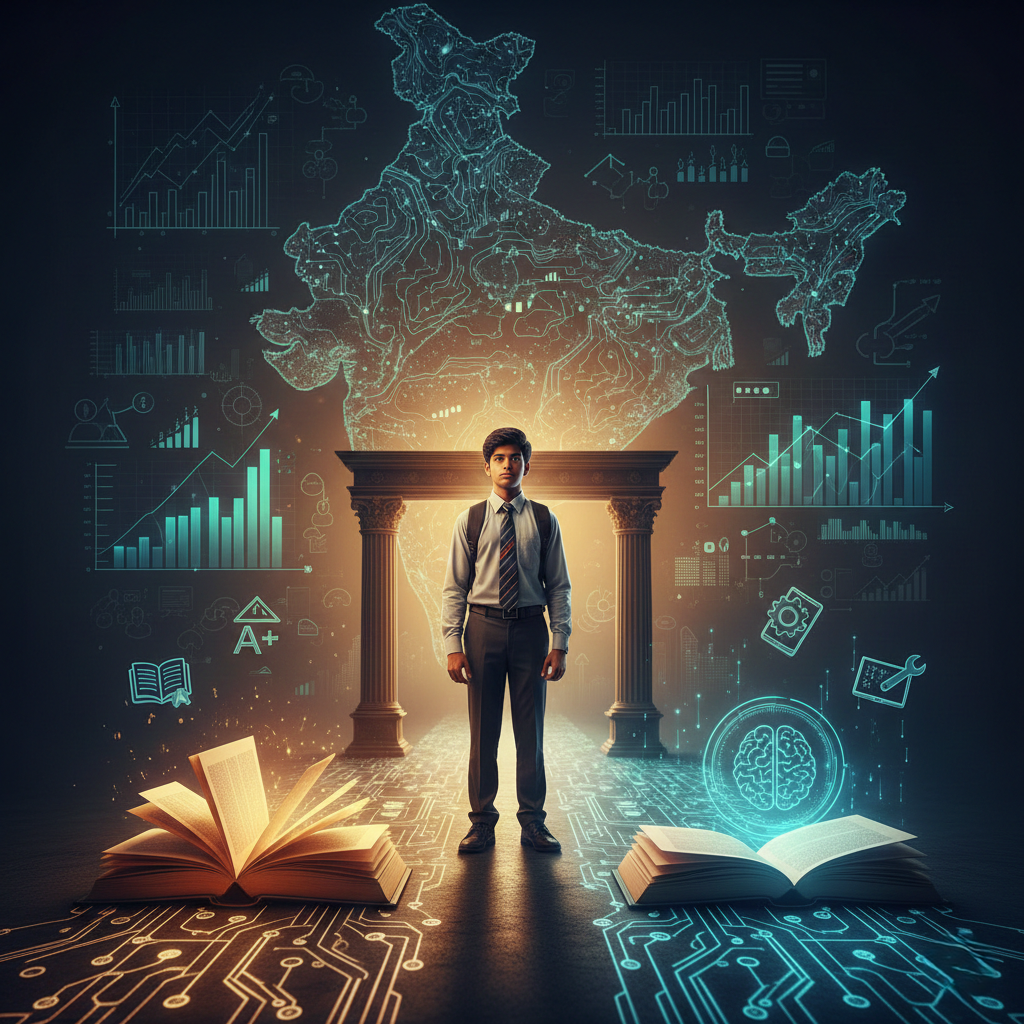
The Economic Survey 2025–26, tabled in Parliament on January 29, 2026, presents an arresting paradox. India has successfully built one of the world’s largest schooling systems—educating 24.69 crore students—yet only six out of ten learners complete higher secondary education.
For school leaders, the Survey’s message is unambiguous: the national focus is shifting from inputs (getting children into school) to impact (ensuring they learn, progress, and stay). What follows are five findings that matter most inside the school gate.
1. The “Leaky Bucket”: Transitioning from Middle to Secondary
While primary enrolment is near-universal (90.9%), the Survey identifies a structural drop-off after Class 8.
Reality check: The Net Enrolment Rate (NER) at the secondary level stands at just 52.2%.
The rural gap: Only 17.1% of rural schools offer secondary education, compared to 38.1% in urban areas. Longer travel distances and higher costs lead to significant transition losses.
What this means for schools:
- The Survey strongly backs Composite Schools (K–12 models) to reduce dropout risk.
- Schools serving Classes 6–10 should prioritise transition counselling, parent engagement, and academic bridging.
Leader takeaway: Retention, not recruitment, is now the real leadership challenge.
2. Learning Outcomes: The PARAKH Recovery Story
Post-pandemic recovery is visible, particularly in foundational years—but learning quality remains uneven across states and school types.
Encouraging gains:
- Grade III Mathematics proficiency has risen to 65%, up from 42% in 2021.
What’s next:
- The Survey proposes a PISA-like, competency-based assessment at the end of Class 10, signalling a decisive move away from rote learning.
What this means for schools:
- Internal assessments will increasingly need to mirror National Achievement Survey (NAS) benchmarks.
- Performance-linked accountability is no longer hypothetical—it is imminent.
Leader takeaway: Assessment literacy will become as important as curriculum delivery.
3. The Skilling Crisis: Addressing the 1%
Perhaps the most candid section of the Survey exposes a stark education–employment mismatch.
The 1% problem: Only 0.97% of students aged 14–18 have received formal institutional skilling.
Structural issue: Education and skilling continue to operate in parallel silos, leaving most learners academically qualified but workplace-unready.
What this means for schools:
- Vocational exposure must be embedded within Classes 9–12, not offered as an optional or external add-on.
- Partnerships with local industry, NSDC-aligned providers, and apprenticeship platforms will become critical.
Leader takeaway: Schools that integrate skills early will future-proof their students—and their relevance.
4. Digital Exposure: Pedagogy vs. Addiction
In a significant first, the Economic Survey flags digital addiction as a threat to student wellbeing, learning focus, and social capital.
The paradox:
- 89% of rural youth now have access to smartphones.
- 75% use them primarily for social media, contributing to sleep deprivation, reduced attention spans, and anxiety.
What this means for schools:
- The Survey recommends introducing a Digital Wellness Curriculum, covering:
- Screen-time literacy
- Cyber safety
- Responsible AI and social media use
Leader takeaway: Digital fluency must now include digital restraint.
5. Global Ambitions: Stemming the Student Exodus
India is on track to become the world’s largest source of international students, with outbound numbers expected to reach 18 lakhs by 2025. Yet, international students form just 0.10% of domestic enrolment.
The strategy:
- The Survey promotes “Internationalisation at Home”—inviting foreign campuses, enabling joint degrees, and ensuring mutual recognition of qualifications.
Key enablers already in place:
- Academic Bank of Credit (ABC)
- APAAR IDs (with 2.2 crore already issued)
What this means for schools:
- Senior secondary students should be actively guided on credit portability, interdisciplinary choices, and global pathways.
Leader takeaway: Global readiness is no longer optional—it is systemic.
The Bigger Shift: Learning Over Schooling
The Economic Survey 2025–26 makes one thing clear: India’s education mission has entered its second phase. Infrastructure and access have largely been achieved. The next frontier is retention, relevance, and real learning.
For school leaders, success will no longer be measured by enrolment numbers alone, but by:
- Meaningful learning outcomes
- Student wellbeing and digital balance
- Employability and global mobility
The bell has rung. What happens after it now matters more than ever.
Education
What the Indian Army Teaches Our Children Beyond Textbooks
By viewing the Indian Army as a living classroom, I see that true leadership stems from selfless service and integrity, not authority. To me, discipline is freedom—the capacity to make ethical choices and remain resilient under pressure. By fostering teamwork and active patriotism through simple, honest deeds, I believe education can transcend academics. My goal is to develop compassionate, self-confident citizens who view challenges as growth and contribute meaningfully to our nation.
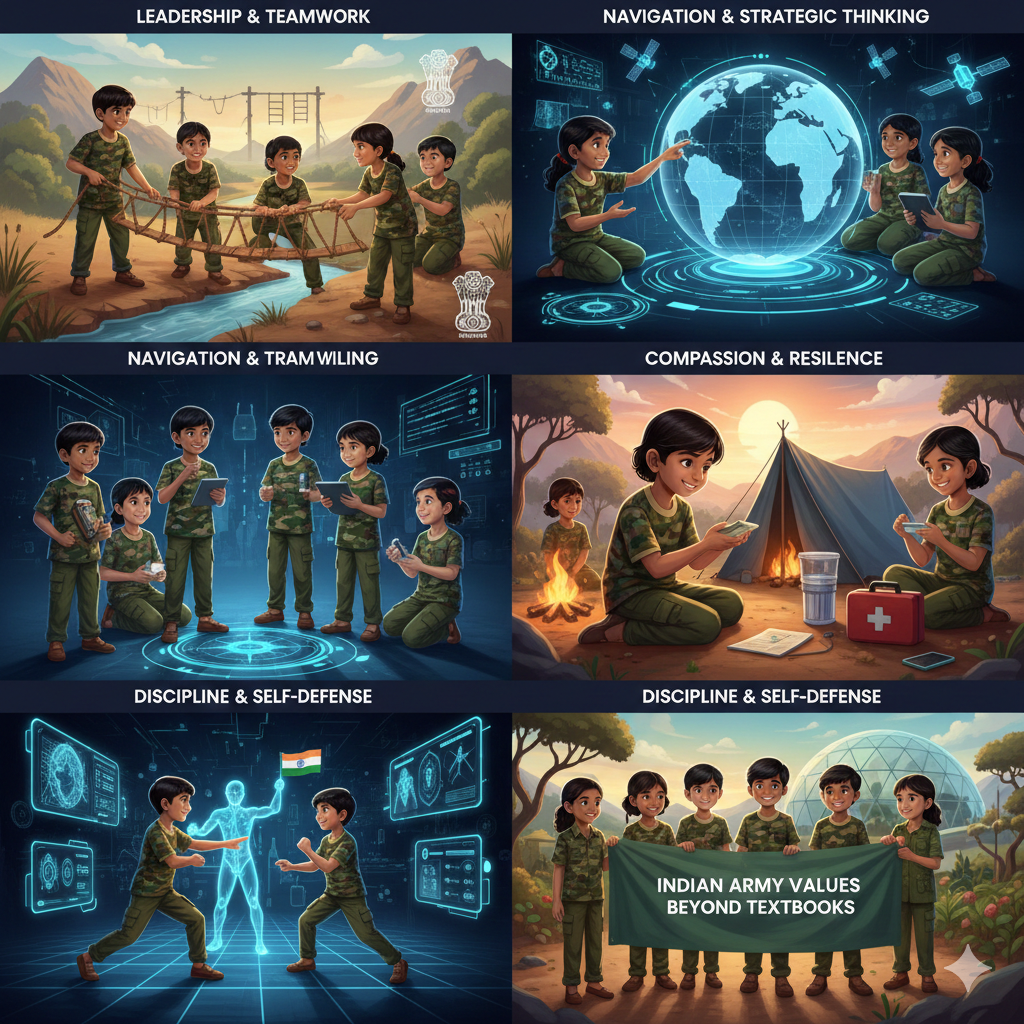
Real-world values will shape the way students see the world around them and what they value most; such as, the Indian Army serves as a living classroom, teaching students leadership, courage, and selflessness through action. Through the actions of each soldier, a student learns that the most important form of leadership comes from being committed to a purpose that is larger than themselves; that leadership is not defined by one’s authority, but rather by the way each individual serves others, holds to their integrity and is steadfast during the most difficult of times.
Discipline is one of the Army’s greatest lessons, but it is also frequently misinterpreted as control. In reality, discipline is a means to provide freedom: freedom to make ethical decisions, act responsibly, and focus when stressed. This lesson of discipline is an essential lesson for children and will help children achieve their true potential through the routines built to help them grow to become trustworthy individuals.
As soldiers, children acquire many skills and knowledge that help them cope with difficult situations and disappointments. They learn how to work together, trust and support each other And recover from their mistakes. All these lessons work together to help a student learn that disappointment is only a step/stage in life; not the finish line. Whether it be in the classroom or on the playground: teaching children emotional strength, working as part of a team and persevering will prepare children not only for the next exam but for life itself.
Patriotism is an action rather than a word. The example of the Indian Army teaches children that love of nation is shown by simple deeds such as being honest, respectful, disciplined and responsible towards one’s community. Schools can make patriotism a part of daily experience instead of just talking about it.
Education needs to model itself after the Indian Army, if it wants to develop citizens who contribute meaningfully to society, and not just create scholarly students. Schools should develop students into people who are self-confident, compassionate, disciplined, generous, strong in values, and are future leaders that support the growth of their country through their successes.
“Discipline and united action are the real source of strength for a nation.” — Field Marshal Sam Manekshaw
About the Author:
Ms. Sonal Sharma is the Principal, Birla Open Minds International School, Yavatmal . She is passionate about empowering both educators and learners by creating engaging, impactful, and innovative training experiences.
Education
AI to Become a Core Subject from Class 3: India’s Big Leap Toward a Future-Ready Generation
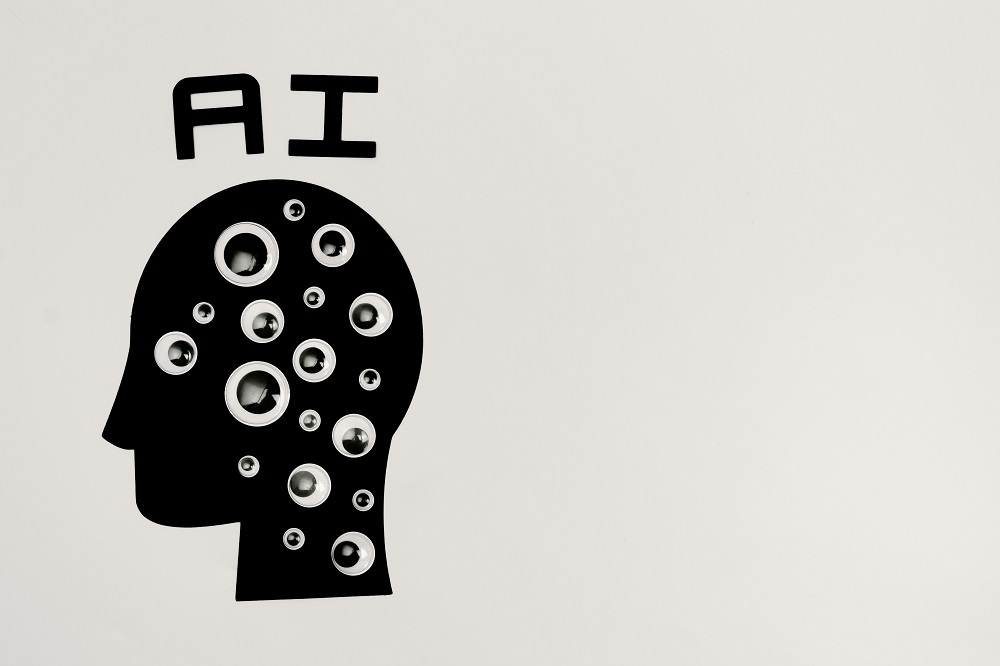
In a landmark move to make India’s school system future-ready, the Department of School Education & Literacy (DoSE&L), Ministry of Education, has announced that Artificial Intelligence (AI) and Computational Thinking (CT) will be introduced as part of the school curriculum from Class 3 onwards, beginning in the academic year 2026–27.
The initiative marks a major step in preparing students for an AI-driven world, ensuring early exposure to technological literacy, ethics, and problem-solving. The curriculum, currently being developed through a consultative process with CBSE, NCERT, KVS, NVS, and States/UTs, will fall under the National Curriculum Framework for School Education (NCF-SE) 2023, in alignment with the National Education Policy (NEP) 2020.
A stakeholder consultation held on 29th October 2025 brought together education leaders, including Prof. Karthik Raman from IIT Madras, who heads the CBSE expert committee responsible for shaping the AI & CT curriculum. The focus is on designing a meaningful, inclusive framework that integrates AI not as an advanced elective but as a foundational skill — comparable to literacy and numeracy in importance.
Shri Sanjay Kumar, Secretary, DoSE&L, emphasised that AI education should be viewed as a universal skill closely linked to real-world applications. “Every child’s distinct potential is our priority. Policymakers must define minimum thresholds and evolve them with changing needs,” he said. He also stressed on teacher training as the backbone of successful implementation, with modules under NISHTHA, and resource materials being prepared by NCERT and CBSE.
The Ministry plans to release AI handbooks and digital resources by December 2025, followed by a grade-specific rollout supported by video-based learning materials and structured training.
By embedding AI education from the foundational years, India aims to nurture a generation that understands, creates, and applies technology ethically — transforming the vision of AI for Public Good into everyday classroom reality.


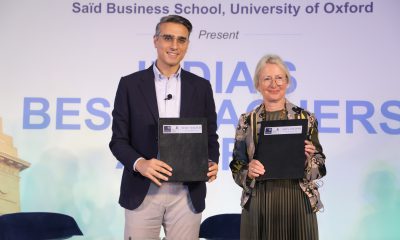
Shiv Nadar Foundation and Oxford Launch India’s Best Teachers’ Awards

Before Wembley, There Was Panchgani: The School That Shaped Freddie Mercury Opens a Gallery

Deregulate education today to be able to achieve Viksit Bharat in 2047

JBCN International School, Oshiwara, Welcomes Gregor Norman Alexander Polson as The New Head of School

The Last Thing AI Cannot Take: Saurav Sinha on Humanity, Boarding Schools, and the Generation We Are Getting Wrong

Why Indian schools are struggling to articulate who they are…

United Learning League Raises ₹100 Crore to Build India’s Next IB School Network

From Marks to Meaning: Why Schools Need Holistic Education?

A school in Nallasopara just built an entire AI innovation ecosystem

Dr Arunabh Singh Named ARISE President-Elect at Varanasi Meet

The Exceptional Indian

Daring to Dream: Six Years in the Heart of Rural Rajasthan

Tapas Project Shaala 2026 to Spark National Dialogue on Autonomy, Curiosity and Community in Education

Judicial Guardrails: How the J&K High Court’s Fee Regulation Verdict Redraws the Rules for Private Schools

Supreme Court’s Landmark Judgment for Schools: Menstrual Health is a Fundamental Right

Beyond the First Bell: 5 Key Takeaways for School Leaders from Economic Survey 2025–26

Inclusive Education Summit 2026: Designing the Future of “Learner-Centric” Education

Building a Healthier India: Why School Health Programs Are Essential

Before the Nobel, There Was a Teacher

What the Indian Army Teaches Our Children Beyond Textbooks

Umeed: A Ray of Hope for Better Tomorrow

AI to Become a Core Subject from Class 3: India’s Big Leap Toward a Future-Ready Generation

Dharav Utsav to Celebrate Rajasthan’s Cultural Heritage and Local Talent

How to Build Better Parent-Teacher Communication

Beyond the Syllabus: School Teachers’ Insights on Project-Based Learning
Shiv Nadar Foundation and Oxford Launch India’s Best Teachers’ Awards
Deregulate education today to be able to achieve Viksit Bharat in 2047
Before Wembley, There Was Panchgani: The School That Shaped Freddie Mercury Opens a Gallery
SGEF2023 | Special Address by Rama Datt, Trustee, Maharaja Sawai Man Singh II Trust, Jaipur

ScooNews | After Movie | ScooNews Global Educators Fest 2023

Aftermovie | NIES2 UP Chapter | 21 Jan 2023

WEBINAR | Gamification in Education: How Digital Badges Can Boost Student Motivation and Engagement

ScooNews | WEBINAR| Importance of Physical Activity for Children at School | Plaeto

SCOONEWS | WEBINAR | WHY DIGITIZING YOUR SCHOOL IS A MUST | TEACHMINT

Keynote Address | Lakshyaraj Singh Mewar

Anurag Tripathi, Secretary, CBSE at SGEF2022

How schools can nurture every student’s genius

Aftermovie | SGEF2022 | Jaipur

Li Andersson | Minister of Education | Finland

Anurag Tripathi, Secretary, Central Board of Secondary Education (CBSE) discusses NEP2020
ScooNews | Early Ed Asia 2019 | Aftermovie
#PodarECEconf : Pursuing quality ECE
#CBSE Class XII #Results #Highlights
The interesting story of India’s educational system | Adhitya Iyer

A young scientist’s quest for clean water

The Danger of Silence: Clint Smith
National Digital Library of India is an initiative by HRD Ministry

Remembering Kalpana Chawla on her birthday!
Message from Sadhguru for Students!
Message from Sadhguru for Students!

The Untapped Genius That Could Change Science for the Better
Eddy Zhong: How school makes kids less intelligent TEDxYouth@Beacon