India has 9.8 million school teachers. Most of them will never be seen. They will spend decades in classrooms across every geography in this country, inventing ways to make physics make sense to a fifteen-year-old in rural Rajasthan, turning a grammar lesson into something a child in a government school in Jharkhand remembers for life, building the foundational confidence that carries a student through every exam and every decision they will ever make. And when the school year ends, they will start again.
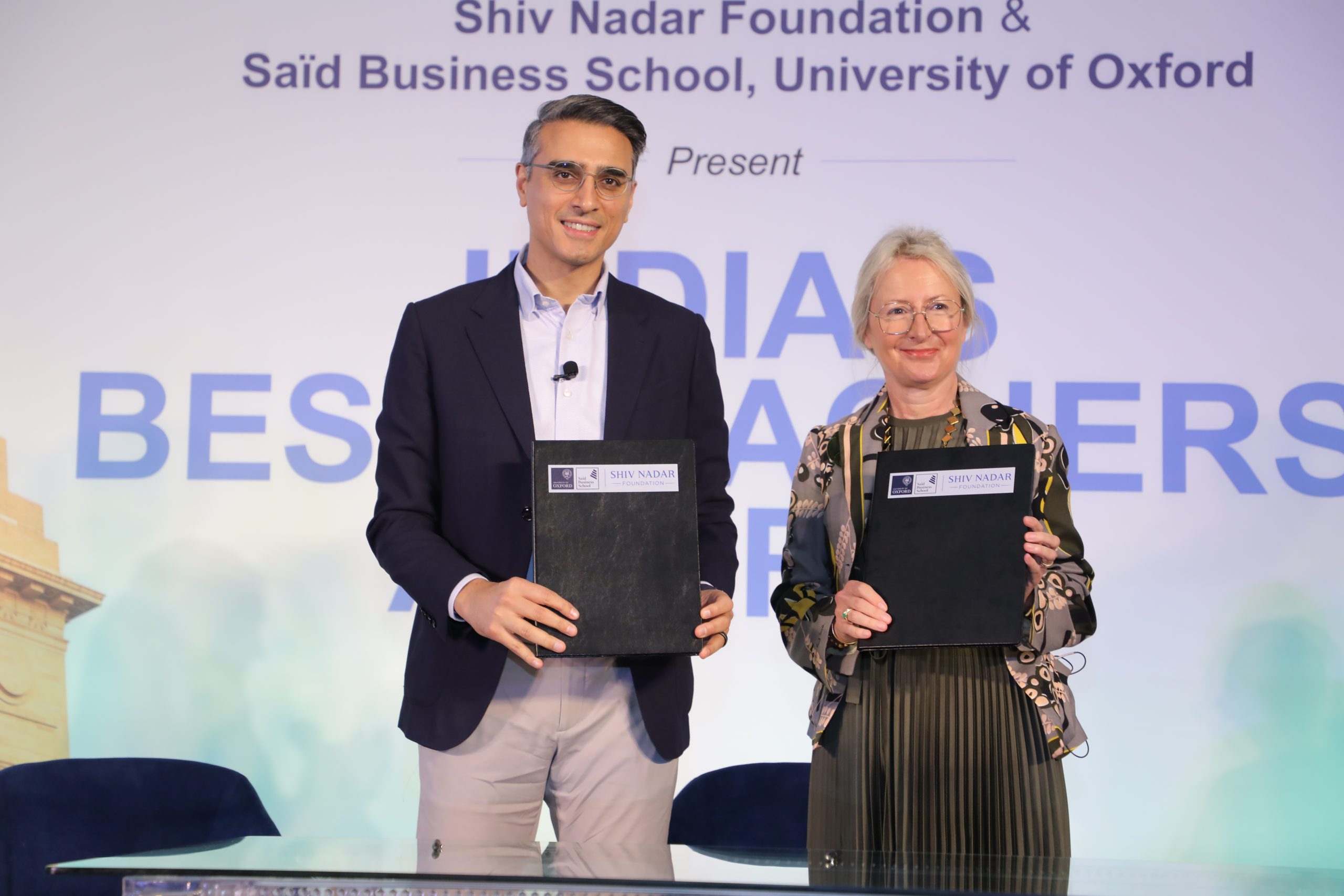
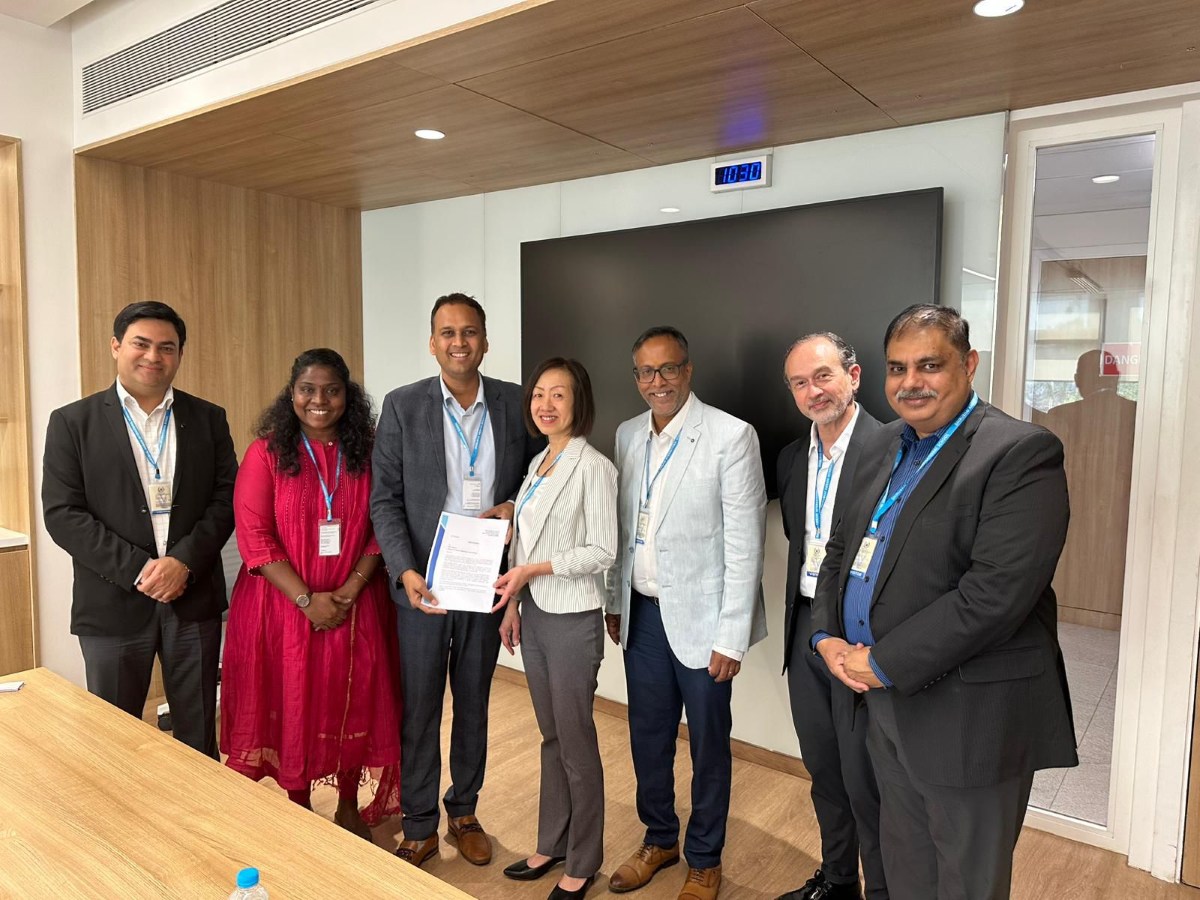
The Shiv Nadar Foundation and Saïd Business School, University of Oxford, believe that needs to change. On 29 April 2026, in New Delhi, the two institutions formalised a partnership to launch India’s Best Teachers’ Awards, a national recognition initiative designed to find and celebrate the country’s most outstanding high-school educators, invest in their professional growth, and begin the work of building a teaching profession that is as admired as the outcomes it produces.
WHY THIS, AND WHY NOW
India’s National Education Policy 2020 places the quality of teaching at the centre of the country’s educational future. Reforming curriculum, improving infrastructure, expanding access: all of it depends, ultimately, on what happens in a classroom, and therefore on who is standing at the front of it.
The Shiv Nadar Foundation has spent thirty years building institutions that understand this. Established in 1994 by Shiv Nadar, the founder of HCL Technologies, the Foundation has invested over USD 1.85 billion across seven landmark institutions in education and the arts, directly touching the lives of more than 56,000 alumni and students. It has built the infrastructure of excellence. Now it is turning its attention to the people inside that infrastructure.
Saïd Business School brings to this partnership its global expertise in pedagogy, leadership development, and what it calls impact from within: the idea that transforming individuals transforms institutions, and transforming institutions transforms the world. It has recently expanded that philosophy to include pre-university students and teachers as central to its mission, not as an afterthought.
Together, what they are building is not a prize that hands over a trophy and moves on. It is the beginning of a sustained, long-term investment in the teaching profession.
WHAT THE AWARDS RECOGNISE
The 2026 edition of India’s Best Teachers’ Awards will recognise exceptional educators teaching in Grades 9 to 12 across eight subject categories:
| Geography |
Business Studies and Entrepreneurship |
| Computer Science |
Economics |
| Physics |
English |
| Environmental Sciences |
Mathematics |
Applications are open to teachers from both government and private schools, across central and state boards. The awards have been designed to reach across the full diversity of India’s school ecosystem: urban and rural, well-resourced and underfunded, board-exam-focused and inquiry-driven.
What the evaluation is looking for is not the teacher who performs best on a standardised test. It is the teacher whose classroom is genuinely different because they are in it. The assessment framework examines teaching methodology, classroom practice, innovation in pedagogy, and measurable student impact: improvements in learning outcomes, changes in student engagement, or interventions that created something genuinely new inside a school.
Nominations begin at school level, where both the principal and students participate in the process of identifying the school’s most impactful teachers. Each school may nominate up to two teachers for the awards.
THE SELECTION PROCESS
The awards follow a structured, multi-stage evaluation process built for credibility. From the applications received across the country, the top five nominees in each category will be invited to Delhi as finalists: eighty teachers from across India, gathered in one place, presenting their work to a distinguished jury panel.
The jury has been designed to match the ambition of the awards. It will draw from within the Shiv Nadar Foundation’s own ecosystem of educators and academics, and from Oxford, where distinguished judges of Nobel calibre will be part of the evaluation panels provided by Saïd Business School. The finalists will present to category-specific juries on Day 1 of the event, in parallel sessions across the full day.
Winners will be announced at the Awards Ceremony on 5 September 2026, at the close of the two-day national event.
| Applications open |
1 May 2026 |
| Applications close |
31 July 2026 |
| Finalist presentations |
3 to 5 September 2026 |
| Venue |
Hotel in Delhi-NCR |
| Winners announced |
5 September 2026 |
WHAT THE WINNERS RECEIVE
The awards have been designed to do two things at once: celebrate excellence in the present, and invest in it for the future.
All 80 finalists who reach the national event will receive a certification signed by the Nobel Laureate jury from Oxford University. That in itself is a recognition unlike anything currently available to high-school teachers in India.
The 16 category winners, one in each subject for each of the eight categories, will receive something more significant still: a full scholarship to attend a one-week, in-person bespoke learning and development programme at Saïd Business School, University of Oxford. The programme is not a generic executive course. It has been designed specifically around the professional needs of outstanding educators: leadership in education, global perspectives on pedagogy, and deep cross-learning with teachers and academics from an international academic environment.
In addition to the Oxford immersion, winners will receive access to a five-week online learning programme designed to deepen their teaching skills in their own time and context.
The intent is clear: the awards are a beginning, not an end. The Foundation and Oxford are building a growing network of recognised educators across India, creating the conditions for peer learning, exchange of practice, and the kind of professional community that outstanding teachers deserve and rarely find.
WHAT THE ORGANISERS SAY
“Teachers shape the lives of their students in ways that extend far beyond the classroom. They influence how young people think, learn, and engage with the world. Through these awards, we aim to build a credible platform that strengthens the broader teaching ecosystem by spotlighting meaningful classroom impact.”
Shikhar Malhotra
Trustee, Shiv Nadar Foundation
“The quality of any education system ultimately rests on its teachers. If we want to raise standards and outcomes, we must ensure that the profession is recognised, respected and supported in a sustained way. Bringing together recognition through the awards and capability-building through the learning programme is an important step in that direction.”
Manos Kapterian
Chief Operating Officer, Saïd Business School, University of Oxford
“Great teaching has a lasting impact that extends far beyond the classroom. By celebrating teachers and supporting their continued development, we reinforce the value of the profession and its role in shaping future generations.”
Josephine Fawkes
Director of Youth Education and Global Inclusion, Saïd Business School
THE TWO-DAY NATIONAL EVENT
The awards culminate in a two-day national gathering in Delhi from 3 to 5 September 2026, bringing together the 80 finalists, jury members, school leaders, and education voices for what is intended to be one of the most significant gatherings of outstanding teachers India has seen.
Day 1 is dedicated entirely to the jury presentations: all 80 finalists present their work to subject-specific juries in parallel tracks across the full day. Day 2 begins with an engagement programme for finalists, followed in the afternoon by a Teachers Symposium featuring panel discussions and knowledge sessions on pedagogy, practice, and the future of Indian school education. The day closes with the Awards Ceremony and a Gala Dinner.
The event is designed to be memorable not only for the winners but for every teacher who walks through the door. The profession will be at the centre, and the world, for those two days, will be watching it.
HOW TO APPLY
Applications open on 1 May 2026 and close on 31 July 2026. Teachers from both government and private schools, across all boards, teaching in Grades 9 to 12 in any of the eight subject categories are eligible to apply.
ABOUT THE ORGANISATIONS
The Shiv Nadar Foundation was established in 1994 by Shiv Nadar, founder of HCL Technologies. Committed to creating a more equitable, merit-based society through transformational education, the Foundation has invested over USD 1.85 billion across seven landmark institutions and initiatives in education and the arts. Today it has a community of more than 100,000 constituents, including over 23,700 current students, 3,600 faculty and staff, and a globally dispersed alumni network of more than 32,300. The Foundation pursues what it calls Creative Philanthropy: building institutions designed to last and to impact future generations.
Saïd Business School at the University of Oxford offers accredited degrees and diplomas for undergraduates and postgraduates, executive education programmes, and a growing set of learning experiences for pre-university students aged 15 to 18 and their teachers. Its mission is to develop future leaders who go into business with purpose and make real impact, operating on the principle that transforming individuals transforms businesses, which transform the world.


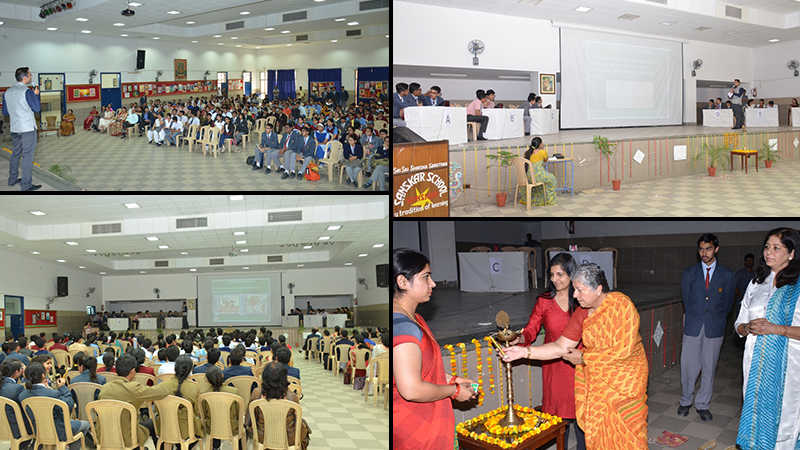
 Flagging off the Quiz: Ms Jyoti Kumar, Ms Rhea Thahryamal, Ms Rama Datt.
 Mr. Ajay Poonia: The star quiz master!
 The intellects: Participating teams
 Not just the teams, audience too had participated